What these pressure wheels do on the weld line
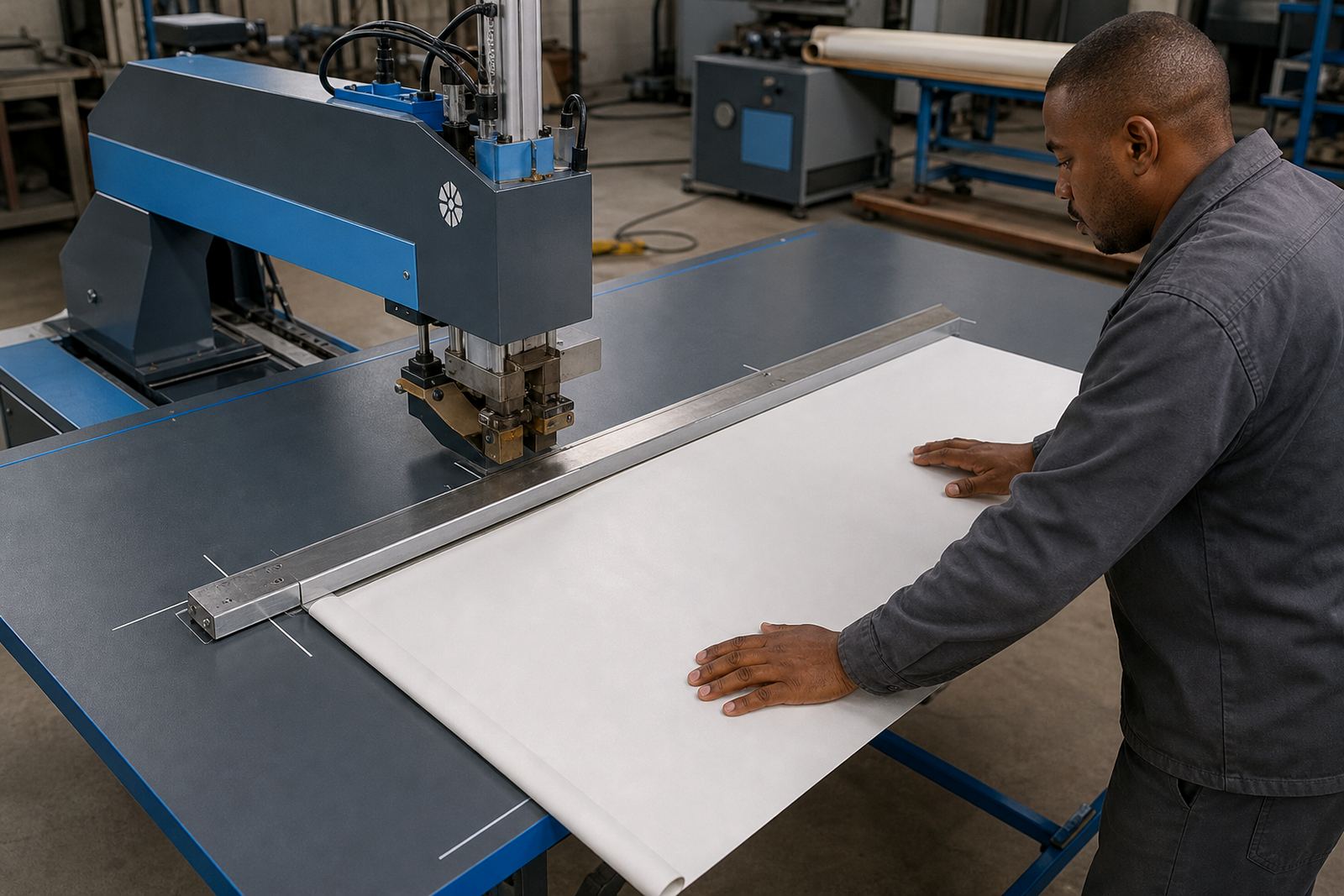
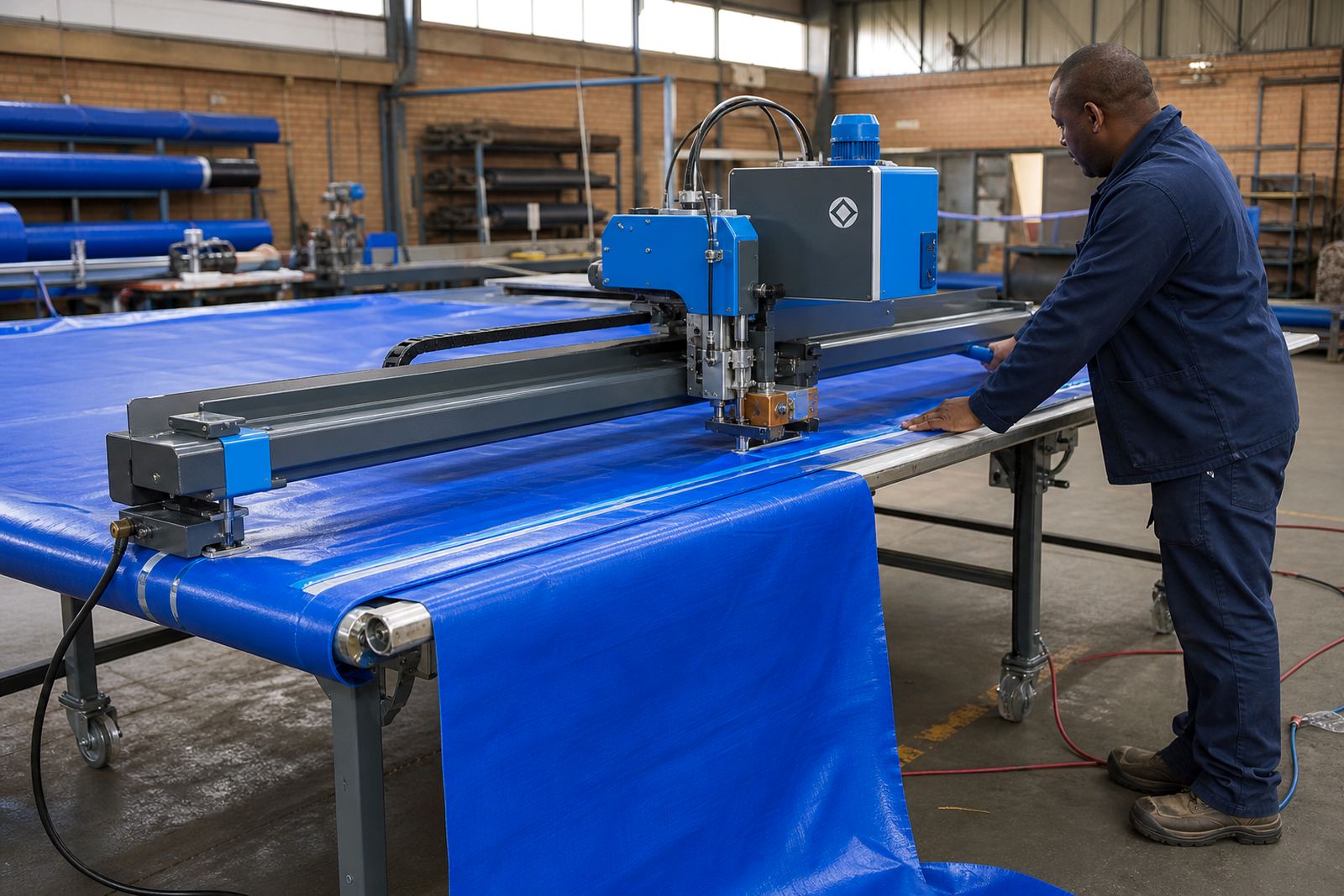
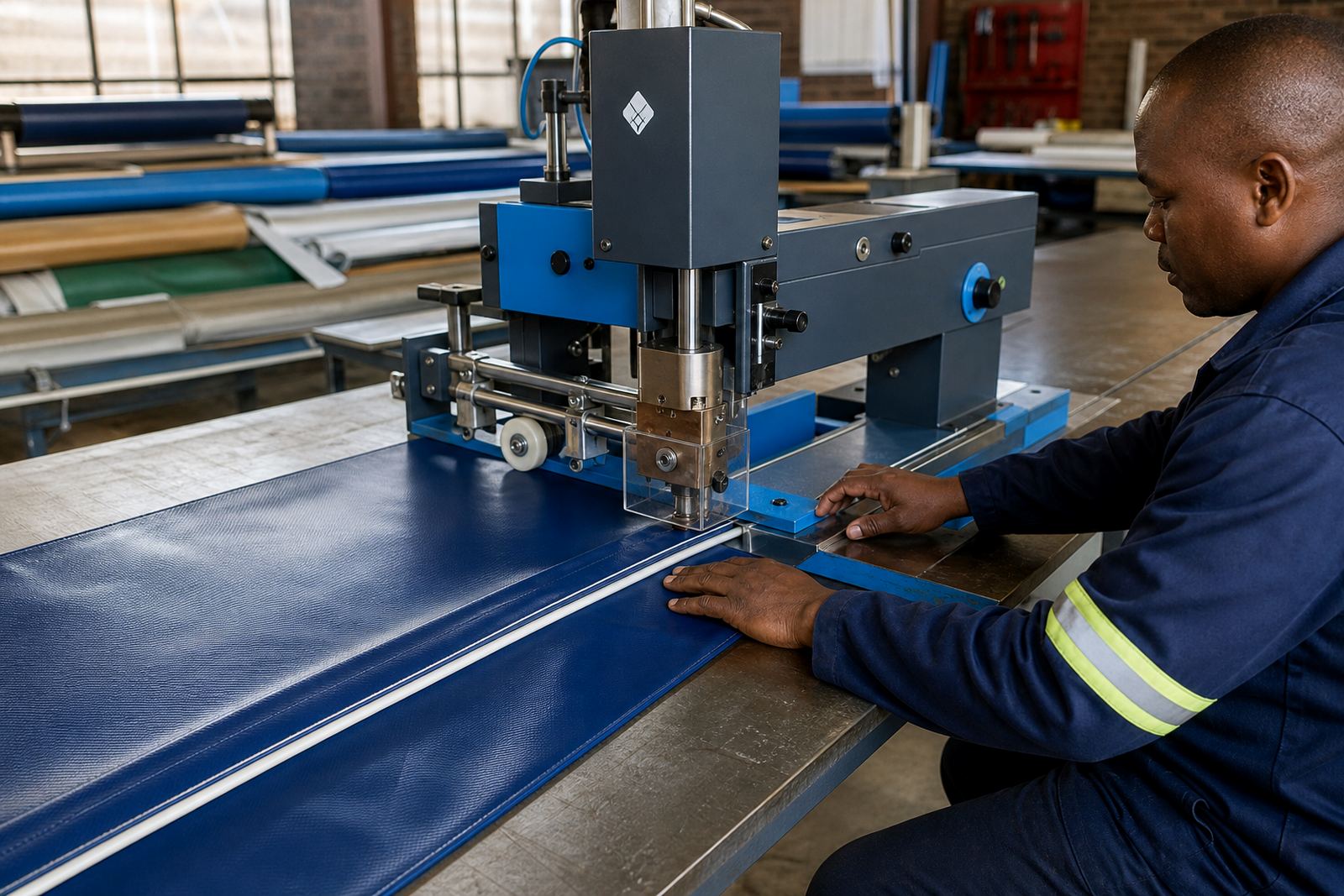
Pressure wheels sit behind the heating zone on hot-air and hot-wedge machines and hold the PVC-coated fabric together while the material is fused. On tarpaulin and banner work they help keep the seam flat, consistent and properly seated along the full weld path, whether the job is a straight run, a hem, a keder pocket or a reinforced edge. The wheel profile has to suit the seam width and the type of feed, otherwise the material can wander or mark.
In practical terms, a good wheel gives steady contact without crushing the face of the PVC. That matters on lighter banner stock as well as heavier truck side curtains, where the weld needs enough pressure to hold, but not so much that the coating gets scored. A wheel that is too narrow can leave the edges loose, while one that is too wide can interfere with the hot zone and create drag.
Sizes, profiles and the seam widths they suit
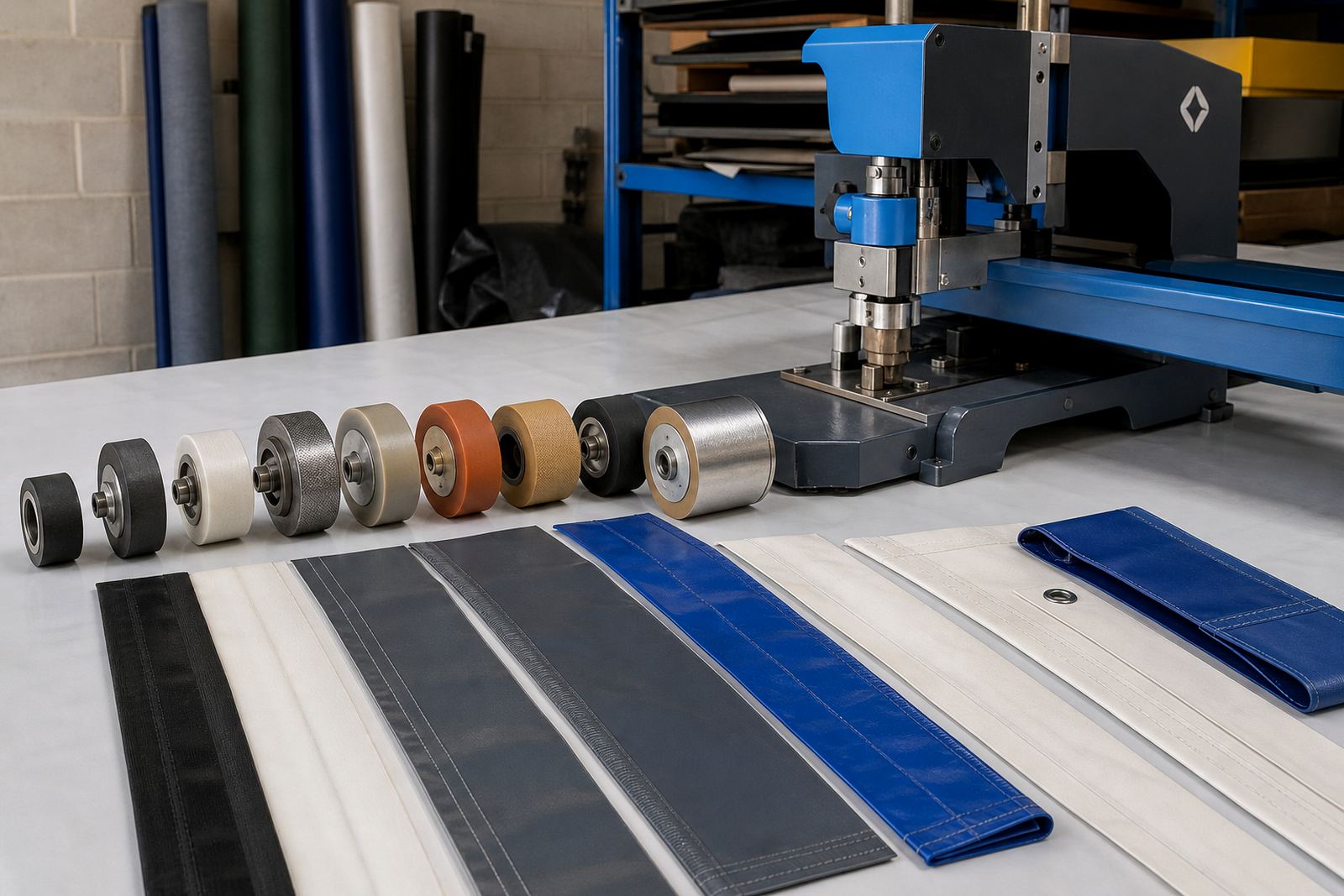
Pressure wheels are selected by diameter, width, bearing size and the working profile at the edge. Some are smooth faced for general seam work, while others are shaped to suit a narrower weld track or a wider lap. In the trade, the wheel choice normally follows the seam type being made on the machine, not just the machine model alone.
- Wheel diameter for travel speed and contact patch
- Wheel face width to suit the weld seam width
- Plain or profiled edge depending on the weld finish needed
- Bearing type and shaft bore for the machine carriage
- Hardness level matched to PVC-coated fabric thickness
- Single wheel or paired wheel arrangement for guided feeding
Typical setups are used for 20 mm, 30 mm, 40 mm and wider seam tracks, though the actual fit depends on the welding head and the carriage assembly. For some machines the wheel must also clear the heater body and the guide arm, so a close match is important. Measure the old wheel if it is still serviceable, and note the actual face width, not only the outside diameter.
Where pressure wheels earn their keep
These parts suit workshops making tarpaulins, tents, marquee skins, billboard banners and other PVC-coated assemblies that need repeatable weld quality. They are also used where hems, pockets and overlay seams must run straight over longer lengths with less operator correction. In places like Germiston, Johannesburg and Pretoria, they are common on production lines that handle frequent changeovers between light display material and heavier industrial covers.
Along the coast, especially Durban and Cape Town, the wheel surface and bearing condition become more important because humidity and fine dust can affect running smoothness and corrode neglected parts. If a wheel starts to chatter, glaze or leave shiny tracks, it can point to a bearing issue, worn face or poor alignment on the carriage. The machine may still weld, but the finish starts to show it.
- Tarpaulin side seams and repairs
- Banner hems and pole pockets
- Keder strips and bead edge work
- Reinforcement patches and overlap seams
- Eyelet area finishing after welding and punching
- Tent panels with long guided weld runs
Fitting and alignment on hot-air and hot-wedge machines
Pressure wheel fitting is not just a matter of sliding on a new part. The wheel must sit square to the weld path, track centrally and apply even pressure across the seam. If the bearing runs rough or the wheel face sits at an angle, the material can pull to one side and the weld line will wander. That makes seam testing harder and can create weak spots in the overlap.
When fitting, check the shaft size, spacer arrangement, locking hardware and wheel clearance against the heating shoe or wedge area. On some machines the wheel position needs minor adjustment after installation so the pressure lands on the right part of the seam. If the setup is being used with different seam widths, it can be worth confirming the correct wheel for each application instead of forcing one part to do everything. A wheel that is correct for a 40 mm lap may not behave well on a narrow hem.
Care that keeps the wheel running true
Pressure wheels work best when they are kept clean, checked for play and replaced before the bearing becomes noisy. Weld dust, adhesive residue and small bits of PVC can build up around the hub and guide surfaces, so regular wipe-downs are worth doing. In a busy shop, the wheel should be inspected during preventive servicing along with the guide rollers and the carriage alignment.
- Clean off softened PVC residue after shift change
- Check the wheel face for flat spots or scoring
- Spin the bearing by hand for roughness or drag
- Look for play in the shaft or retaining hardware
- Keep replacement wheels stored dry and boxed
- Replace worn wheels before seam quality starts dropping
Good care also helps operator safety. A wheel running badly can pull the material and make hands work closer to the hot zone than they should. That is avoidable with proper servicing and a tidy feed path, plus correct training on seam control and machine handling.
Details to confirm before ordering replacements
To match the right pressure wheel, confirm the machine type, the seam application and the physical dimensions of the old part. If the old wheel is worn, measure the axle bore and the overall width from the soundest points, not the damaged edge. If you are replacing more than one wheel on the same line, it helps to match the full set so the pressure stays even across the weld path.
- Machine type and welding method used
- Outside diameter of the wheel
- Face width and edge profile
- Bore size, bearing size and shaft fit
- Seam width being run most often
- Whether the wheel is for left hand or right hand position
For shops handling tarpaulins, banners and tent fabric across South Africa, the wrong wheel can cost more than the part itself because it affects seam testing, rework and machine time. If you are in Germiston, Boksburg, Benoni, Johannesburg, Pretoria, Durban, Cape Town or Bloemfontein, give the machine details, the seam type and a clear measurement so the replacement fits the job properly the first time around.
Key facts
| Product type | Replacement pressure wheel for hot-air and hot-wedge PVC welding machines |
|---|---|
| Use | Pressure retention on welded seams, hems, keder and overlap joints |
| Typical materials | PVC-coated tarpaulins, banners, tent panels and curtain fabrics |
| Wheel options | Smooth faced, profiled edge, different diameters and face widths |
| Fitment data | Bore size, shaft diameter, bearing size, face width and outside diameter |
| Care | Clean regularly, inspect bearing play, replace on wear or tracking faults |