Fold control before the weld starts
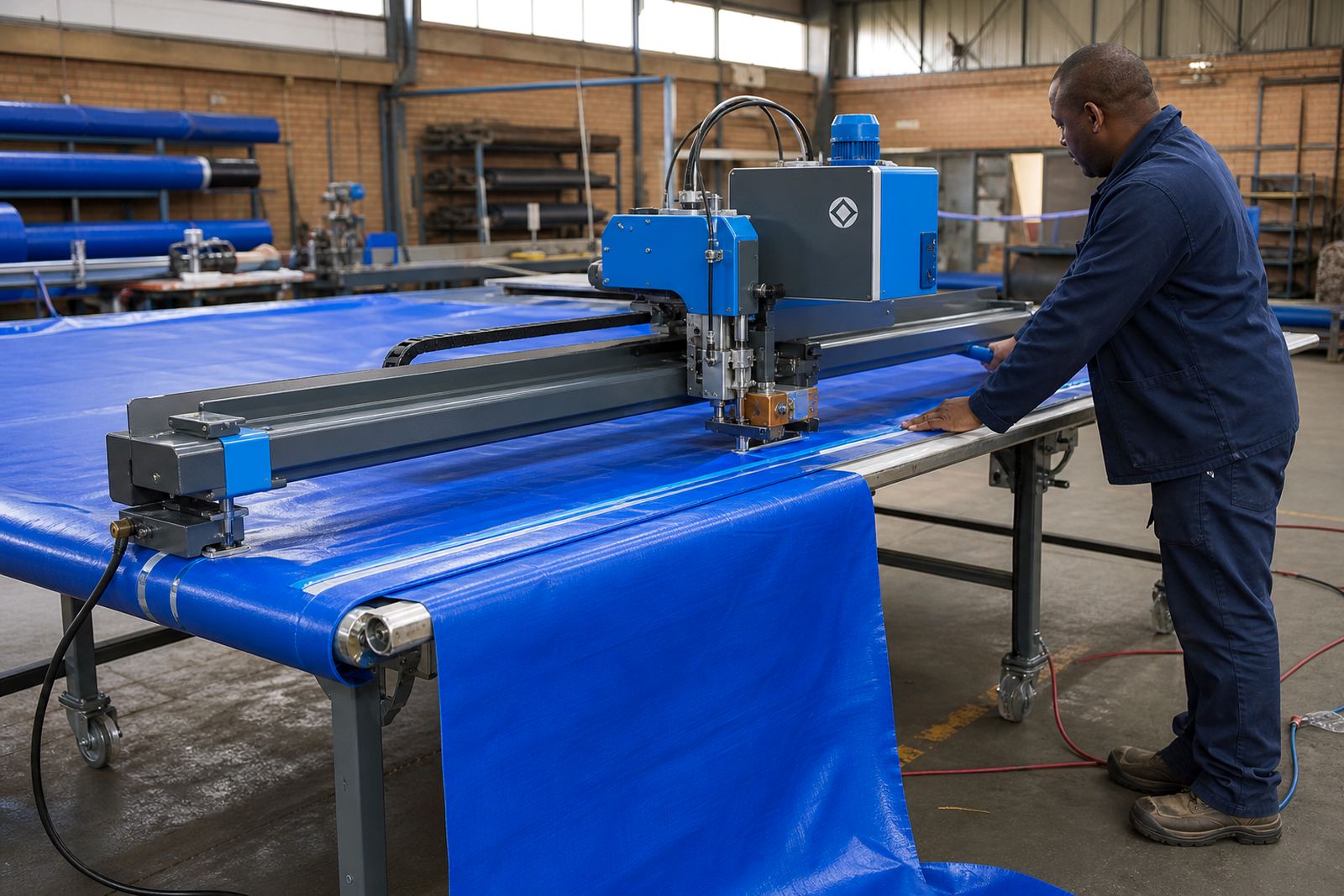
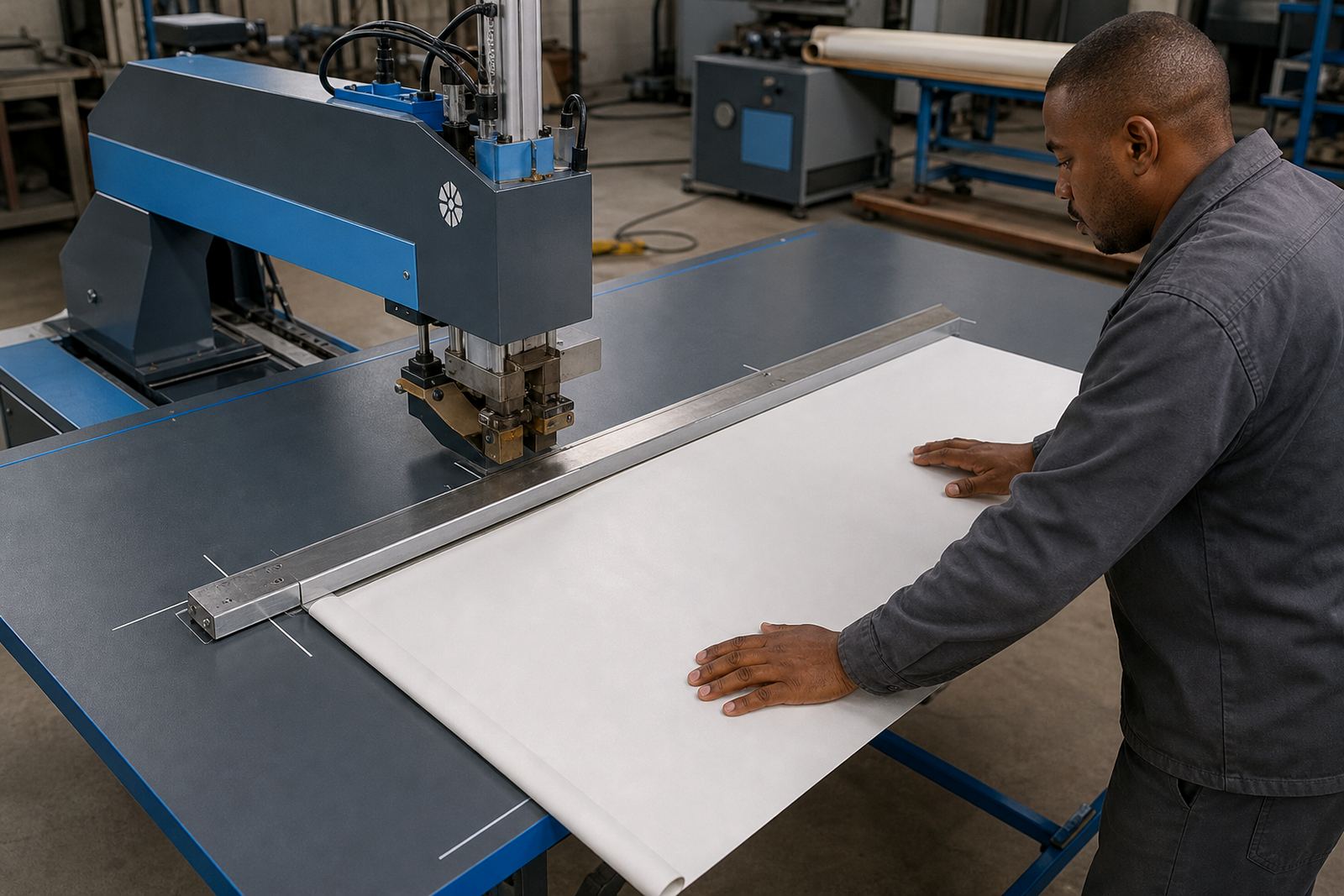
The hemming bar is a fitting used with high-frequency and hot-air or hot-wedge PVC welders to guide the material into a repeatable fold. For banner work, truck tarpaulins, tent valances and event skins, it helps keep the edge flat so the weld lands in the same place across the full length of the job. That matters when you are working on long seams, corner returns and hems that must line up with eyelets or keder.
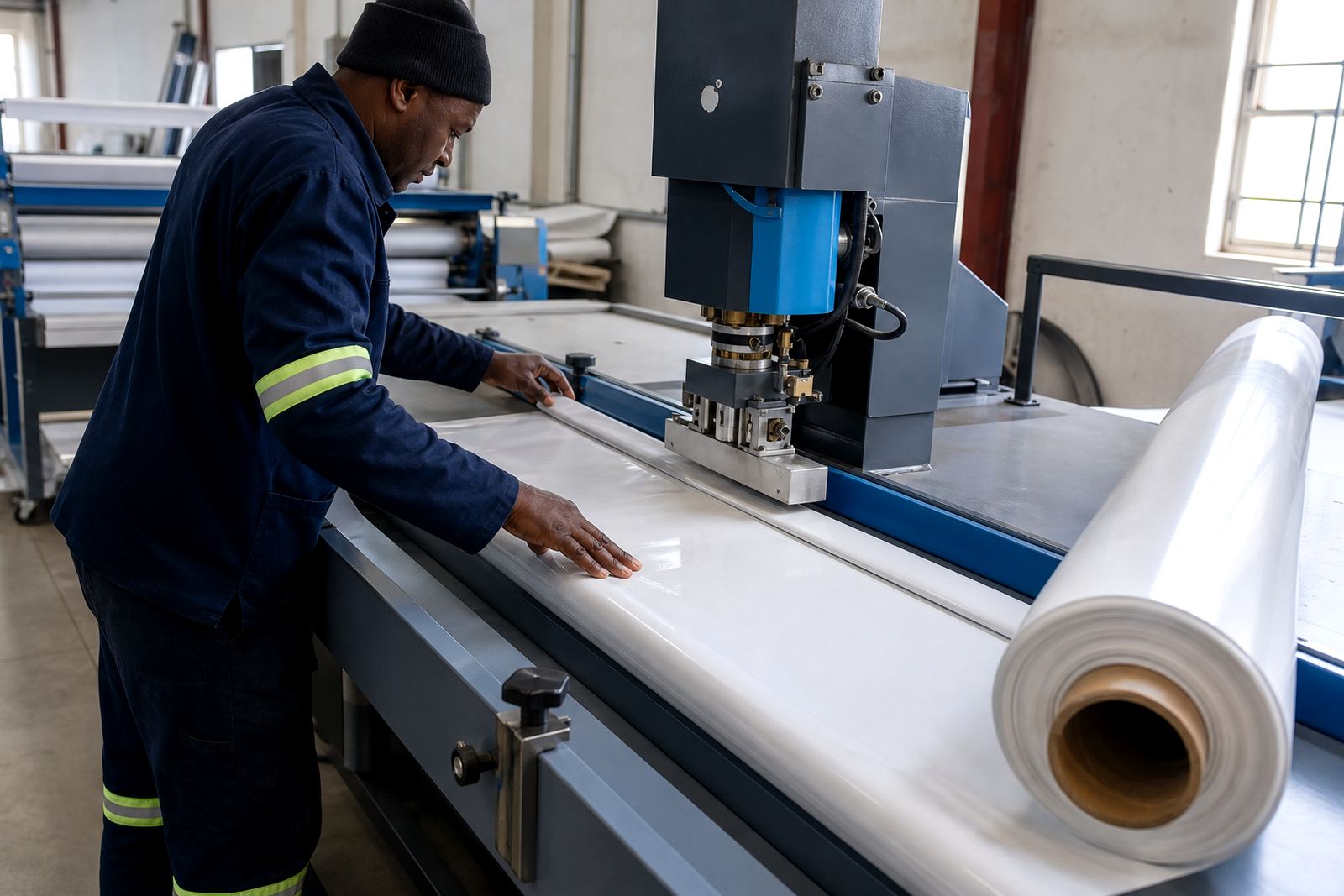
In practical use, the bar supports the fabric edge while the operator feeds it into the machine or hand weld set. It is suited to PVC-coated polyester and similar welded fabrics used in signage, shelter and transport covers. The result is less wandering at the edge, fewer twisted folds and a neater finish where the hem is folded twice or folded over reinforcement tape.
Sizes and build choices for workshop use
Hemming bars are normally selected to suit the working width of the welder, the table setup and the width of hem you want to form. A narrow bar is useful for lighter banners and small panel work, while a wider bar gives more support on heavier tarpaulins and tent panels. On larger production lines, the bar may be fitted with guides that help keep the edge square as the operator feeds material through.
- Common working lengths: 1.2 m, 1.5 m and 2.0 m
- Typical fold widths: 25 mm, 38 mm, 50 mm and 75 mm
- Material options: aluminium, steel or hard-wearing composite parts
- Guide styles: fixed guide, adjustable guide or roller-assisted guide
- Fitment types: clamp-on, bolt-on or machine-mounted brackets
For shops in Germiston, Boksburg and Benoni that run mixed banner and tarpaulin jobs, an adjustable setup is often the most practical because one machine may handle light display work one hour and a heavy truck curtain the next.
Where it suits in the trade
This accessory suits workshops that make PVC banners, gazebos, tent walls, side curtains, truck covers, valance strips and reinforced edge sections. It also works well where hems must carry eyelets, rope pockets or keder strips. On coastal work in Durban and Cape Town, operators often want a cleaner hem because humidity can make handled fabric feel softer and more difficult to keep square during feeding.
In signage and display work, a straight hem keeps the banner edge neat around eyelets and helps the finished piece sit flatter when hung. In event and shelter work, it supports repeatable folds on long panels so the seam line stays even from end to end. For heavier industrial tarpaulins, the bar helps the fold hold its line before the weld head or hot-air nozzle closes the seam.
- Banner hems for suspension and finishing strips
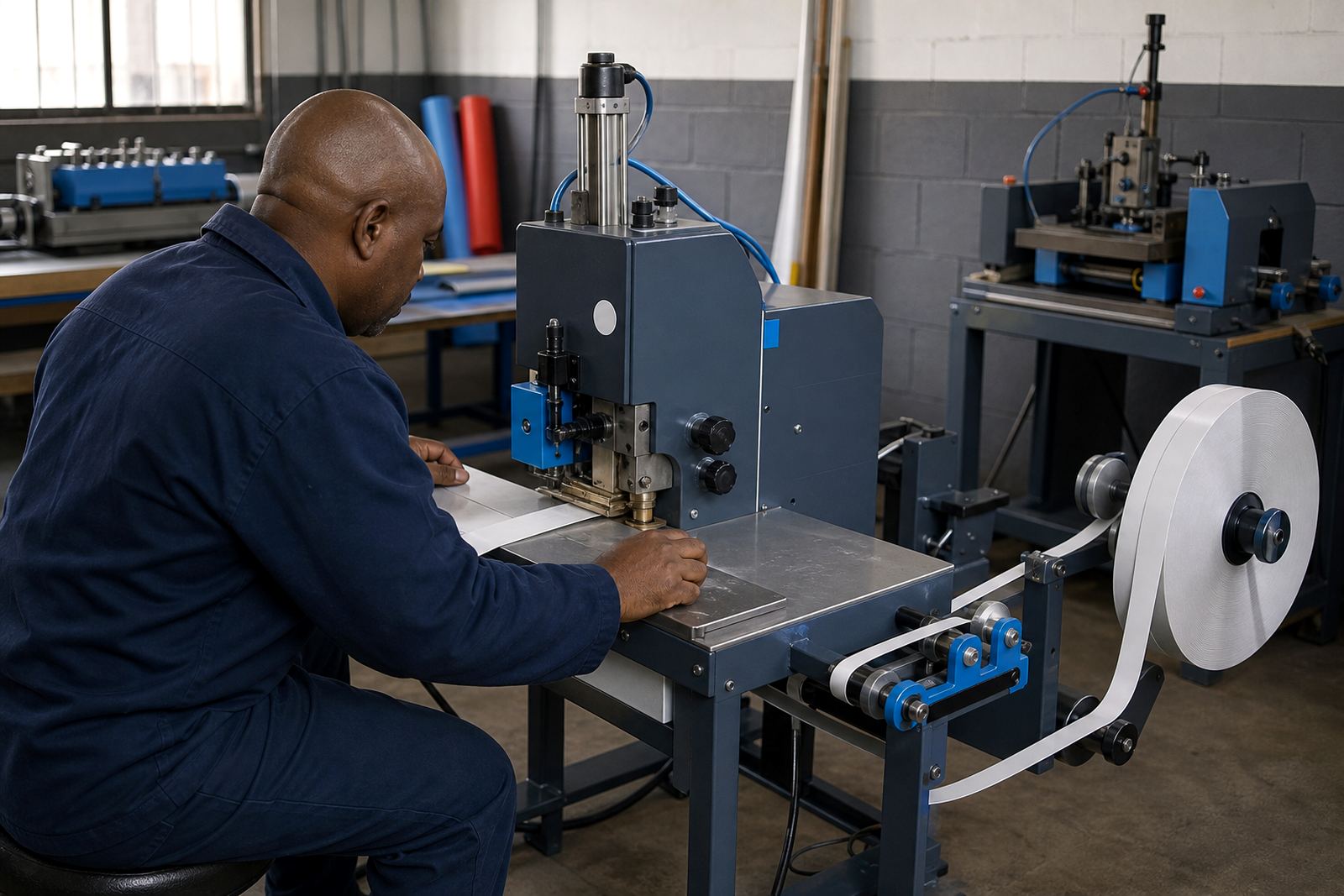
- Tarpaulin edge reinforcement and double folds
- Keder pocket formation for track-in installations
- Eyelet strips where spacing must stay even
- Tent panels and side walls with long straight runs
Fitting it to a welder or hand station
Fitting depends on the machine frame, the available table space and the way material is fed. On a production welder, the bar should sit square to the feed path so the operator can keep constant pressure on the fold. On a smaller hand station, it may be used as a guide rail for edge folding before the hot-air nozzle or wedge head seals the seam. The bar should never force the fabric, it should support it so the material flows naturally into the weld zone.
When installing, check the mounting points, the working height and the clearance needed for thicker hems or reinforcement strips. If the workshop changes between light banner stock and heavier coated fabric, an adjustable bar with quick setting positions is useful. A proper fit also reduces the chance of the edge drifting, which can lead to uneven hems, curled edges or a keder pocket that runs off line.
Care, cleaning and day to day handling
Keep the bar clean so dust, adhesive residue and fine PVC scraps do not mark the fabric or affect fold accuracy. Wipe it with a soft cloth and a suitable workshop cleaner, then check for burrs, loose fasteners and worn guide surfaces. If the bar uses rollers or sliding parts, a light service check helps prevent sticking during long production runs.
In busy shops, the accessory should be checked whenever operators change from one fabric thickness to another. A bar that is still aligned for a thin banner may not guide a heavy tarpaulin cleanly. If the fold starts wandering, inspect the mounting, the straightness of the guide and the condition of the contact edge before blaming the welder setting.
- Remove dust and offcuts after each shift
- Check screws, clamps and brackets for movement
- Inspect guide faces for grooves or dents
- Keep rollers free of adhesive build-up
- Store spare parts in a dry area away from sharp offcuts
What to confirm before ordering
Before ordering a hemming bar, confirm the machine type, the fold width you need and the fabric weights you handle most often. It also helps to note whether the bar is for a high-frequency welder, a hot-air setup or a hot-wedge line. The mounting pattern, bed width and working height must match the machine so the accessory sits correctly and does not interfere with the weld head or feed rollers.
Useful order details include whether the job is mostly banner, tarpaulin or tent work, whether you need a fixed or adjustable guide, and whether the shop uses eyelet insertion or keder finishing after the hem is made. If you are replacing a worn unit, a photo of the existing mount and a note on the current fold size can save a lot of back-and-forth at the workshop.
- Welder type and machine model details
- Required hem width and fold style
- Material thickness and fabric type
- Mounting style and available table width
- Need for eyelet, keder or reinforcement compatibility
Support for shops across South Africa
PVCWelder supplies and services welding equipment and accessories from Germiston, Ekurhuleni to workshop teams in Johannesburg, Pretoria, Durban, Cape Town and Bloemfontein. Support also reaches Boksburg and Benoni for callouts, servicing and parts supply. The team includes Mandla Mnisi, Alicia van der Merwe, Sibusiso Abrahams, Johan Mkhabela, Thandi Mokoka and Lebo Motsepe, covering installation, training, fault finding, tooling alignment and preventive servicing for tarpaulin and banner production lines.
For Hemming Bar enquiries, clients use the enquiry form on the contact page. That keeps the details together for the right machine, the right fold width and the right fitting arrangement for the workshop setup.
Key facts
| Product | Hemming bar accessory for PVC welding work |
|---|---|
| Use | Fold control for hems, keder pockets and reinforced edges |
| Compatible work | PVC-coated fabrics for banners, tarpaulins and tent panels |
| Common sizes | 1.2 m, 1.5 m and 2.0 m working lengths |
| Fold widths | 25 mm, 38 mm, 50 mm and 75 mm |
| Mounting options | Clamp-on, bolt-on or machine-mounted brackets |