Straight-line welding for tarpaulin work
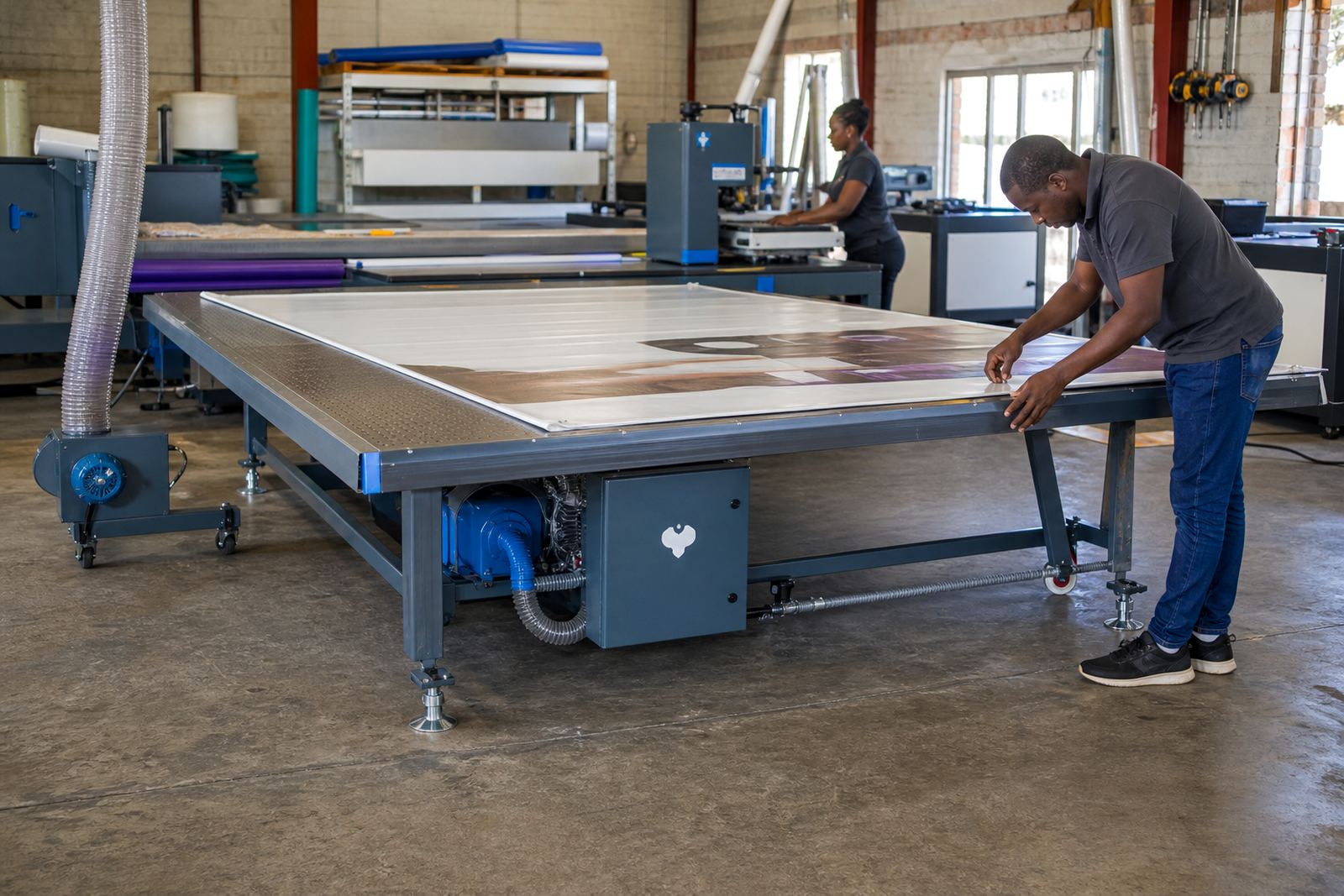
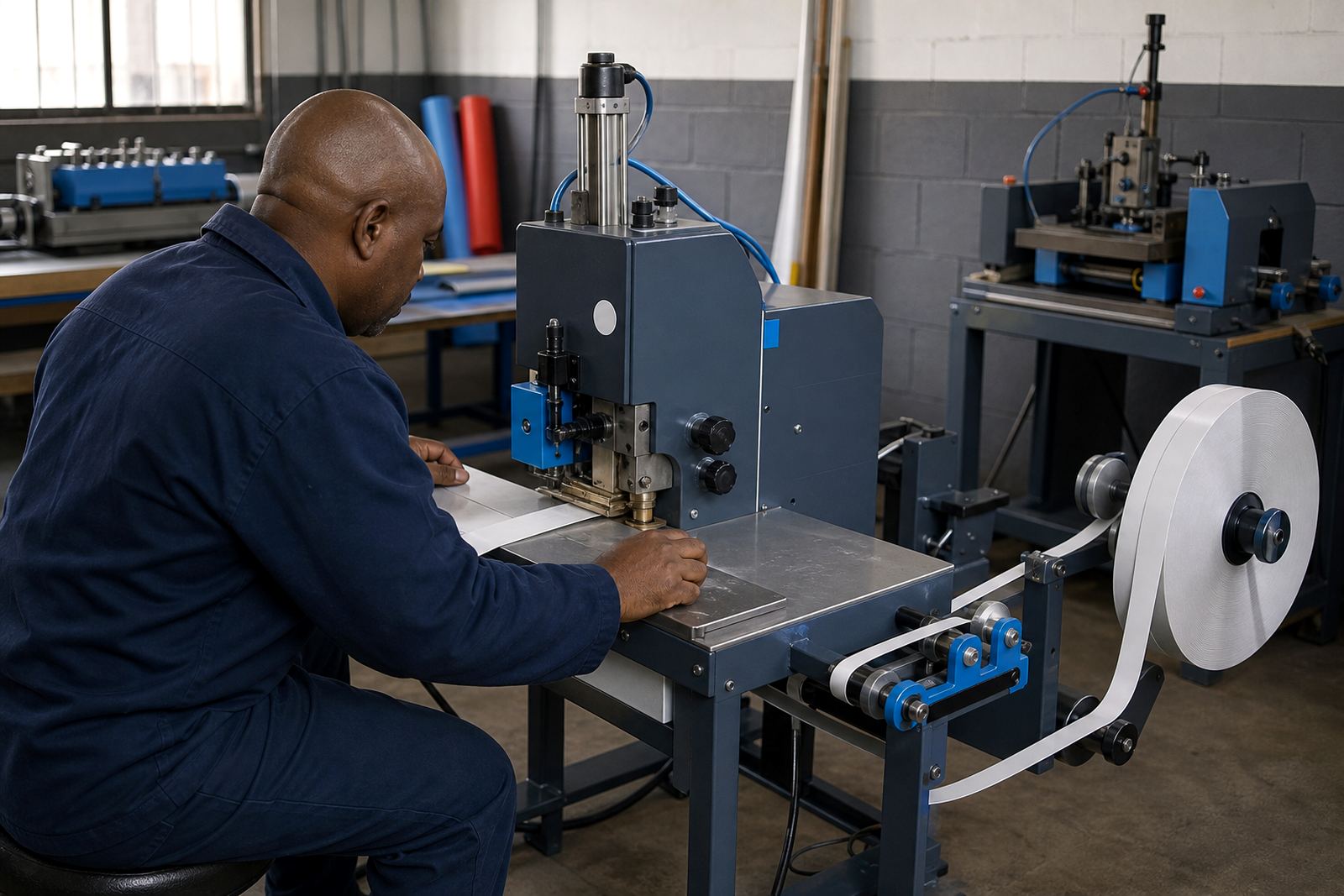
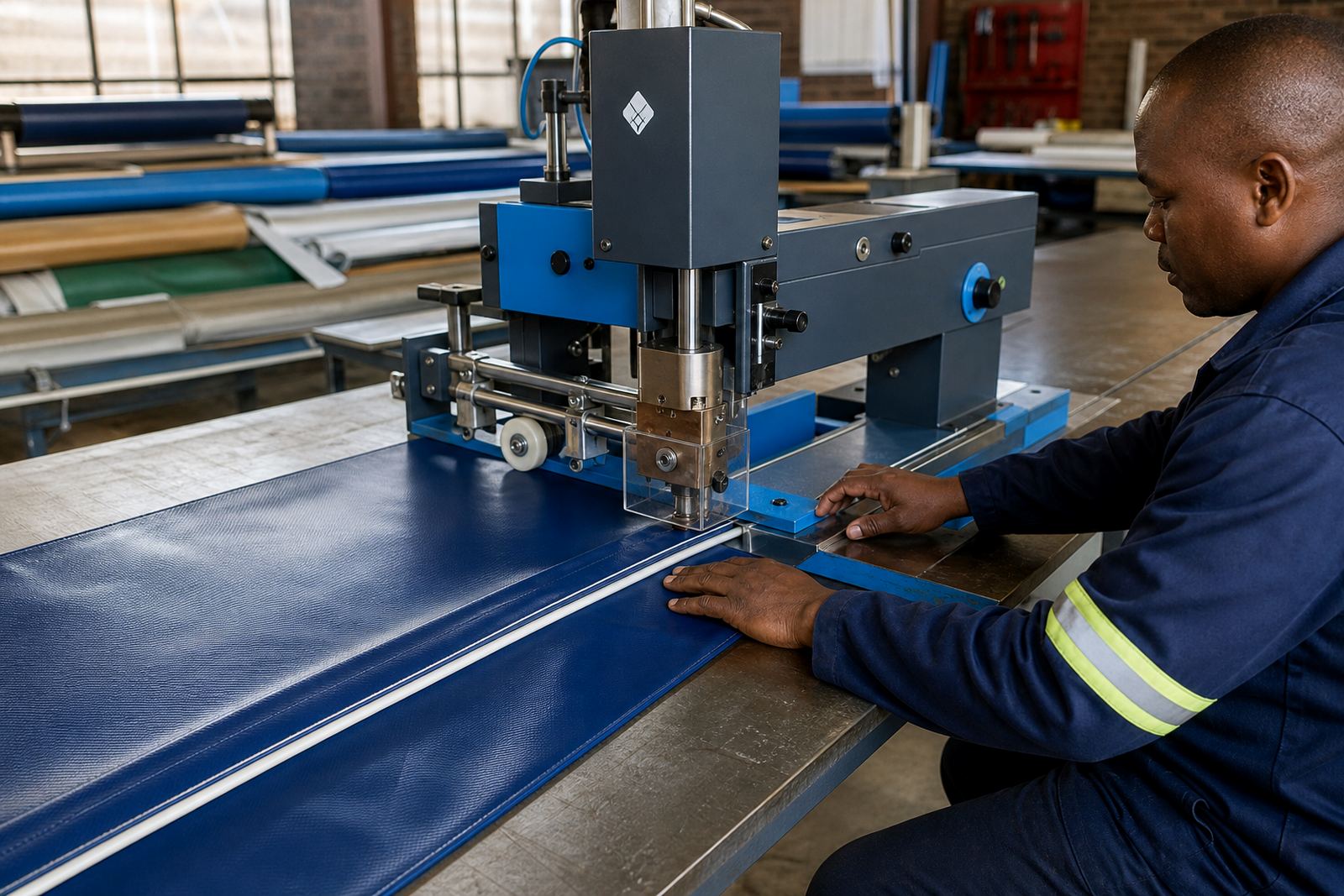
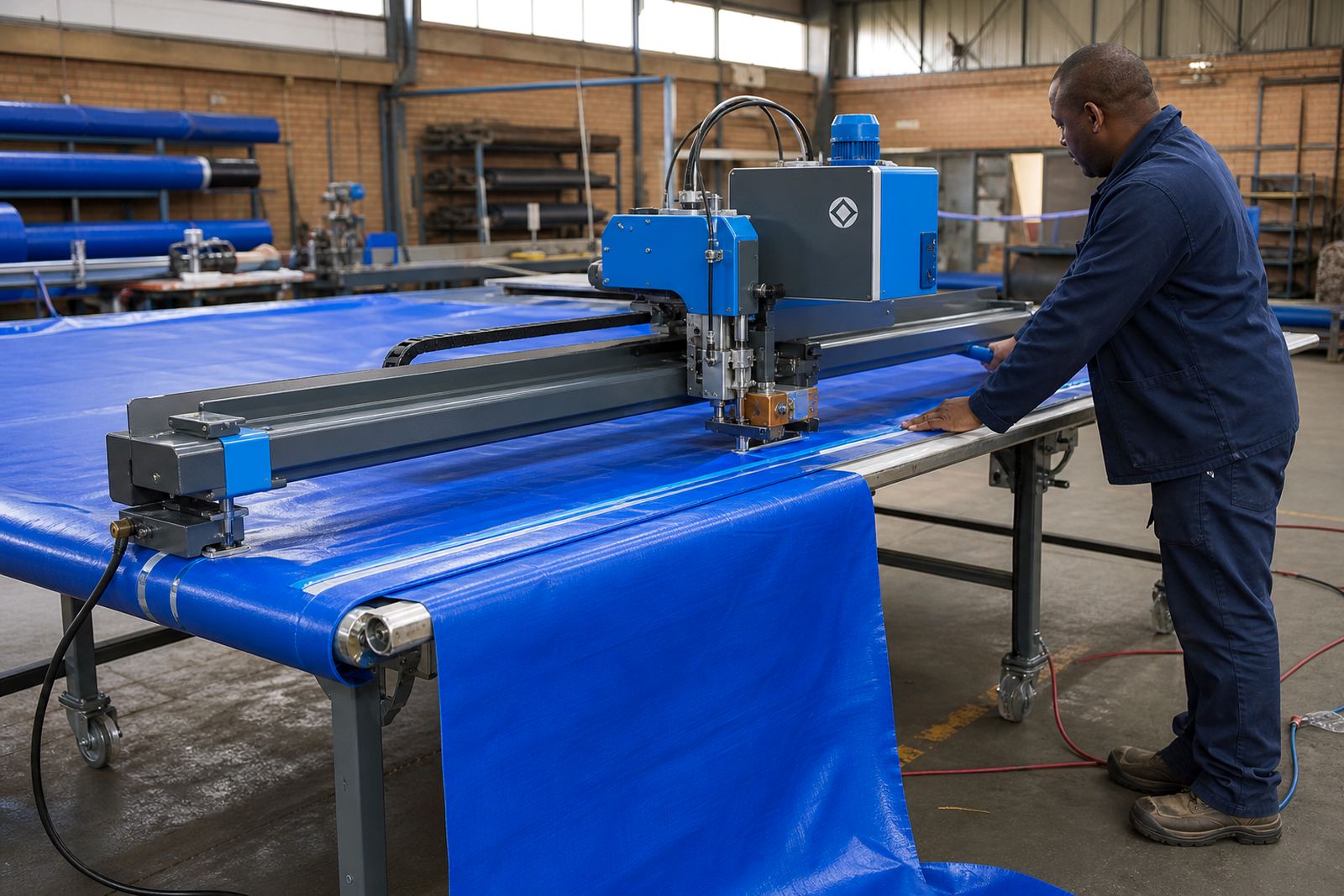
This machine is built for long, straight runs on PVC-coated fabrics, especially where the seam must stay consistent over several metres. It suits hem folds, overlap seams, banner finishing, keder strips and reinforced edge work on made-to-size covers, screens and outdoor display goods.
Hot-air welding uses controlled heat and pressure to soften the coating and join the layers without the uneven bead that can happen with rushed hand work. In a busy tarpaulin shop that makes truck covers, marquee sidewalls or event banners, the long bed gives the operator a stable work area and helps keep the weld line true from start to finish.
For coastal work in Durban or Cape Town, this is especially useful on PVC-coated fabric that must stay neat around hems and tension points, because poor seam travel can shorten service life and lead to rework.
Machine layouts and working widths
Long-bed hot-air welders are commonly set up in different working lengths to match the size of the material flow. Typical options include compact benches for smaller banner jobs and longer beds for full sheet work, large tarpaulin panels and extended edge sealing. The right length depends on your shop space, the type of material you handle, and whether two operators work on the same line.
- Working bed lengths commonly suited to straight seams and hems from shorter shop runs through to long-sheet handling
- Adjustable heat, speed and pressure controls for PVC-coated fabric thickness changes
- Guide systems for hem folding, overlap alignment and repeat seam placement
- Optional edge guides for keder application, banner pockets and reinforced hems
- Compatible tooling for eyelet prep areas and seam test samples before full production
On larger jobs, the value lies in repeatability. Once the temperature, air flow and feed are set for the material in hand, the weld line can be held to a clean, professional finish across a full panel.
Best fits in the workshop
This type of welder suits businesses that do straight-run fabrication rather than short patch repairs alone. It is a practical fit for tarpaulin makers, banner finishers, tent fabricators, sign shops and canvas workers handling PVC-coated material every day. If your output includes hems, sleeves, edge seals, lap seams and fixed-size sheets, a long-bed unit can cut down on handling errors and improve output consistency.
It is also useful where workshop staff must work to municipal or site-size requirements, such as large covers for transport and event work that need a clean edge and repeatable dimensions. In busy Gauteng workshops, the machine often forms part of a line that includes cutting, welding, eyeleting and final inspection.
- Tarpaulin sheet hems and overlaps
- Banner edges and pocket folds
- Keder strips for track-fed installations
- Sidewall panels for tents and temporary structures
- Reinforcement strips around stress points and corner areas
Fitting, setup and on-site placement
A long-bed hot-air welder needs proper set-up so the feed stays straight and the heating head sits square to the material path. Installation usually includes positioning, levelling, electrical connection, test running, and setting the heat and travel speed for the common material weights used in the shop. If the unit forms part of a wider finishing line, the bed height and infeed position should match the cutting table and any eyelet or trimming station nearby.
Good placement matters in South African workshops where floor space is tight and materials move in long lengths. The operator must have enough clear room at the front and back of the machine to handle heavy sheets without dragging the weld line out of alignment. For busy Germiston and Ekurhuleni operations, a proper site check can save a lot of wasted material later.
When a job uses a particular hem or keder profile, the tooling, guide rails and pressure rollers must be matched to that profile before production begins. That is where machine installation, commissioning and tooling alignment become part of the job, not an afterthought.
Care that keeps the seam line steady
Hot-air welders work best when the air path, rollers and guides are kept clean. PVC dust, coating residue and trimmed offcuts can collect around the feed area and affect seam finish if they are left to build up. Regular servicing should check the heating element, air delivery, rollers, belt path and control settings, especially if the machine is used daily on long panels.
In coastal areas the workshop should also watch for damp storage conditions and corrosion on exposed parts. A clean, dry storage area helps protect electrical components and moving parts. Worn rollers, damaged guides and loose tooling can all show up as a wavy hem or a weak edge, so preventive servicing is worth more than waiting for a breakdown.
- Keep the feed path clear of scraps and adhesive residue
- Check roller wear and alignment before long production runs
- Test seam quality on offcuts after any heat or speed adjustment
- Inspect cables, switches and safety guards during routine servicing
- Store spare tooling and small parts in a dry, labelled place
Ordering details worth confirming first
Before placing an order, confirm the working width you need, the material thickness range, the seam style you produce most often, and whether the machine must handle hems, overlap seams, keder or reinforced edges. It also helps to note your workshop voltage, available floor space, and whether the unit will sit beside a cutter, eyelet press or other finishing equipment.
If you are comparing machines for Johannesburg, Pretoria or further afield, ask for the exact bed length, feed arrangement, temperature range and any tooling supplied with the unit. For hot-air work on PVC-coated fabric, the small details matter: guide width, roller profile, heat stability and the way the material enters the seam all affect the final result.
Clients can reach PVCWelder through the enquiry form on the contact page for machine supply, servicing, parts, operator training and site callouts across South Africa. The Germiston support base also works with shops in Boksburg, Benoni and surrounding Ekurhuleni areas when fitting, testing or fault finding is needed.
Key facts
| Machine type | Long-bed hot-air welder for PVC-coated fabrics |
|---|---|
| Main use | Straight seams, hems, banner edges and overlap welds |
| Working material | Tarpaulin sheets, banners, tent panels and similar PVC-coated fabric |
| Controls | Heat, speed and pressure adjustment |
| Common options | Guide rails, hem tooling, keder tooling and edge support |
| Service support | Installation, commissioning, training, servicing and parts supply |