Keder Bonds That Feed Cleanly Into Track
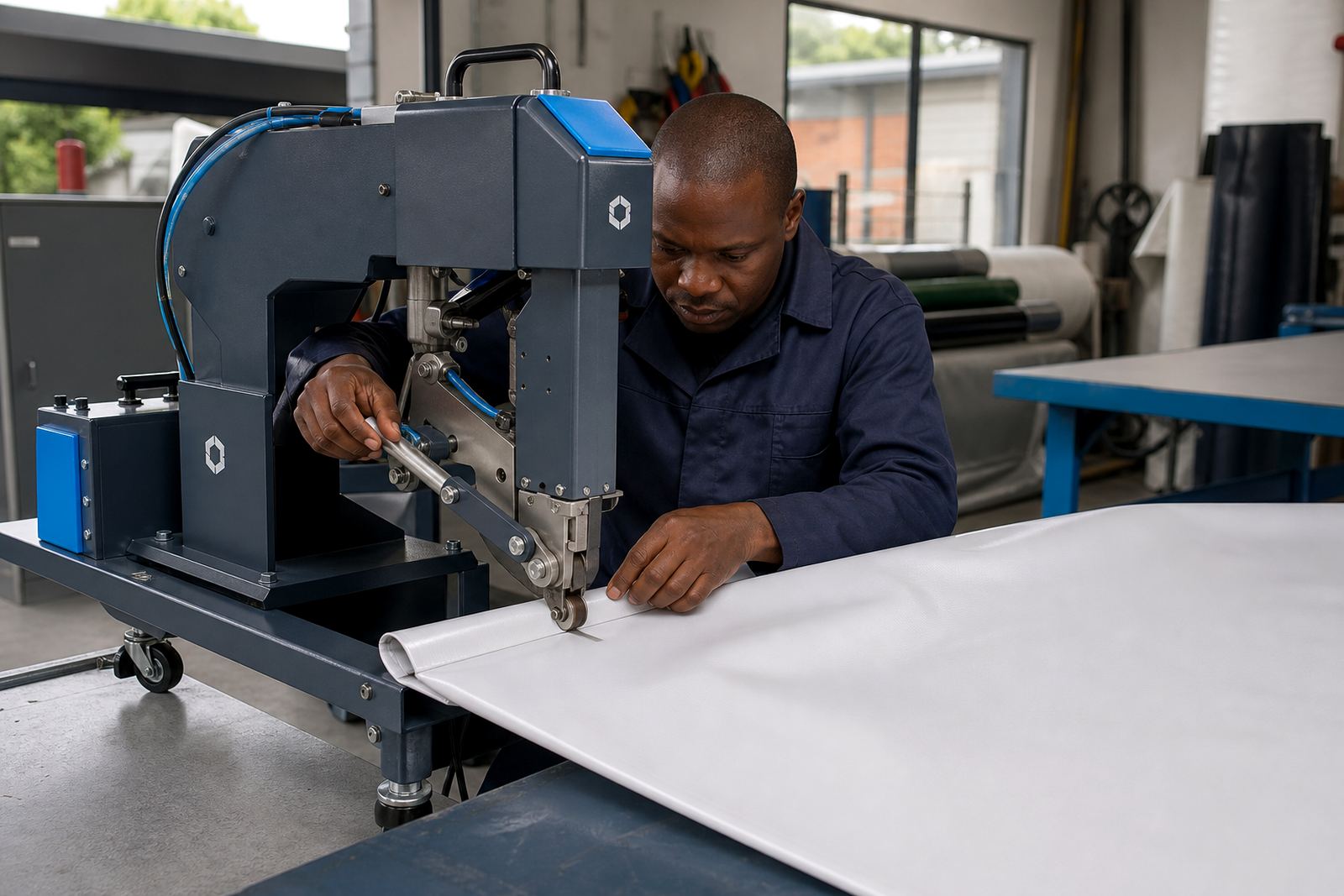
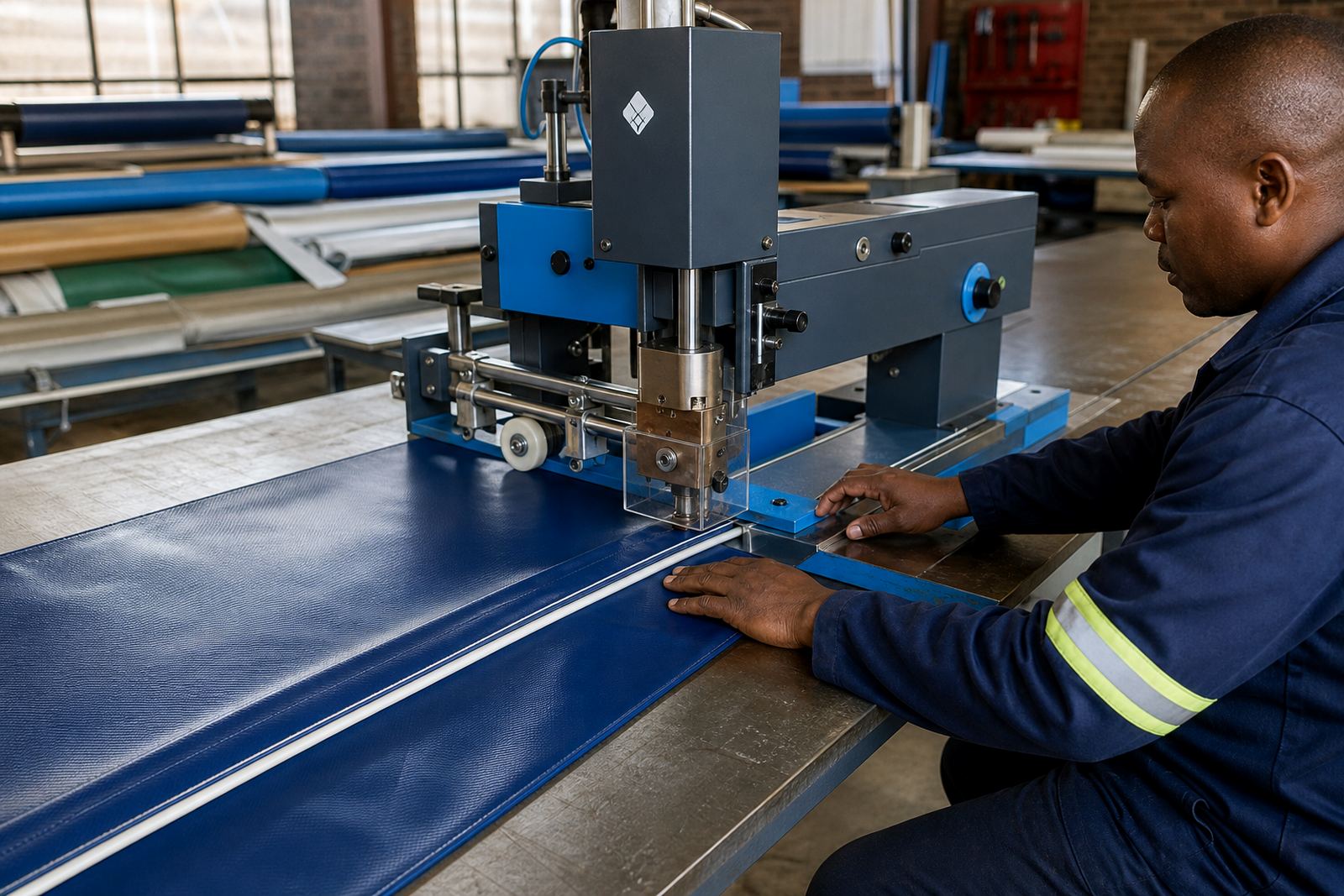
This unit is made for welding keder to PVC coated fabrics used in tents, banners and tensioned graphics. The welded edge forms a neat bead or rope edge that runs into aluminium or steel track, giving a straight pull and a tidy finish where the fabric must sit under constant tension.
For shops working with signage, event walls, marquees and outdoor displays, the value is in repeatable seam control. The weld has to hold through handling, wind load and repeated installation, and the keder needs to sit evenly along the full length so the panel feeds without snags.
- Suitable for PVC coated polyester and similar coated fabrics
- Used for keder rope, keder bead and track edge work
- Supports long straight runs and shaped panels
- Helps produce a uniform seam width for consistent insertion
Seam Forms, Hems and Edge Work On One Line
A keder welding unit is often used alongside other PVC fabrication tasks. In the same workshop it may work next to hot-air or hot-wedge equipment for hems, overlap seams and repair work on tarpaulins and display covers. The keder edge itself needs accurate placement before the weld, especially where a corner or curve must be kept true.
When the job includes eyelets, webbing or reinforcement strips, the operator still needs a machine that keeps the bead position steady and the fabric flat. Good edge control reduces puckering and helps the finished panel sit properly once it is installed on site.
- Works with straight runs, mitred corners and shaped returns
- Useful for reinforced hems beside keder edges
- Can be paired with eyelet and finishing stations
- Supports repeat work for production runs and repairs
Where Keder Welding Fits In South African Fabrication Shops
This type of machine suits tarpaulin makers, banner makers and tent fabricators in Germiston, Johannesburg, Pretoria, Durban, Cape Town and Bloemfontein. It is common in workshops producing sail rails, side curtains, stage surrounds, tent valances and tensioned graphics where the edge must lock into a profile rather than hang loose.
Coastal humidity in Durban and Cape Town can affect stored fabric and finishing, so clean material handling matters. In inland areas such as Pretoria, Johannesburg and Bloemfontein, the same machine is often used on larger runs where the bead must remain consistent across wide panels and multiple repeat cuts.
- Tensioned graphics and event branding
- Marquees, tents and shade structures
- Tarpaulin side walls and lorry curtain work
- Track-fed display systems and outdoor enclosures
Machine Sizes And Build Options To Confirm
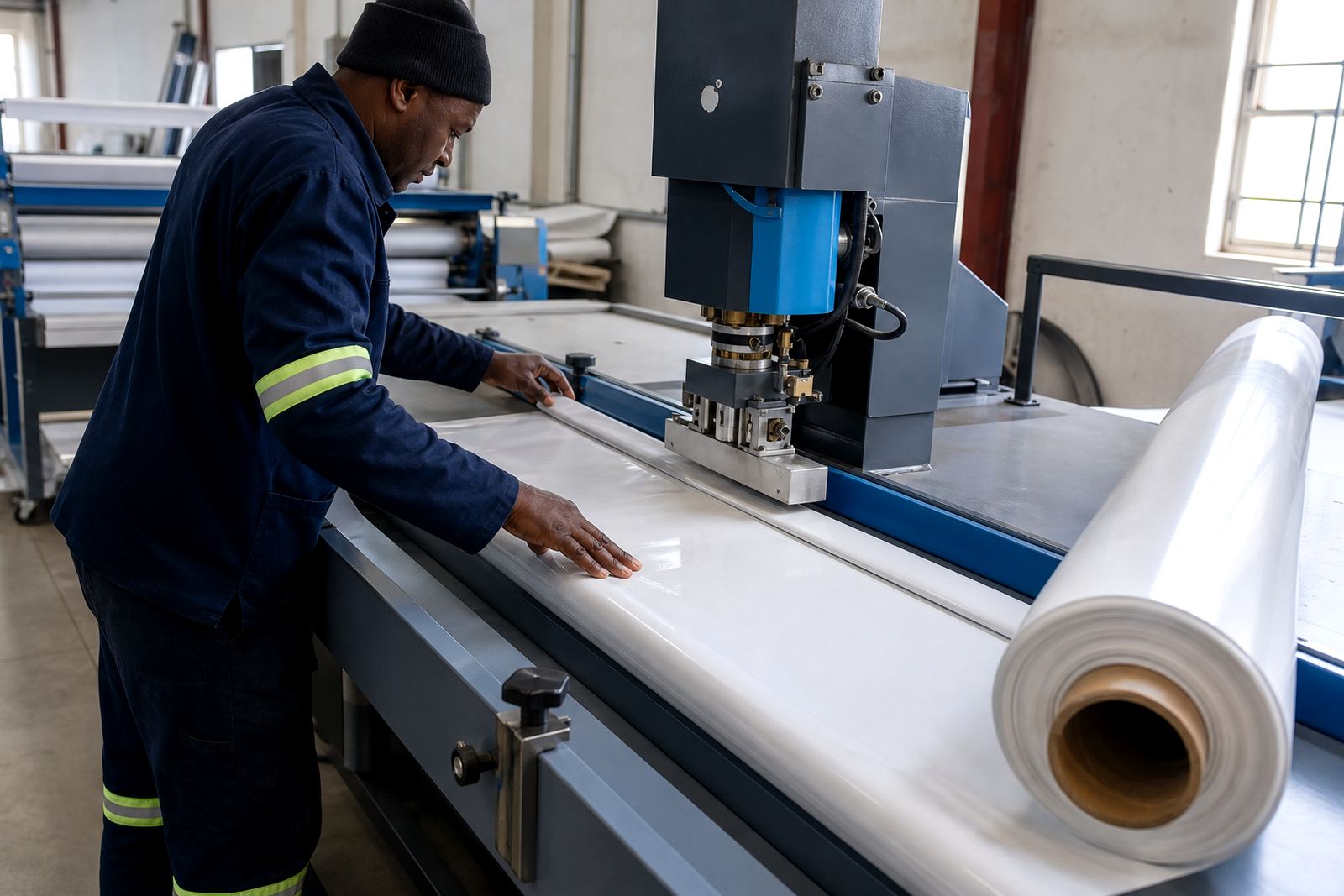
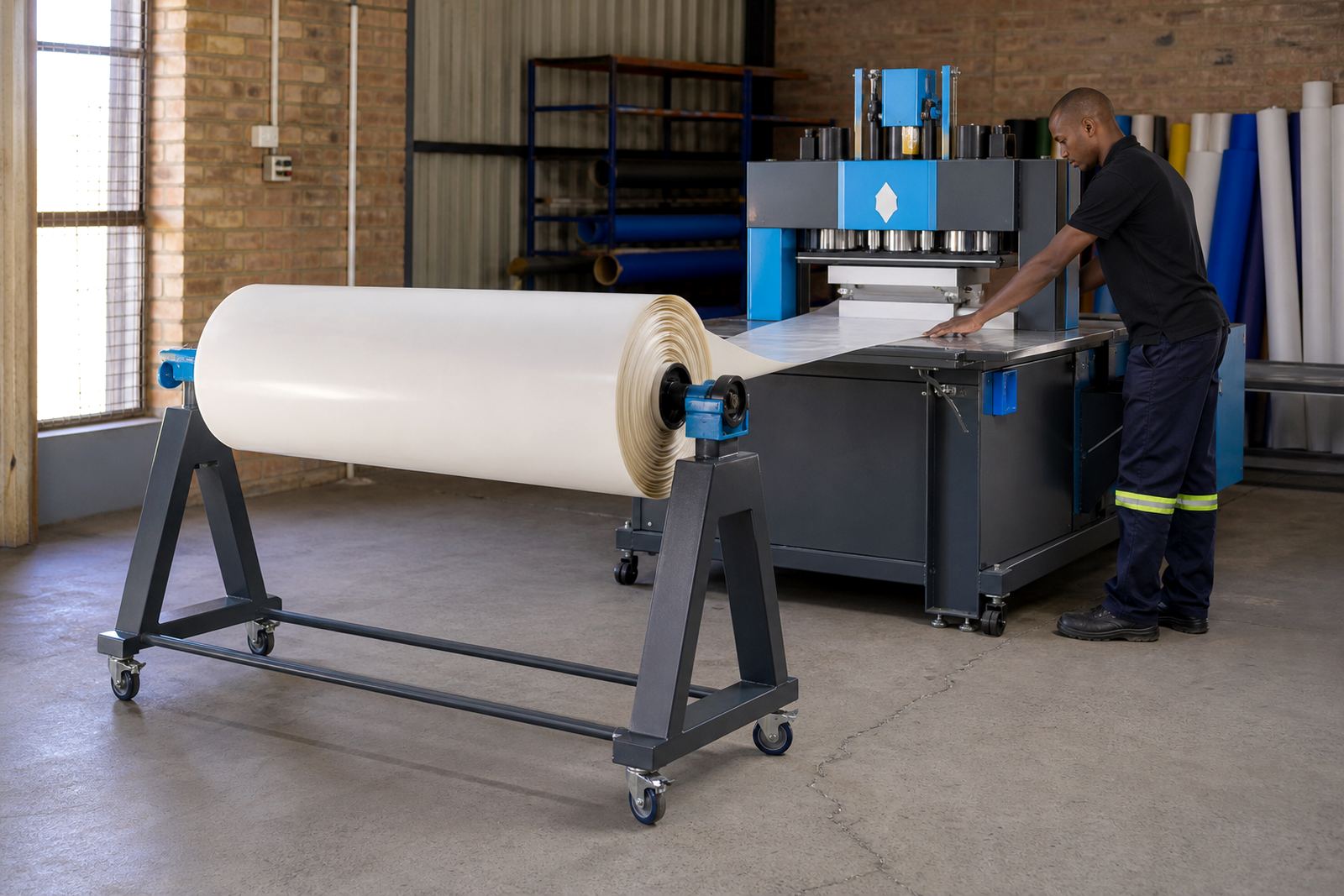
These units are specified to match the width of the bead, the fabric thickness and the production volume. Some shops want a compact bench machine for shorter runs, while others need a wider machine bed and more guiding support for long panels. The right choice depends on how the keder is inserted, the weld length and the amount of daily output.
Where the fabric is heavy or the bead is thick, the machine must keep pressure even along the weld zone. On lighter banner work, the main need is line control so the seam stays straight without distorting the coated face. The following details should be checked before ordering.
- Keder diameter or profile size
- Working width and throat depth
- Fabric thickness and coating type
- Power supply required on site
- Guide style and feed arrangement
- Table or stand dimensions
Installation, Setup And Operator Safety
A keder welding unit needs correct placement, level support and sensible operator spacing. The machine must be set up so the fabric feeds square and the bead enters at the correct angle, with enough room for rolls, cut panels and finished stock. If the unit uses electric heating or drive systems, the supply must suit the machine rating and the workshop layout.
Operator safety matters on every line. Hands should stay clear of heated zones and moving rollers, and trimming tools must be used with care around fresh seams. Good lighting, tidy cable routing and routine checks on guards, controls and pressure settings help keep the station practical and safe.
- Level installation surface and stable support
- Correct feed path for straight bead alignment
- Safe access to controls, cutters and rollers
- Training on weld settings and feed handling
Care, Servicing And Parts That Keep Output Steady
Like all welding equipment, a keder machine works better when rollers, guides and pressure parts are kept clean. PVC dust, adhesive residue and fabric fibres can affect seam quality if they build up around the feed path. Regular inspection helps catch wear before it shows up as uneven insertion or a wandering seam.
Preventive servicing usually covers alignment checks, pressure adjustments, roller condition, electrical inspection where relevant and replacement of worn tooling. In workshops that run daily, this saves time on rework and keeps the bead feeding properly. Support can include site callouts, parts supply and service plans for busy fabrication rooms.
- Clean guides and rollers after production runs
- Check feed alignment before long jobs
- Inspect wear on pressure parts and tooling
- Book servicing when seam quality starts drifting
What To Confirm Before Ordering
To match the unit to your work, confirm the keder profile, the fabric type and the way the finished panel will be fitted on site. If the job is for tents or tensioned graphics, the track system and panel size matter just as much as the weld itself. A small mismatch in bead size or seam position can affect how the finished piece runs into the rail.
It helps to have sample material ready, along with the required bead diameter, panel drawings and any corner details. If you need installation, commissioning, operator training or later servicing in Germiston, Ekurhuleni or elsewhere in South Africa, those support needs can be planned at the same time as the machine order.
- Keder size and profile shape
- Coated fabric type and weight
- Panel lengths and corner treatment
- Track or channel dimensions on site
- Need for training, servicing or spare parts
Key facts
| Product type | Keder welding unit for PVC coated fabrics |
|---|---|
| Primary use | Welding keder to panels for tensioned graphics and tent work |
| Compatible materials | PVC coated polyester and similar coated fabrics |
| Typical applications | Tents, banners, tarpaulins, track-fed graphics and side walls |
| Options to confirm | Bead size, working width, feed guide and power requirement |
| Support available | Installation, commissioning, training, servicing and parts supply |