Folded edge work that stays tidy on the job
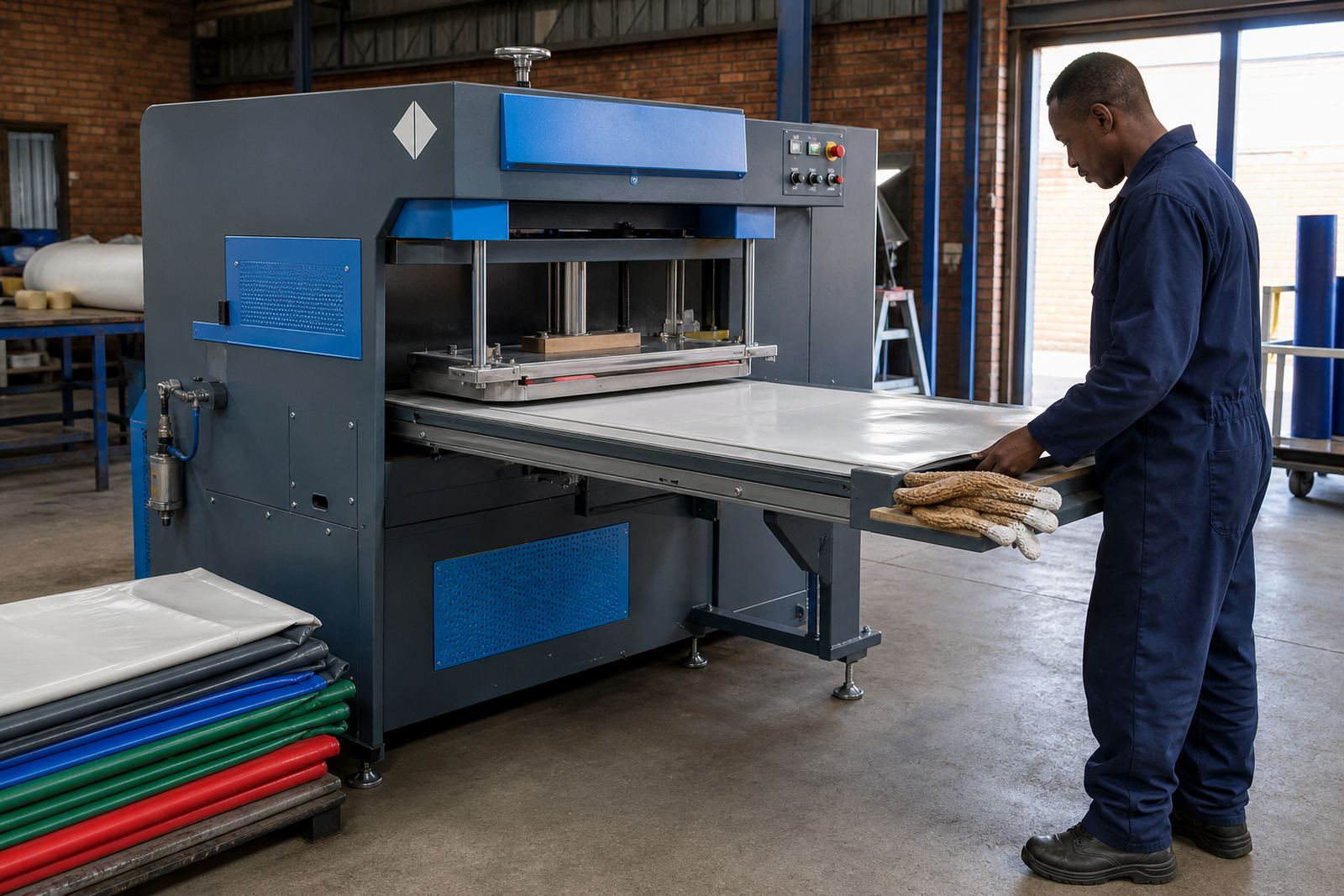
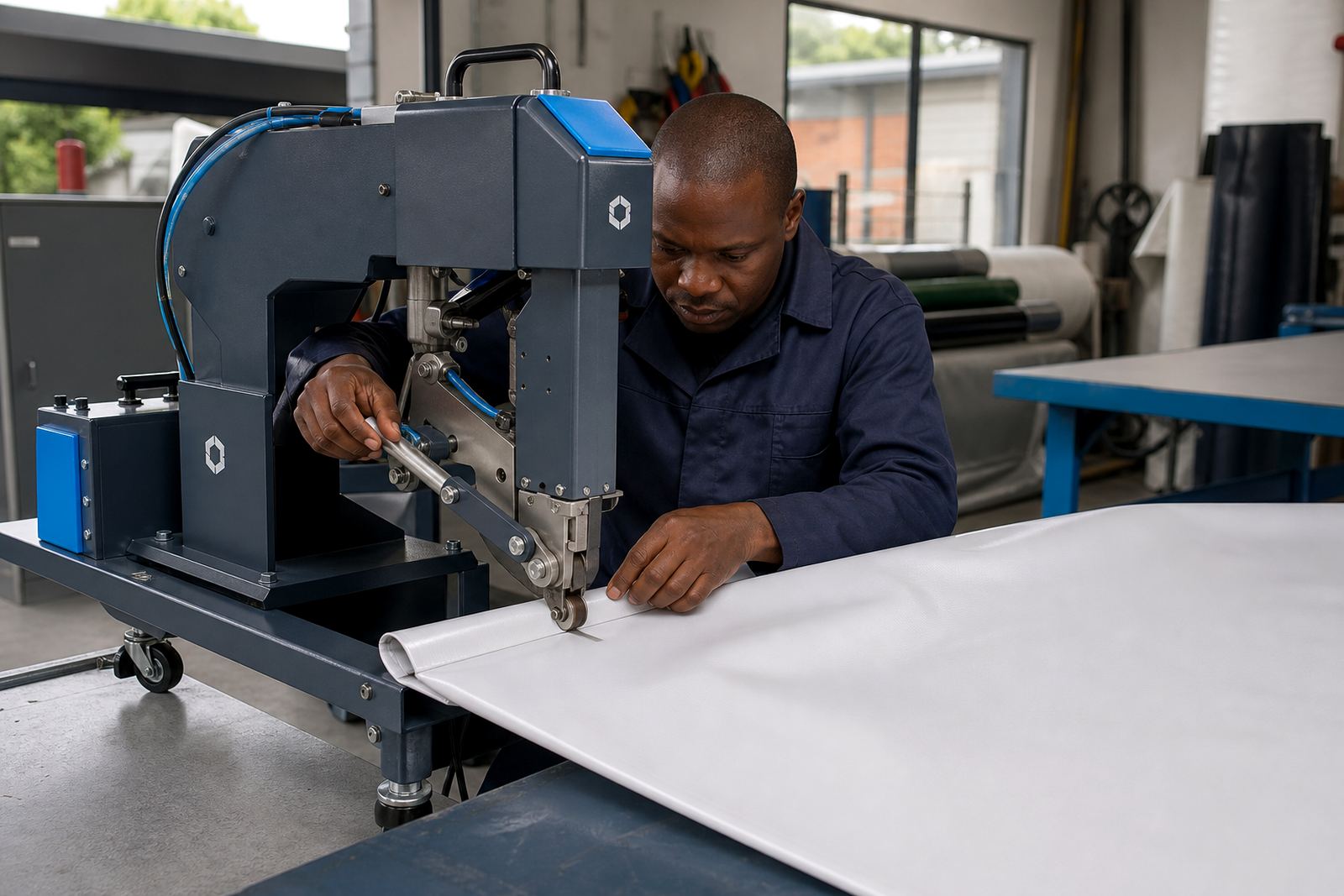
This unit is built for folded hems on PVC-coated tarpaulins, banners and display panels where the edge must sit flat and finish neatly. In a workshop, that means less chasing by hand with clamps and tacks, and more control over the fold width, heat and pressure along the seam line.
It is commonly used for hem folds before eyelet setting, for reinforced banner edges, and for preparing long sides that must hang straighter in wind or move through a frame without curling. On heavier tarpaulins, the right fold also helps spread load at tie points and along stitched-look finishes that are actually welded.
- Suitable for PVC-coated fabrics used in signage, shade and covering work
- Works on straight hems, mitred corners and formed edge returns
- Gives a cleaner finish than loose hand folding on long runs
Welding methods and seam styles it is matched to
The unit can be set up around hot-air or hot-wedge welding methods, depending on the material and production line. For hem work, the aim is a consistent bond across the folded edge without scorching the face of the banner or drawing the coating unevenly.
On banner shops and tarpaulin lines, the same edging process is often paired with lap seams, butt joins, hem seams and pocket folds. Where keder is being added, the folded edge must hold its shape so the cord or bead sits correctly. Eyelet work also benefits from a stable hem because the material tears less when the punch is placed in a clean reinforced zone.
- Hot-air welding suits many folded edge jobs and repair work
- Hot-wedge welding is useful for steady long runs and controlled overlap
- Compatible with hems, sleeve pockets, keder edges and eyelet reinforcement zones
Sizes, fold widths and workshop fit
Hem welding units are usually selected by fold width, working length and the type of guides fitted to the table or machine bed. Smaller shops may need a compact unit for short runs and repairs, while larger sign and tent makers often want longer working lengths for wide banners, side curtains and large tarpaulins.
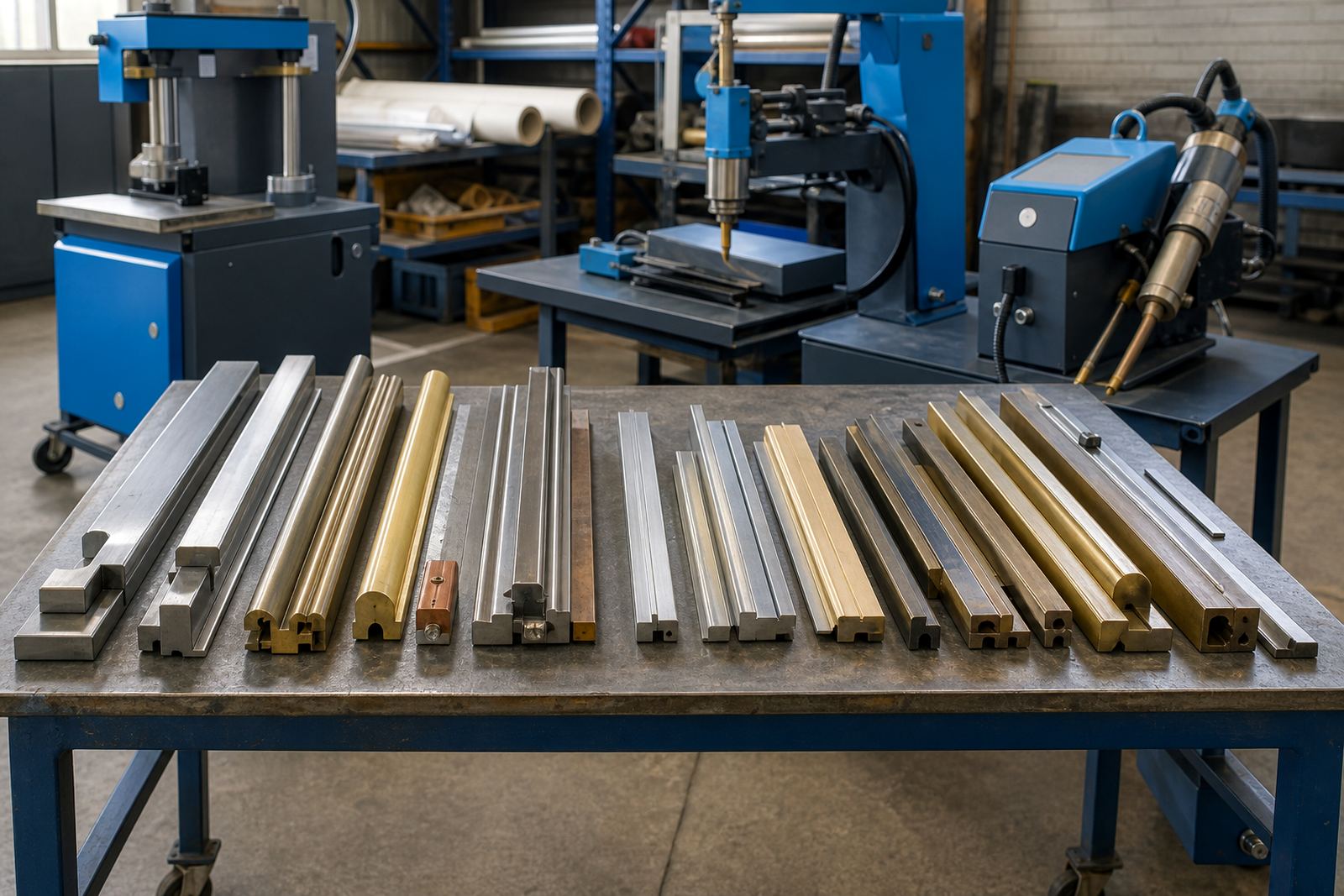
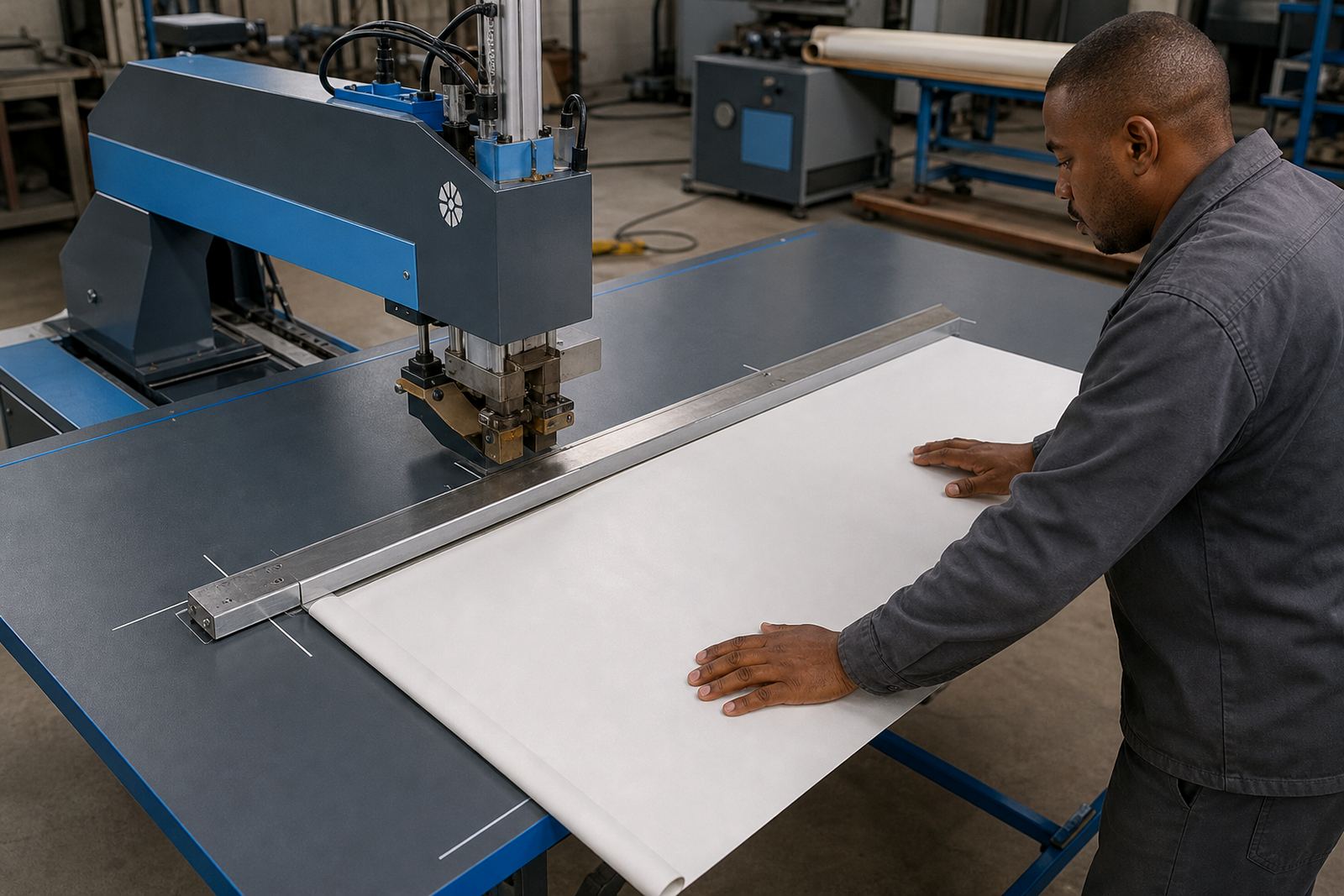
Typical options include adjustable fold guides, edge rulers, pressure rollers and temperature control suited to the material thickness. For display panels and banner faces, a narrow, neat hem may be enough. For tarpaulins used on trucks or outside storage, a wider hem can give better grip for eyelets or rope reinforcement. In coastal towns like Durban, warm shop conditions and humidity can change how quickly PVC cools, so fine adjustment matters.
- Working lengths can be matched to small repair tables or full production lines
- Fold widths are usually set to suit the job, from narrow display hems to wider reinforced edges
- Optional guides help keep long hems straight on large-format fabric
Where the unit fits in day-to-day production
This equipment suits banner makers, tarpaulin makers, tent workshops and display fabricators that need consistent edge finishing. It is a practical fit for shops handling school event banners, site hoardings, truck covers, market awnings and outdoor display panels that must be trimmed, folded and finished to size.
In Germiston, Johannesburg and Pretoria, many workshops run mixed orders where a hem welding unit is used before a separate eyelet press or keder attachment station. In Cape Town and Durban, where wind and coastal weather can punish weak edges, a sound hem helps the finished item sit better on frames and cord lines. In Bloemfontein, the same unit is useful for larger signs and covers that need straight, tidy edges without extra hand finishing.
- Banner shops needing repeatable edge folds
- Tarpaulin and tent makers working with long side hems and corner returns
- Display panel fabricators preparing neat, straight edges for finishing hardware
Installation, fitting and operator safety
A hem welding unit must be fitted level and aligned so the fold tracks true along the full length of the seam. If the machine uses hot-air or hot-wedge output, correct set-up is important for temperature control, roller pressure and feed speed. Poor alignment can leave a twisted hem, weak spots or shiny marks along the face of the fabric.
Operator safety matters on this kind of equipment. Staff should keep hands clear of heated parts, wear suitable gloves where needed and understand the start and stop controls before production begins. Ventilation should suit the workshop, especially when welding coated PVC for long periods, and the work area must stay clear of offcuts, solvents and loose tools. A stable power supply is important on mains-driven units, and the machine should be checked after any move to a new line or table.
- Check table height, feed path and guide alignment during installation
- Train operators on heat settings, roller pressure and safe handling
- Keep the work zone clear around hot parts and moving rollers
Servicing that keeps hems even
Regular care keeps the seam clean and predictable. Rollers, guides and drive parts should be checked for adhesive build-up, wear and heat damage. On busy shops, a small fault in alignment can show up quickly as a wandering hem, a thin bond or a crease that appears along the fold.
Preventive servicing may include tooling alignment, roller replacement, electrode refurbishment where applicable, seam testing and a check of controls and heating elements. For workshops on the coast, moisture and salty air can affect exposed metal parts if the machine is left dirty after use. In inland areas, dust from cutting and trimming can work into guides and bearings, so a regular clean-down helps the unit stay accurate.
- Wipe down heat zones and guides after shifts
- Inspect rollers, feed tracks and fold guides for wear
- Test seam quality after servicing or after any change in fabric type
Order details to confirm before supply
When ordering a hem welding unit, it helps to confirm the fabric type, hem width, working length and whether the line will also handle keder or eyelet preparation. The correct setup depends on the weight of the PVC-coated material, the seam style and the volume of work moving through the shop.
It is also useful to specify the workshop space, the mains power available and whether the machine will be used for straight hems only or for mixed edge finishing. If the unit will work on tarpaulins one day and banners the next, the guides and pressure settings need enough range to suit both. For South African workshops, that detail saves time at installation and reduces rework once production starts.
- Fabric type and thickness
- Required hem width and working length
- Whether the unit will handle keder, eyelets or corner reinforcement
- Power supply and workshop layout
- Expected daily output and the mix of banner, tarp or display jobs
Key facts
| Product type | Hem welding unit for PVC-coated fabrics |
|---|---|
| Welding methods | Hot-air or hot-wedge, depending on setup |
| Typical output | Folded hems, edge returns and reinforced seam lines |
| Material use | Banners, tarpaulins, display panels and similar PVC-coated work |
| Options | Adjustable guides, fold width control, pressure rollers and temperature control |
| Service support | Installation, training, servicing, fault finding and parts supply |