Shuttle-table welding for repeat seam runs
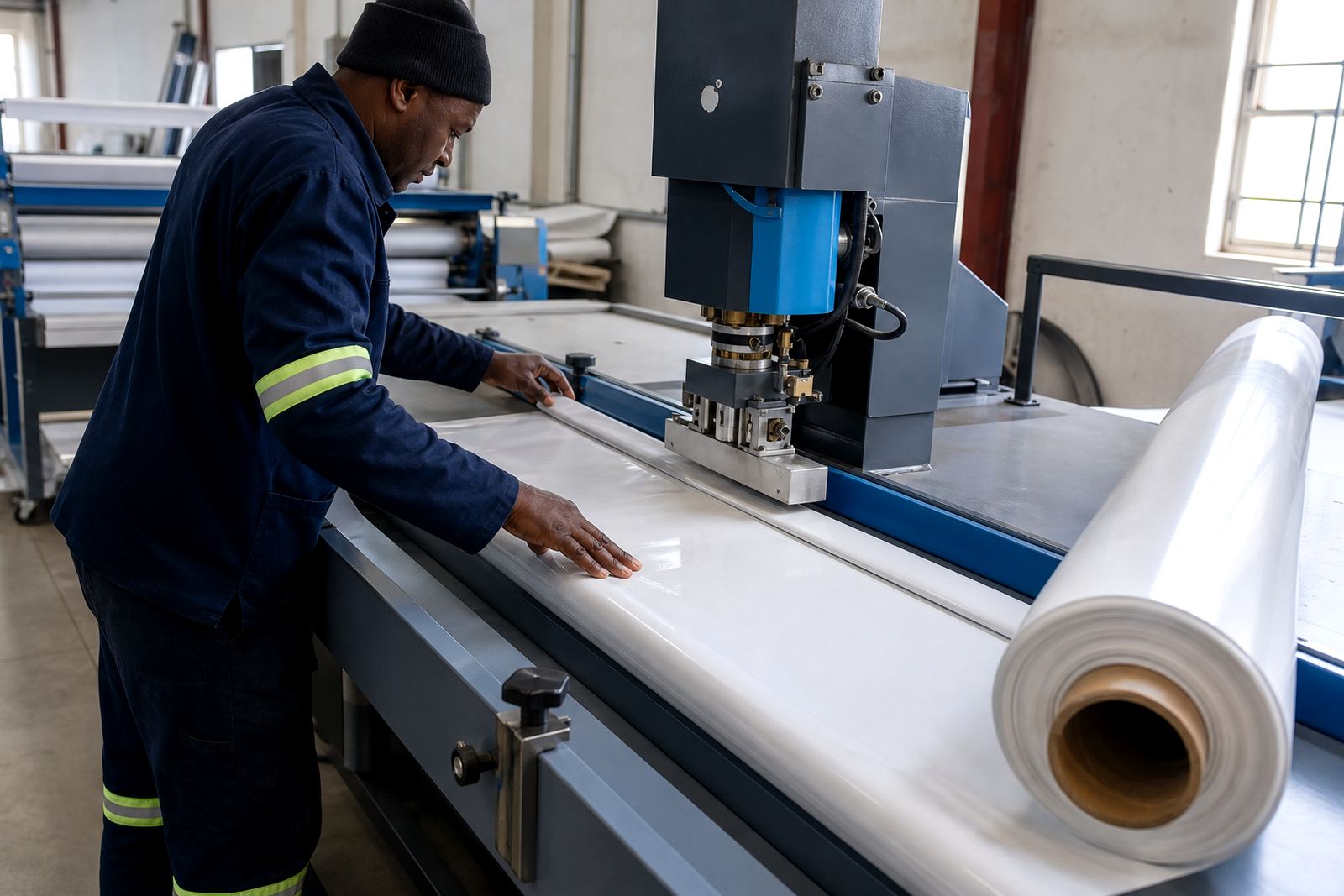
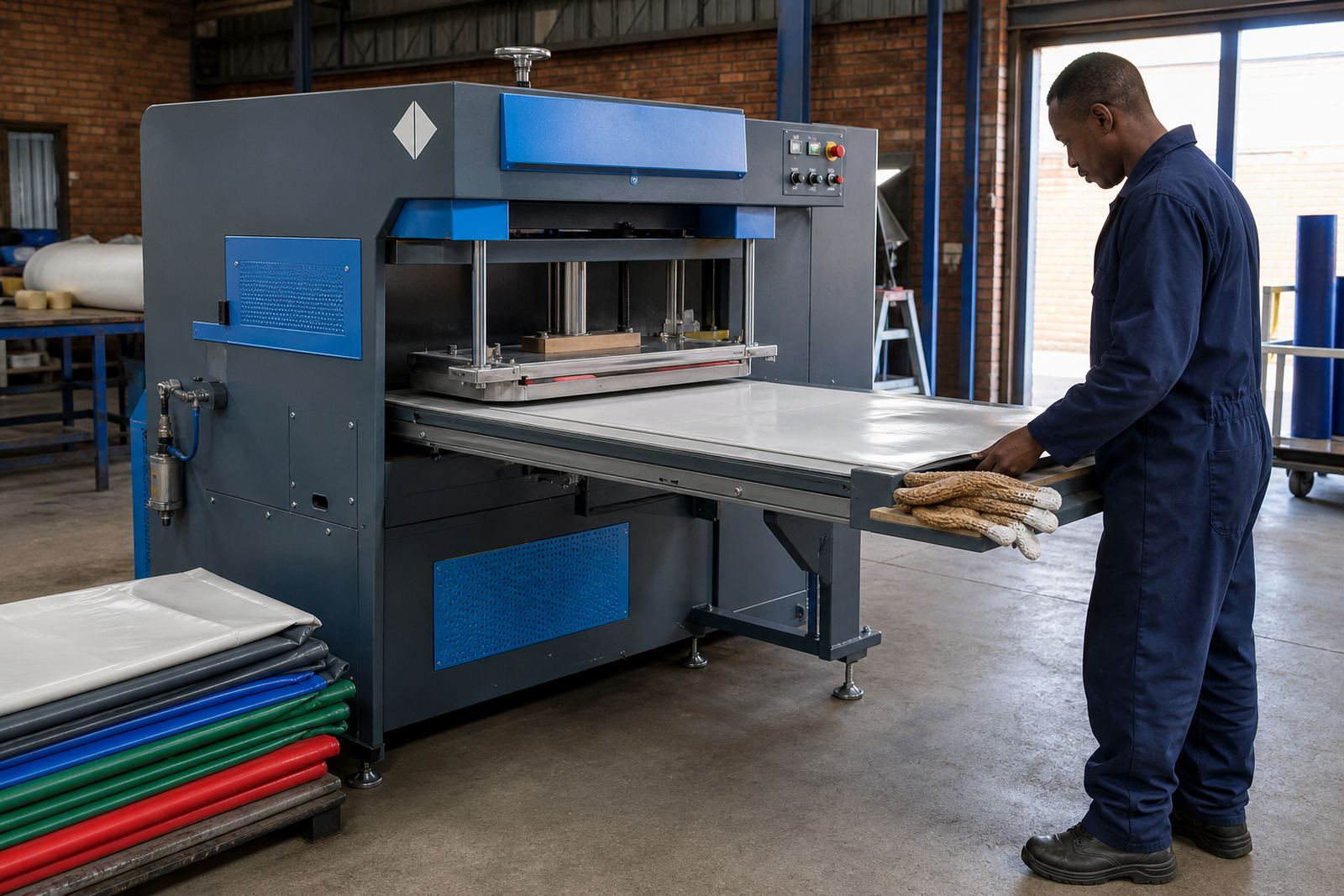
This unit uses a shuttle table that lets one side load while the other side is under the electrodes, which keeps production moving on repetitive work. In practical terms, it is a good match for shops welding long straight seams, overlapping panels, pocket folds and other repeat runs on PVC-coated fabrics, especially where the same seam width has to stay consistent from one piece to the next.
For tarpaulin makers, banner shops and tent makers in Germiston, Johannesburg, Pretoria, Durban, Cape Town and Bloemfontein, the shuttle format helps reduce handling delays on batch work. It suits operators who need a predictable cycle, clear placement of material and stable pressure across the weld area, rather than constant repositioning of a flat bed.
What this HF unit is set up to weld
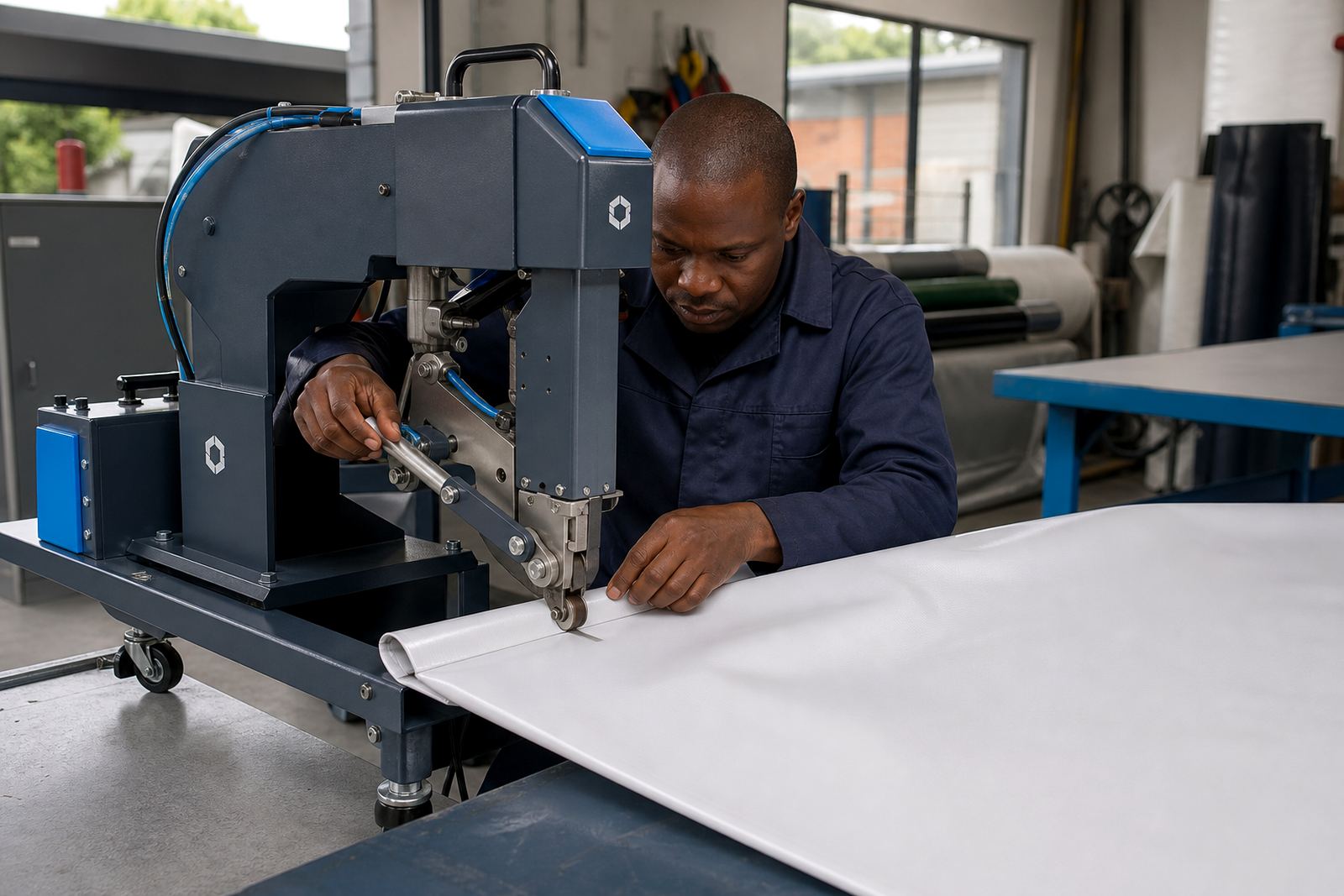
High-frequency, also called radio frequency welding, is widely used on PVC-coated fabrics because it heats the material at the seam line and forms a clean bond. The HF shuttle welder is typically used for overlap seams, hems, pockets, keder inserts, reinforcement strips and eyelet tabs where the weld must stay tidy under tension.
Common work on this type of machine includes:
- Tarpaulin side seams and end joins
- Banner hems and wind pockets
- Tent wall panels and roof sections
- Keder edge welding for track-fed installations
- Eyelet reinforcement areas and patch welds
- Long straight seams on PVC-coated canvas and similar coated textiles
The right setting depends on fabric thickness, coating type and seam width. A steady operator can keep output consistent on repetitive jobs, while the weld itself remains neat enough for signage, display and industrial cover work.
Sizes, table styles and working setup
HF shuttle welders are commonly specified by table size, electrode length and the type of work envelope needed around the seam. Some workshops want a compact footprint for tighter floor space, while others need a longer shuttle surface for wider panels and fewer repositioning steps. The table size should match the longest regular weld and the biggest panel the team handles without forcing awkward movement.
Options can include straight-bar electrodes, shaped tooling for hems or keder, and set-ups for single seam or repeated cycle work. Where the job changes often, a machine with easy tooling access and clear guides is easier to keep in line. For taller tent panels or long tarpaulin lengths, the operator also needs enough side clearance to feed and turn material cleanly.
- Shuttle table length matched to the largest regular panel
- Electrode tooling for overlap seams, hems or keder work
- Adjustable pressure and dwell control for material consistency
- Safety guards and foot or two-hand cycle controls
- Tooling alignment features for straight, repeatable welds
Where the machine fits on a working floor
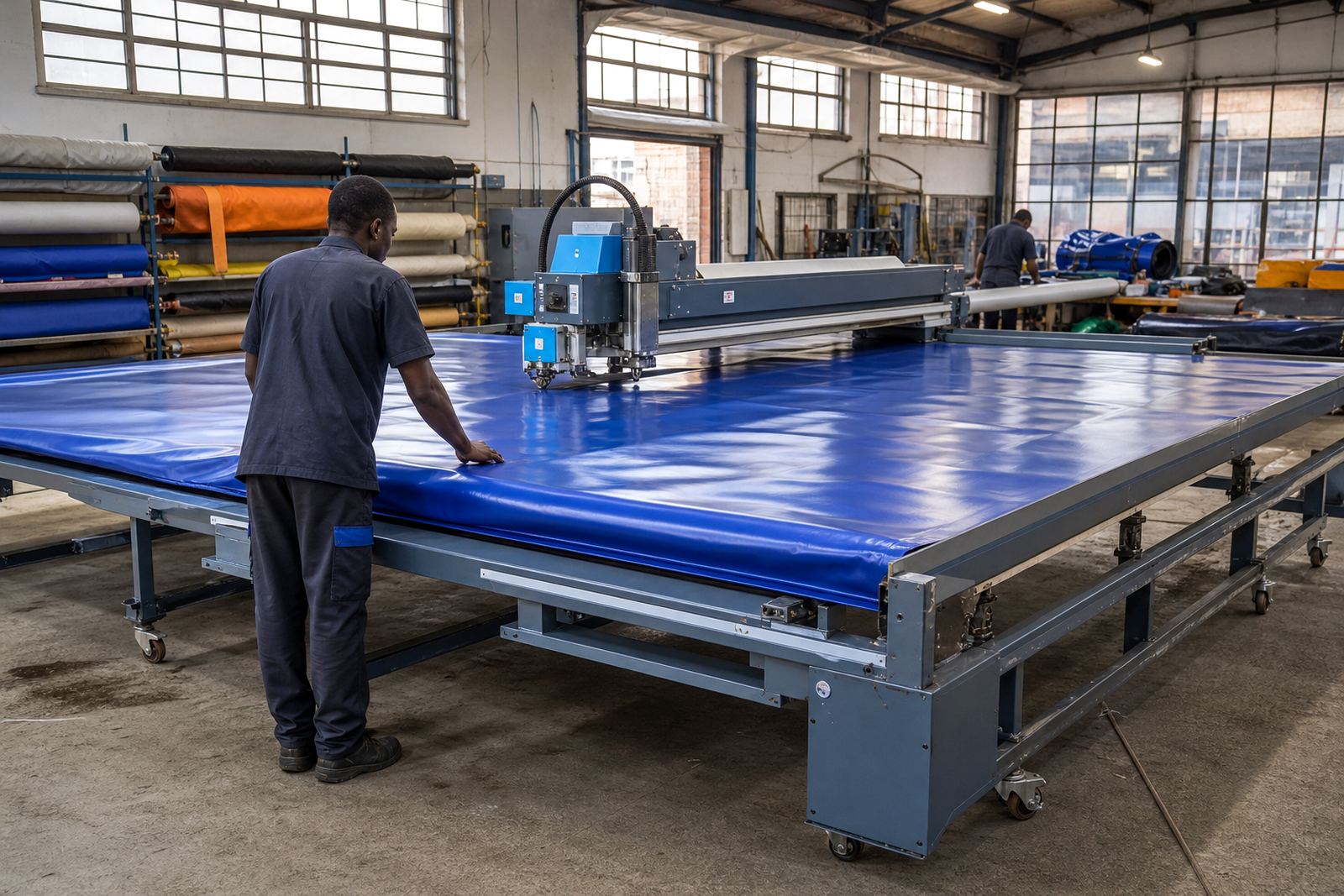
This type of welder suits production floors that handle repeat batches and need controlled seam placement. It is a practical choice for tarpaulin makers in Ekurhuleni, banner converters in Gauteng, and tent fabricators supplying event work across South Africa. Coastal humidity in Durban and Cape Town can make stored PVC-coated stock feel different on the table, so stable pressure and well-kept tooling help the weld stay even.
The shuttle-table layout is also useful where one operator handles loading and another trims or prepares the next panel nearby. It works well in shops doing:
- Truck and trailer covers
- Event marquees and tent side walls
- Billboard and banner finishing
- Industrial covers and weather shields
- Custom PVC fabrication with repeated seam widths
For lighter sign work, the machine can be set up for clean hems and edge reinforcements. For heavier industrial covers, the operator may need wider seams and stronger pressure control to suit the fabric body and the intended load on the join.
Installation, power and workshop fitting
HF welding equipment needs correct site preparation, clean earthing and the right electrical supply for the machine rating. The installation should allow safe operator movement around the shuttle and enough space for loading long panels without pulling the fabric off line. In a workshop that also runs cutters, compressors or other powered equipment, the layout matters because the welder must sit where the operator can feed, align and unload without crossing traffic paths.
Fitting work normally includes machine positioning, electrical connection, tooling check, alignment of the shuttle travel and a weld test on the actual fabric stock used in production. For shops in Johannesburg, Pretoria, Germiston, Boksburg and Benoni, site callouts are often used to get the machine placed where the material flow makes sense and the seam line stays square.
Good installation should also leave room for routine inspection of the electrodes, table guides and safety controls. A machine that is awkward to reach tends to lose time during set-up and servicing.
Care, servicing and operator safety
Like any HF machine, a shuttle welder needs regular attention to keep seam quality steady. Keep the table clean, check for wear on the tooling faces and inspect alignment whenever the seam starts to drift or the bond looks uneven. On hot-air and hot-wedge work elsewhere in the workshop, dust and offcuts can build up quickly, so the same housekeeping discipline helps around HF equipment too.
Typical care points include:
- Checking electrode condition and cleaning contact faces
- Confirming the shuttle runs freely and returns square
- Watching for loose guides, worn rollers or damaged stops
- Testing seam quality after tooling changes or repairs
- Keeping safety shields, cycle controls and cable runs in good order
Operator safety matters with any radio frequency welding equipment. Staff should be trained on loading position, cycle timing and safe hand placement around the weld area. Preventive servicing, fault finding and seam testing help keep the machine dependable on long production runs, especially where the same seam is repeated many times in a shift.
What to confirm before ordering this machine
Before placing an order, confirm the fabric types, the usual seam widths and the biggest panel size your team handles. The machine needs to suit the product mix, whether that is tarpaulins, banners, tent panels or keder edge work. If the workshop uses both RF and hot-air or hot-wedge equipment, it helps to list which seams are done on which machine so the tooling and table size can be matched properly.
Useful details to confirm include:
- Fabric type and coating thickness
- Longest seam length and widest panel
- Required seam style, such as overlap, hem, keder or reinforcement
- Electrical supply available at the site
- Floor space for loading, unloading and operator movement
- Whether the machine is for single-operator or shared use
For South African workshops, the right shuttle welder is the one that matches the work rate, the seam type and the way material moves through the shop. That is what keeps the weld neat and the process manageable on busy production days.
Key facts
| Welding process | High-frequency radio frequency welding for PVC-coated fabrics |
|---|---|
| Machine style | Shuttle-table unit for repetitive seam cycles |
| Typical seam work | Overlap seams, hems, keder, reinforcement patches and eyelet areas |
| Material range | PVC-coated tarpaulin, banner and tent fabrics |
| Workshop use | Production finishing, batch welding and repeat seam runs |
| Support services | Installation, commissioning, training, servicing, fault finding and parts supply |