Built for wide sheets and long production runs
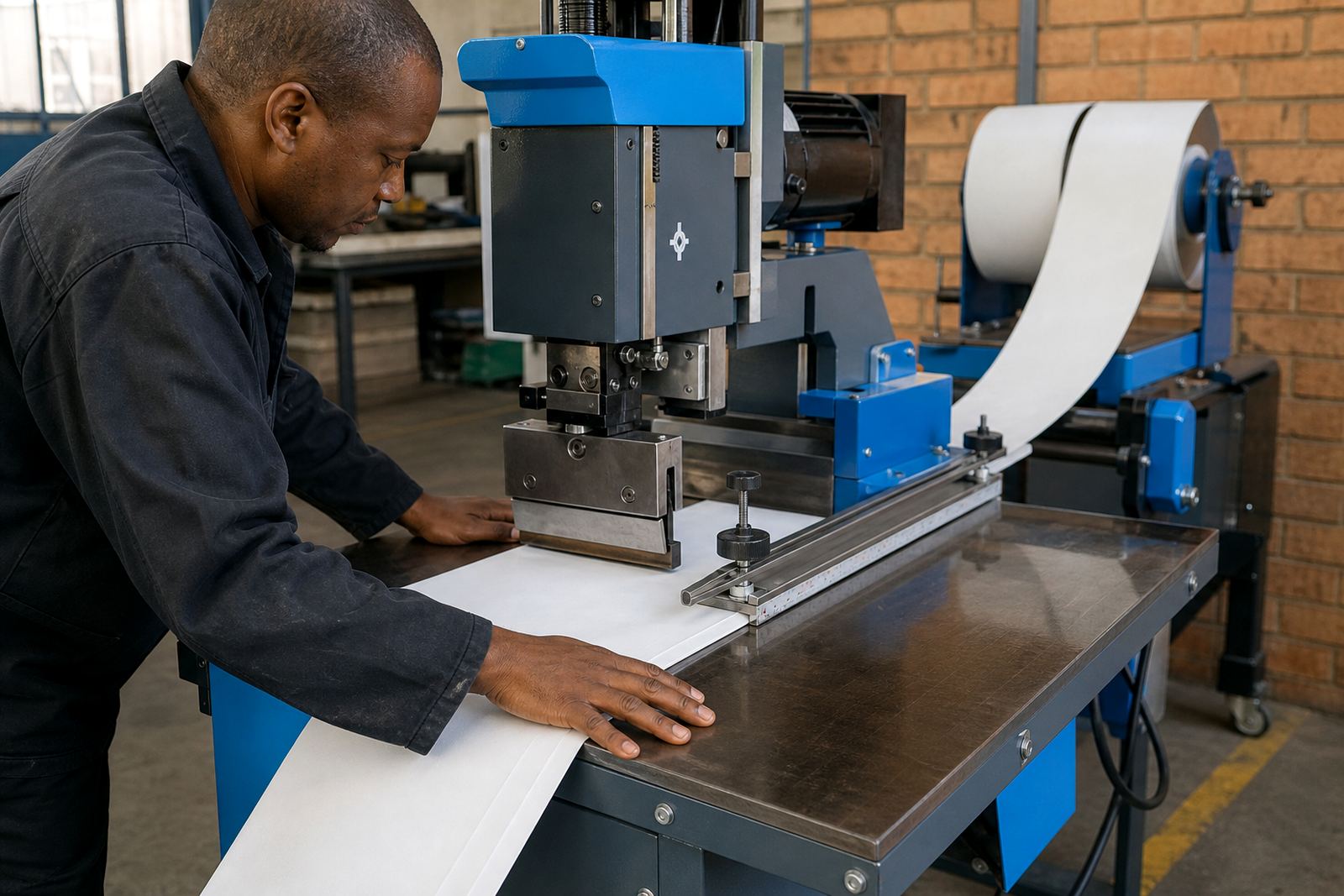
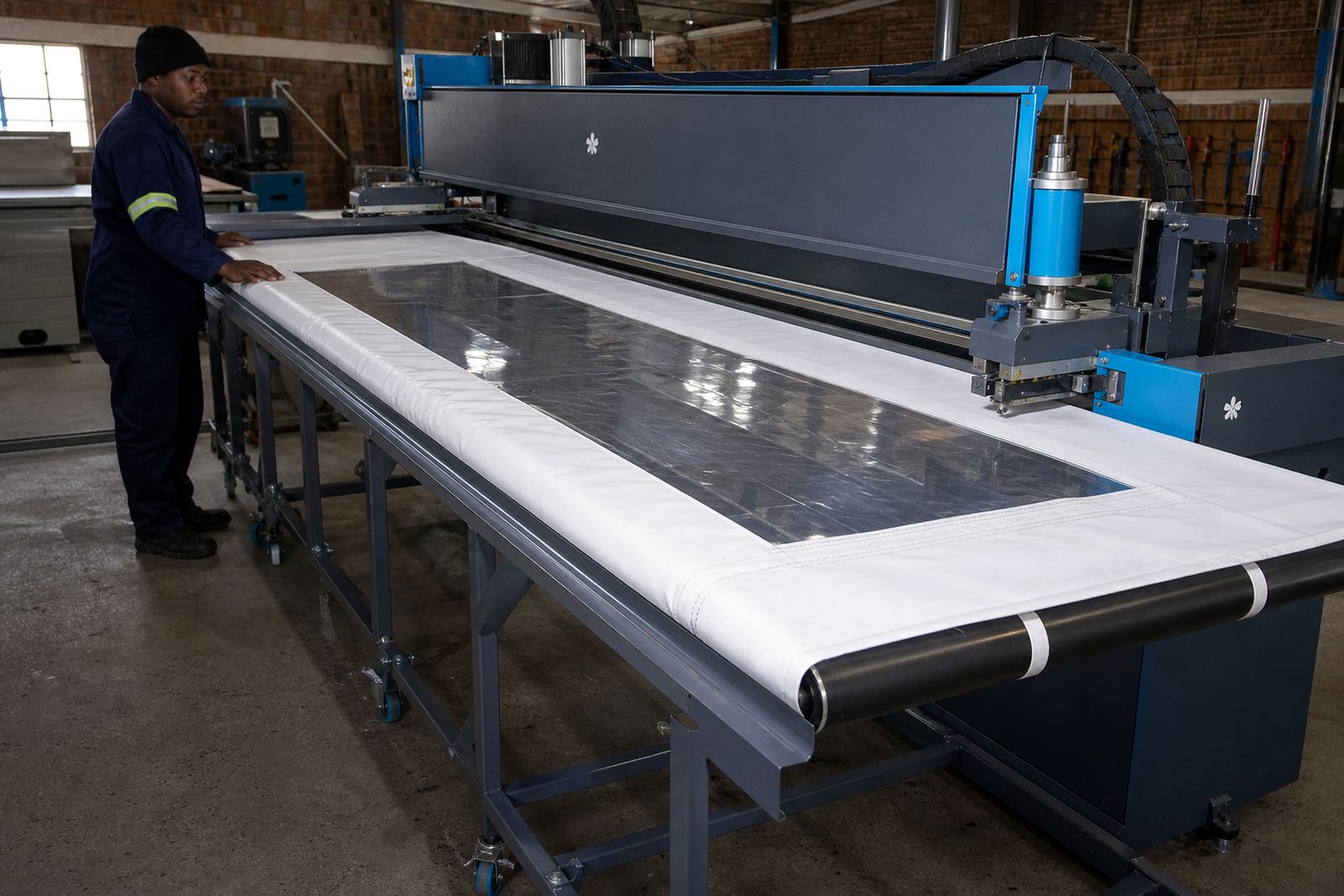
The Wide Format Welder is suited to PVC-coated fabrics that need broad, even welding across large areas. In banner shops, tarpaulin plants and tent-making lines, it is used for long lap seams, hem folds, pocket work and reinforced edges where a tidy finish is needed across the full width of the material.
High-frequency, also called radio frequency welding, is used where a strong, consistent bond is needed on compatible PVC-coated cloth. Hot-air and hot-wedge methods are also common in this trade for hems, seams and reinforcements, especially where the operator is working on thicker sections or where the workflow calls for controlled heat over a longer line. The right method depends on the fabric build, seam style and the look required on the finished job.
Typical seam work on banners, tents and tarpaulins
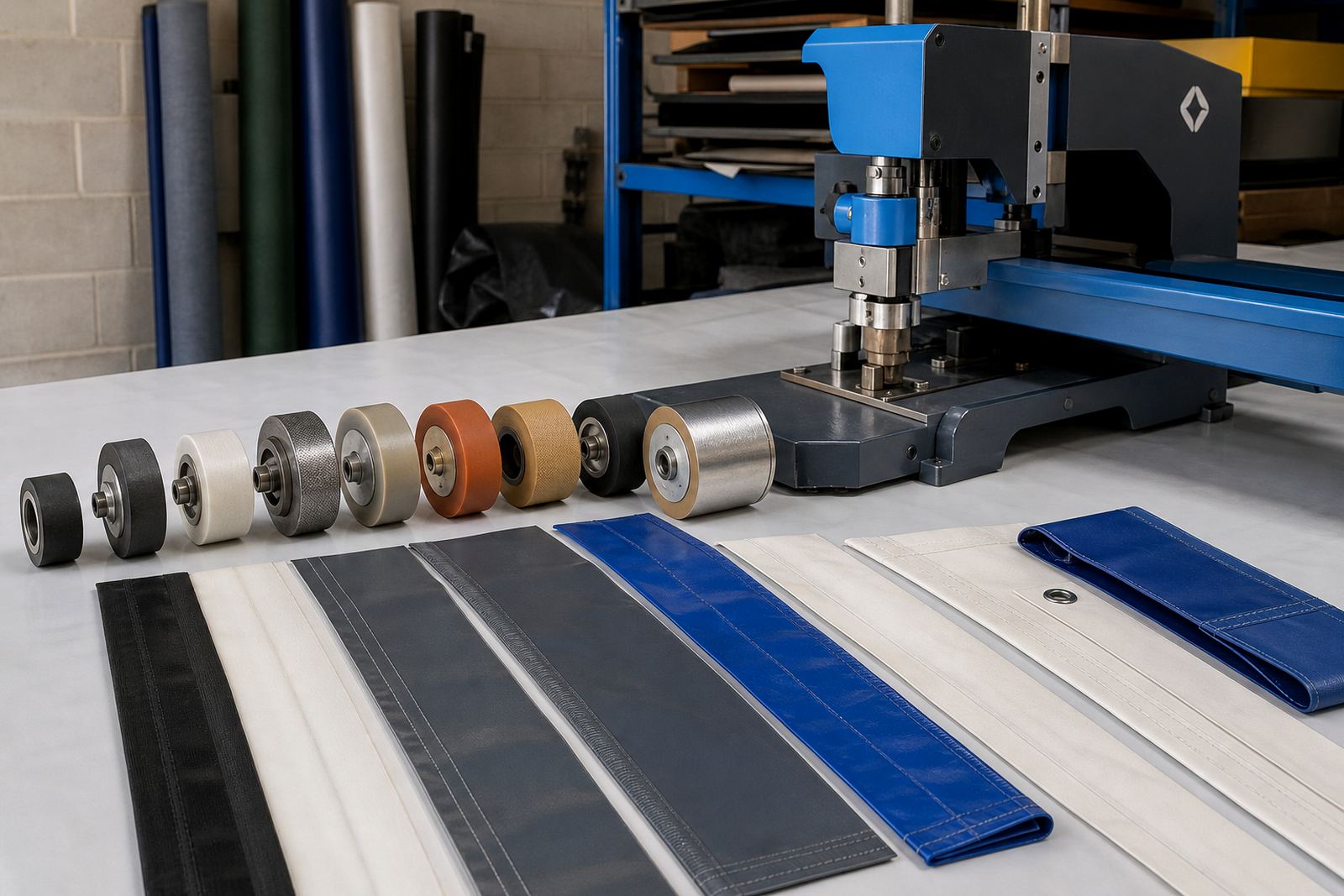
This type of unit handles the kind of work that usually lands on a production floor in Germiston, Johannesburg, Pretoria or Durban: broad banner panels, tent side walls, truck tarps and weather covers. It is used for lap seams, overlap joints, turned hems, pocket hems for poles or ropes, keder welding for track feed systems and eyelet reinforcement zones. On outdoor jobs, the weld needs to hold through sun, wind and coastal humidity, so seam width and pressure need to be set properly for the material in hand.
- Broad banner joins for billboard and display panels
- Long tarpaulin seams for side curtains and cover sheets
- Hems for reinforced edges and clean finished borders
- Keder attachment for tent and marquee systems
- Eyelet reinforcement areas and patch work around fittings
Size choices and production options
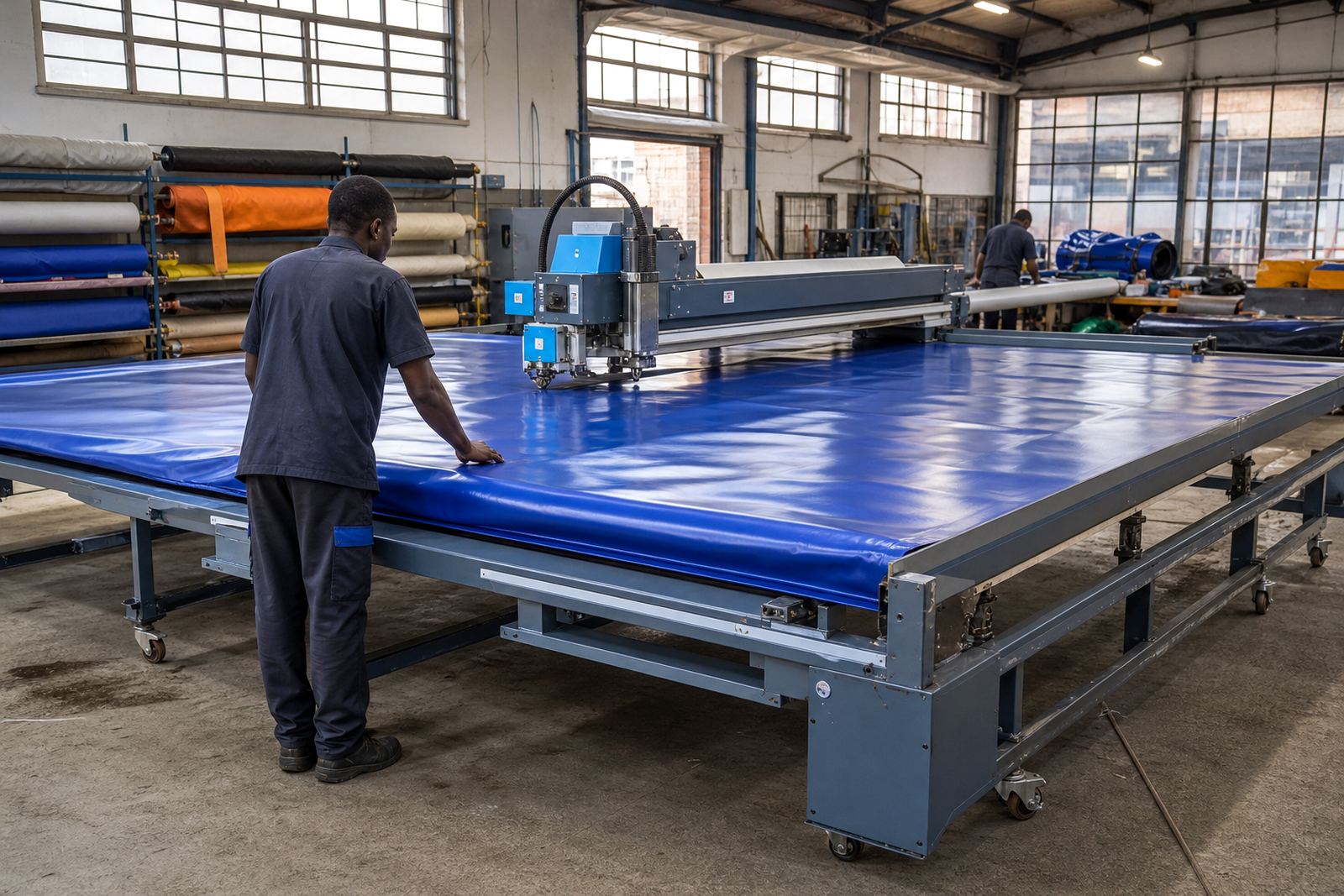
Wide-format welders are selected by working width, table size, output speed and the type of drive or clamping arrangement fitted to the machine. Smaller production teams may want a unit that suits medium banner sheets and repair work, while higher-volume shops often need a wider bed for large tent panels and repetitive runs. In practice, the right size is the one that lets the operator place the sheet flat, align the overlap cleanly and keep tension even from one end to the other.
Options often include adjustable pressure, temperature or RF output control, timed cycle settings, guide systems for straight work and changeable tooling for different seam profiles. Where eyelets, hems or keder are part of the job mix, the machine should be matched with the correct forming tools and handling space so the work can move through without twisting or marking the fabric.
- Working width matched to panel size
- Adjustable pressure and dwell or cycle control
- Guide tooling for straight seams and repeat work
- Setups for hems, keder and reinforcement strips
- Space for feed-in and take-off of wide sheets
Where this machine earns its place
This unit suits businesses that make or repair PVC banners, tent skins, marquees, truck covers and broad signage sheets. It is also practical for event work where large panels need to be welded, trimmed and fitted with edging before transport to site. In Cape Town and Durban, where moisture and salt in the air can affect storage and handling, clean seam preparation and proper machine set-up help keep output consistent.
For shops working across Johannesburg, Pretoria and Bloemfontein, the machine is a good fit where teams want a dependable production line for repeated orders, field repairs and custom sizes. It can also support municipal and industrial cover work where material thickness, panel size and edge finishing need to be controlled carefully.
Fitting, wiring and workshop placement
High-frequency welding units need proper installation, earthing and workshop layout so the operator can work safely and the seams stay consistent. The machine should be placed on a level floor with enough room for feed-in, operator movement and sheet turning. Power supply details matter on HF equipment, as the machine load and site wiring must suit the duty cycle and the local supply arrangement.
For hot-air or hot-wedge models, correct positioning of the heating head, guide wheels and pressure rollers is just as important. If the unit is being installed on a new line or moved into an existing workshop, the bench height, cable routing and access to tooling all need to be checked before production starts. On service callouts, small issues like a worn roller, misaligned electrode or loose guide can show up as uneven seams or scorch marks, so fitting needs to be handled with care.
Operator care and machine servicing
Good output depends on good habits. Operators should keep the work area clean, remove offcuts and dust from the bed, and check that the fabric edges are trimmed square before welding. On HF units, electrode faces, pressure surfaces and tooling should be kept clean and aligned. On hot-air and hot-wedge machines, the heating element area, rollers and guides need regular inspection for wear, build-up and uneven movement.
Preventive servicing helps avoid poor seam finish and unnecessary downtime. A normal service routine may include fault finding, tooling alignment, electrode refurbishment, roller replacement, seam testing and parts supply where needed. Where a machine is used daily, a service plan is often worthwhile because banner and tarpaulin work can move quickly from one size to the next, and small wear points become visible fast.
- Keep weld surfaces clean and free of grit
- Check pressure, guides and alignment before production runs
- Inspect electrodes, rollers and heating parts regularly
- Test seams after setup changes or tooling replacement
- Store tooling and spare parts dry, especially in humid coastal areas
Details to confirm before ordering
Before ordering a wide-format welder, it helps to confirm the fabric types you use most, the widest panel you need to handle, the seam styles you produce and whether your work calls for HF, hot-air or hot-wedge welding. It also helps to note if you need keder work, reinforced hems, eyelet zones or long straight runs on large sheets. These details affect the machine width, tooling and power arrangement.
Other useful points are the available floor space, workshop access for installation, the supply voltage on site and any travel or callout support needed for Germiston, Boksburg, Benoni or further afield. If you are servicing multiple branches across South Africa, it is worth listing the spare parts you want held for regular wear items, along with the normal production thickness and the finish expected on the final seam.
- Fabric type and coating thickness
- Maximum panel width and seam length
- Need for hems, keder, eyelets or lap seams
- Preferred welding method and tooling style
- Site power details and floor space available
- Service access, spare parts and maintenance needs
Key facts
| Product type | Wide-format PVC fabric welding unit |
|---|---|
| Welding methods | High-frequency, hot-air or hot-wedge options depending on setup |
| Typical work | Banners, tarpaulins, tent panels, hems, keder and reinforcement zones |
| Controls | Adjustable pressure, timing or cycle settings, guide alignment |
| Installation needs | Level floor, correct wiring, earthing and workshop clearance |
| Service support | Installation, commissioning, training, preventive servicing and seam testing |