Straight Runs On PVC-Coated Fabric
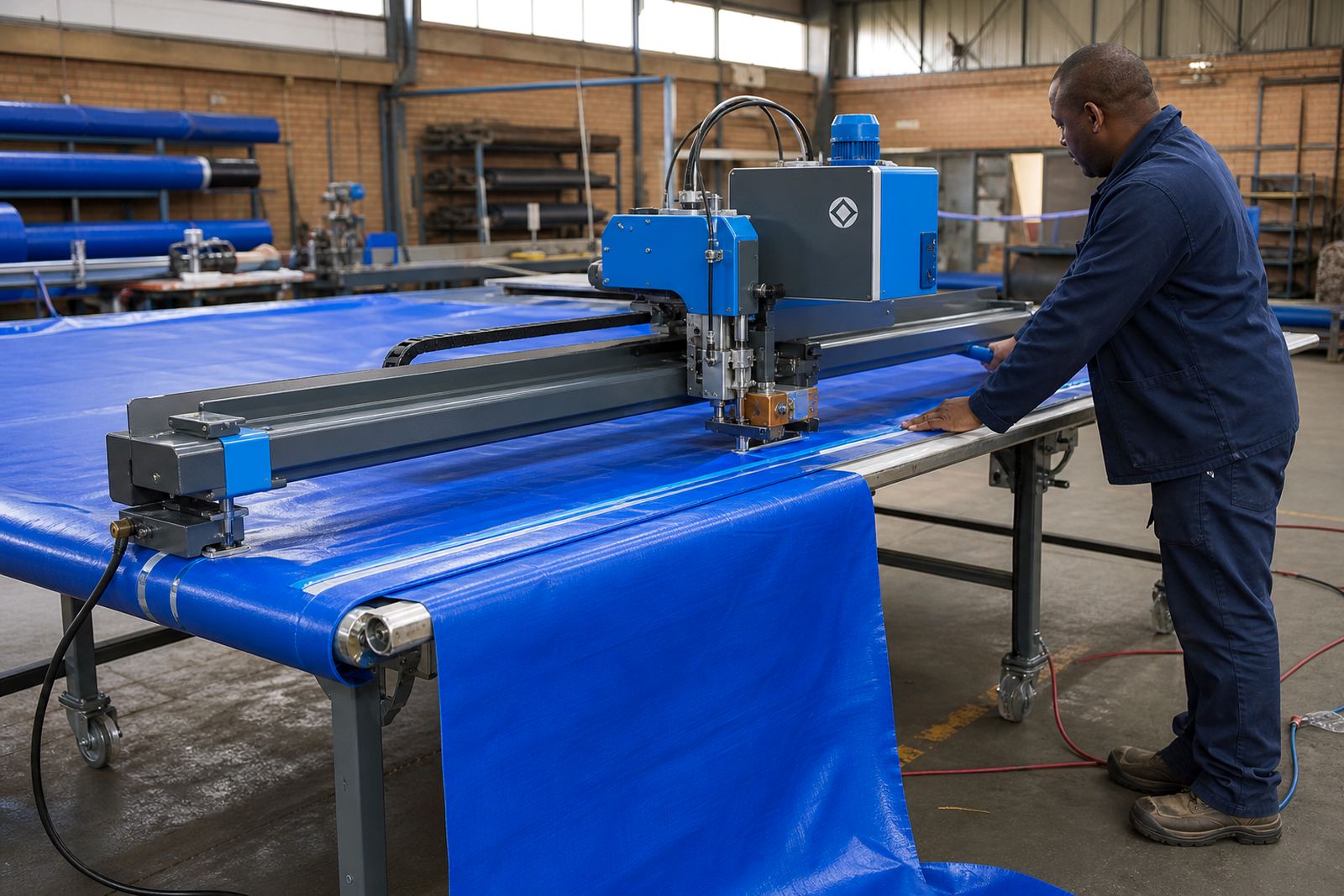
The edge guide sits beside the welding path and gives the operator a fixed line to follow when feeding PVC-coated fabrics through the machine. On long banner panels, truck tarpaulins and tent walls, that small guide makes a clear difference where the seam must stay even from the first metre to the last.
It is used with radio frequency welding equipment as well as hot-air and hot-wedge systems, depending on the seam style and the fabric build-up. The attachment helps keep lap seams, hems, reinforcement folds and edge finishes steady, especially where a sheet is wide and the material wants to drift. In humid coastal conditions around Durban or on dusty job sites in Gauteng, a consistent guide line also helps operators maintain neat edges even when handling large panels.
- Supports straight seam tracking on long weld lengths
- Helps repeat the same offset on multiple panels
- Useful where visual marks on dark PVC are hard to see
- Suitable for left-hand or right-hand machine layout, depending on the table and operator position
Sizes, Mounting Styles And Working Range
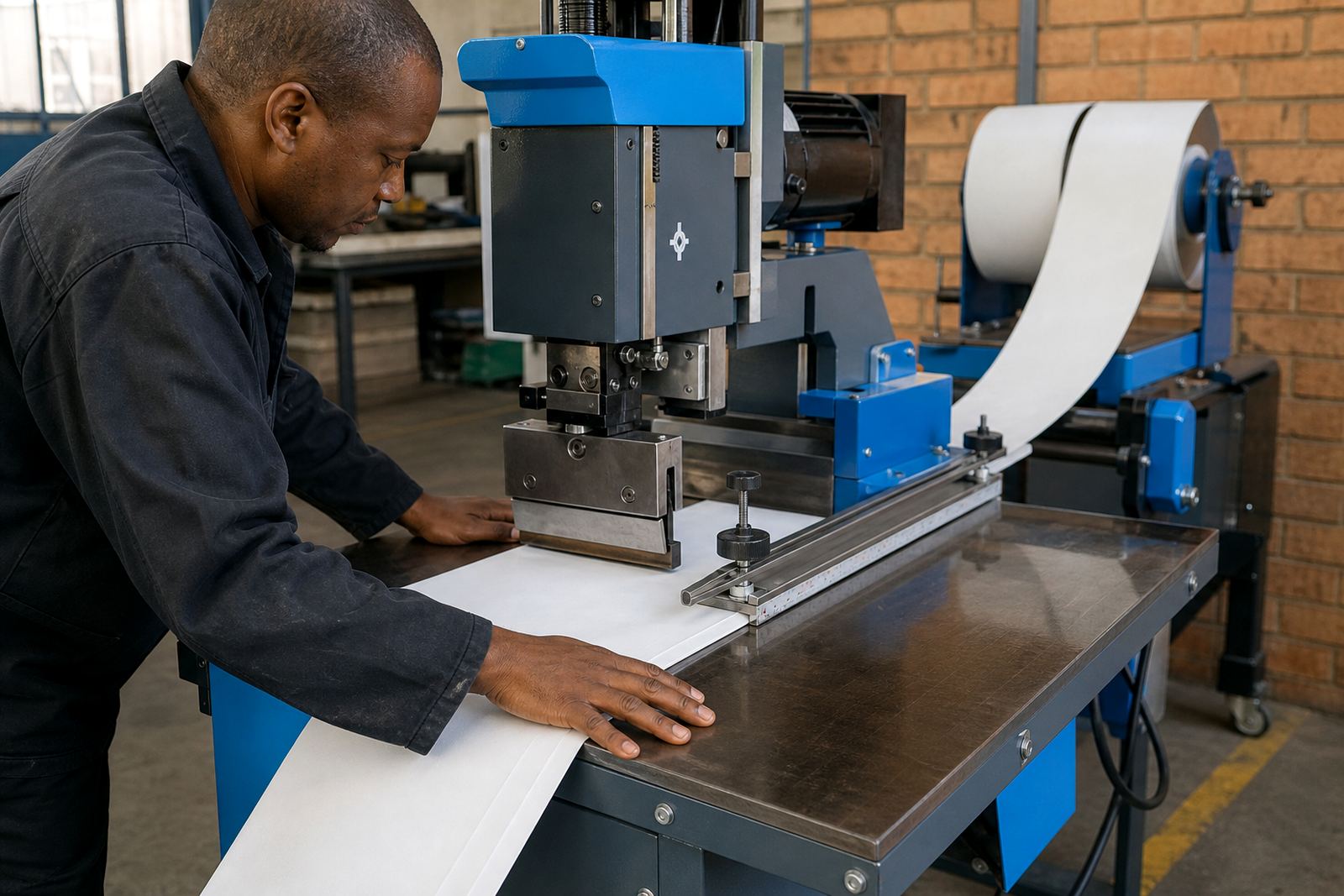
Edge guides are usually selected to suit the machine table, the throat depth and the type of work passing through. Some are fixed guides with a single set position, while others are adjustable so the operator can change the distance from the weld line to the edge. For wider tarpaulins and banner stock, an adjustable guide is often preferred because seam allowances can vary from one job to the next.
For this trade, the important details are the working width, the height of the guide above the table surface and how close it sits to the tooling path. A guide that is too low can slow feeding on bulky hems, while one that sits too far from the weld line can allow drift. On tent work, where keder, pole pockets and reinforced corners all sit in the same workshop flow, the guide must leave enough space for the fabric build-up to pass cleanly.
- Fixed or adjustable guide options
- Left or right side mounting
- Different arm lengths for narrow and wide machines
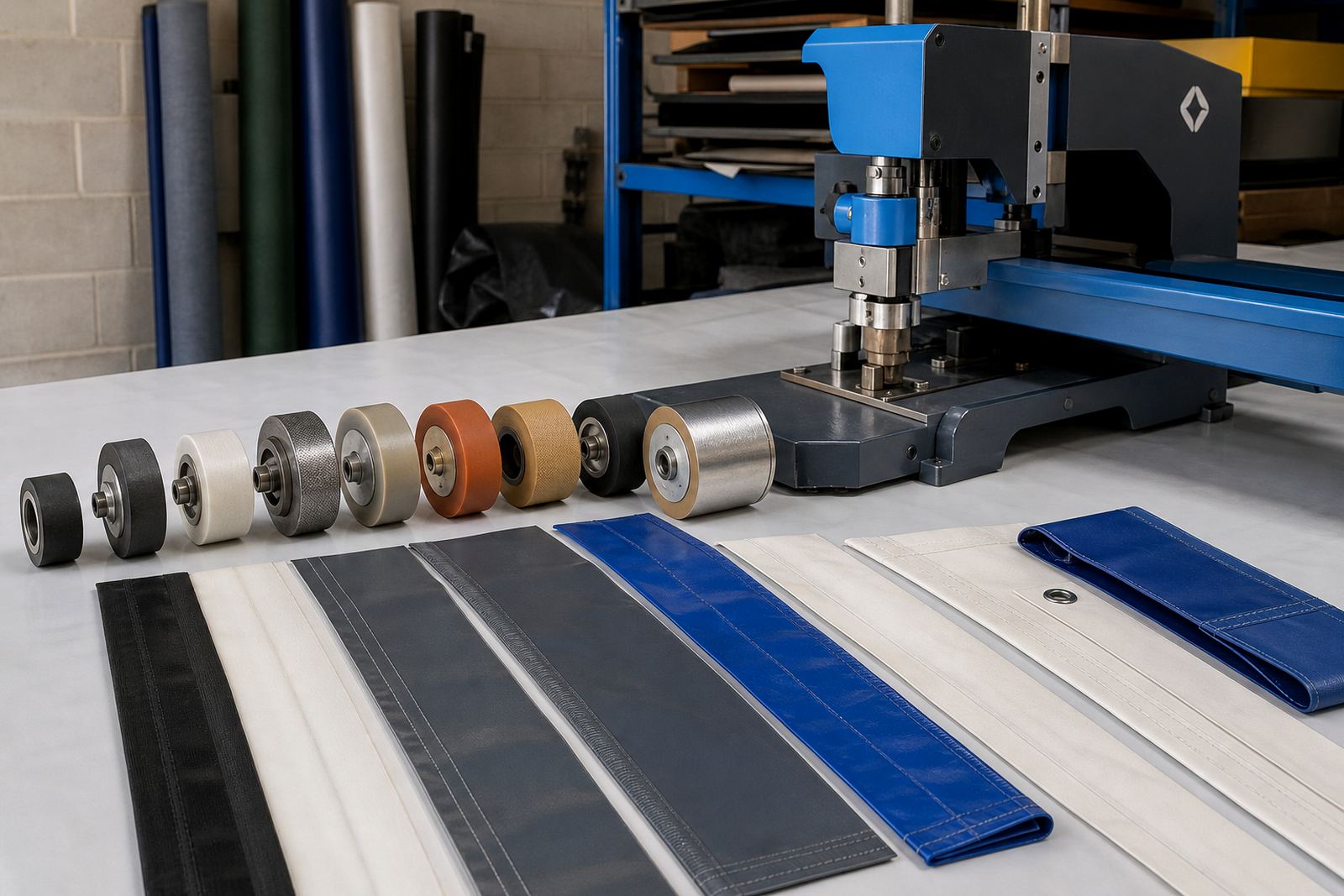
- Guide face sizes chosen for light banner work or heavier tarpaulin seams
Where The Guide Helps Most
This attachment is practical wherever straight, repeatable welding matters. Advertising shops use it for banner hems, welded pockets and clean edge finishing before eyelets are set. Tarpaulin makers use it for overlap seams, roof sheet joins and side hems that must stay uniform across several panels. Tent makers often rely on the guide when forming long side walls, valance edges and keder channels that must feed evenly into the same line every time.
It is also useful when the job calls for a visible seam allowance that must stay constant, such as 25 mm, 30 mm or 50 mm depending on the spec sheet. For high-frequency welding, the guide keeps the layers aligned under the electrodes. For hot-air and hot-wedge welding, it helps the operator maintain a steady feed rate and keep the overlap parallel to the weld path.
- Tarpaulin side seams and corner reinforcements
- Banner hems and welded pockets
- Keder strips and pole pocket work
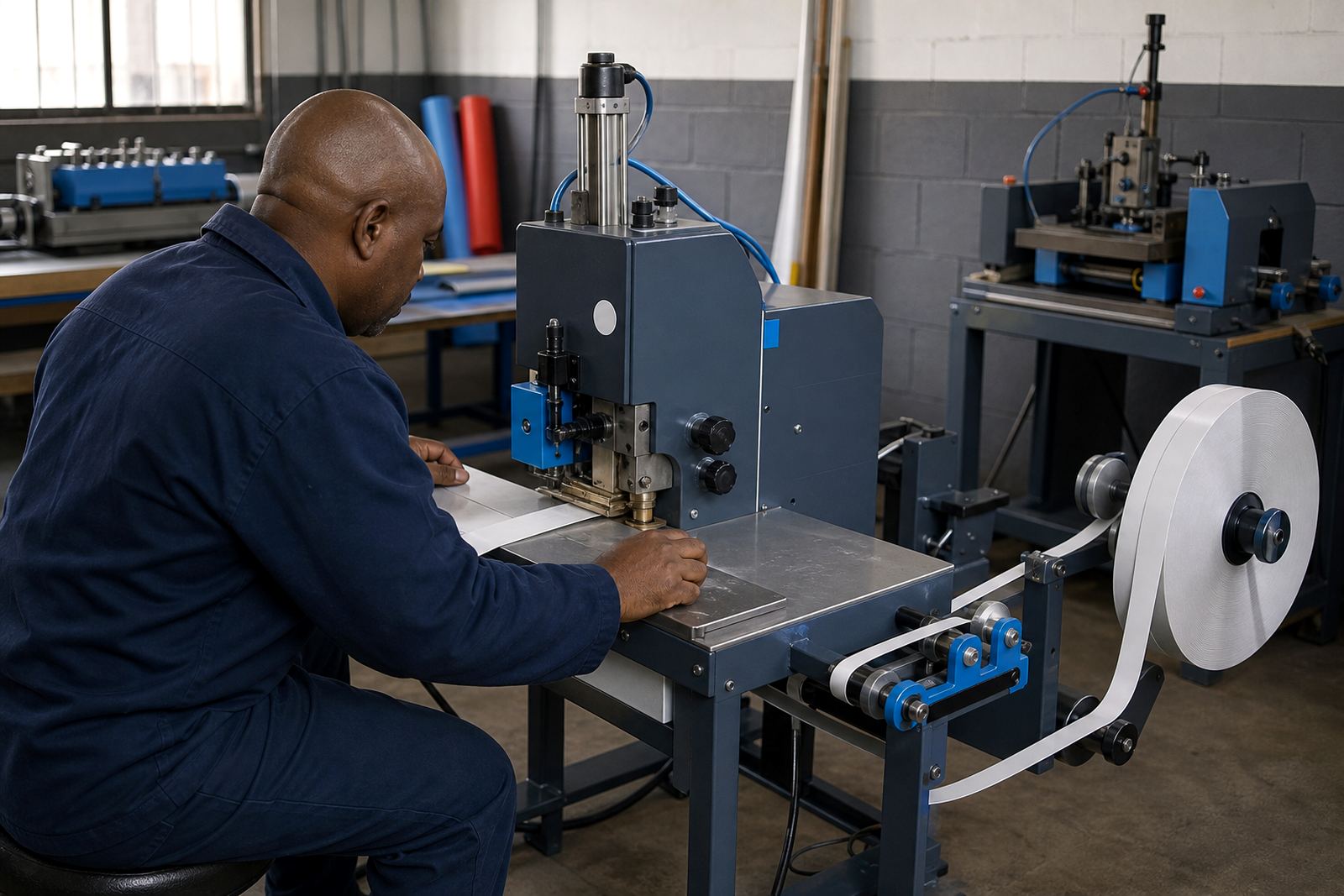
- Eyelet reinforcement bands before punching
Fitting To The Machine And Operator Position
Correct fitting matters because the guide must match the machine setup, not just the fabric width. The attachment should sit square to the weld line and clear the tooling, pressure rollers or electrode area. On a workshop floor in Germiston or Boksburg, a guide that is mounted slightly out of line can cause a lean in the seam, which then carries through to the next length and shows up at the final trim.
During fitting, the technician checks the table edge, the clamp position and the travel path so the operator has a comfortable feed position. On larger machines, the guide may need to be set for a seated operator, while smaller units often work better with a standing feed position. If the machine is used for both narrow banners and broad tarpaulin sheets, quick adjustment is worth having so the setup can be changed without a long reset.
Good fitting also helps reduce strain on the operator hands and shoulders. When the guide is positioned correctly, the material follows naturally and the operator does not need to keep pulling against the edge all shift.
Care, Cleaning And Workshop Checks
Like other machine fittings in PVC fabrication, the edge guide works best when kept clean and checked for wear. Adhesive residue, dust from trimming and small bits of melted PVC can build up on the guide face or mounting points. If that happens, the fabric may drag or hesitate as it moves through. A quick wipe at the end of the shift usually helps, and the guide should be inspected for bends, loose fasteners and rough edges that could mark the material.
In workshops close to the coast, salty air can affect metal parts over time, so a light surface care routine is worthwhile. If the guide is removable, it should be stored dry and fitted back squarely after servicing or changeover. Where the machine is used for long runs, the guide and the adjoining rollers should be checked together, because a worn roller can make the guide seem out of line when the real issue is feed pressure.
- Wipe off PVC dust and residue regularly
- Check fixings for looseness before long production runs
- Inspect for wear on the contact face and mounting arm
- Keep spare fasteners and matching brackets on hand where possible
Details To Confirm Before Ordering
To supply the correct edge guide, the workshop needs a few clear details from the machine and the job. The most useful information is the machine type, the table or frame width, the side the guide must mount on and the seam allowance you want to hold. It also helps to know whether the work is mainly banners, tarpaulins or tent panels, because each one brings a different fabric weight and feeding style.
For larger operations across Johannesburg, Pretoria, Durban, Cape Town and Bloemfontein, it is worth confirming whether the guide must work with an existing welding head, roller set or keder attachment. If the machine is used for eyelet bands, hems and pole pockets in the same line, the fitter can match the guide to the widest normal job so the setup stays practical from day to day. The more exact the measurements, the less adjustment is needed on site.
- Machine make and model details
- Left or right hand fitting requirement
- Seam allowance or edge offset needed
- Material type and typical sheet width
- Whether the setup is for RF, hot-air or hot-wedge welding
Suited To Heavy Workshops And Mobile Service Work
An edge guide is a practical accessory for workshops that handle regular production as well as for service teams doing site callouts. In a busy Germiston yard, it can help standardise output across several operators. On a mobile job where a tent panel or tarpaulin section must be repaired on site, the same guide can make the weld line easier to hold when the material is large and awkward to feed.
It works well alongside preventive servicing, tooling alignment and seam testing because it supports the same goal, steady output with less rework. For operators trained on high-frequency and hot-air welding, the guide is a small part but it has a direct effect on finish quality, especially where the visible edge of the product has to look clean before dispatch.
Key facts
| Product type | Edge guide attachment for PVC welding machines |
|---|---|
| Primary use | Helps operators keep long seams straight and repeatable |
| Compatible processes | High-frequency, hot-air and hot-wedge PVC welding |
| Typical applications | Tarpaulins, banners, tents, hems, keder and eyelet reinforcement work |
| Mounting options | Left or right side, fixed or adjustable |
| Workshop fit | Suitable for production tables and site-supported machine setups |