Built for wide curtain panels and long seam runs
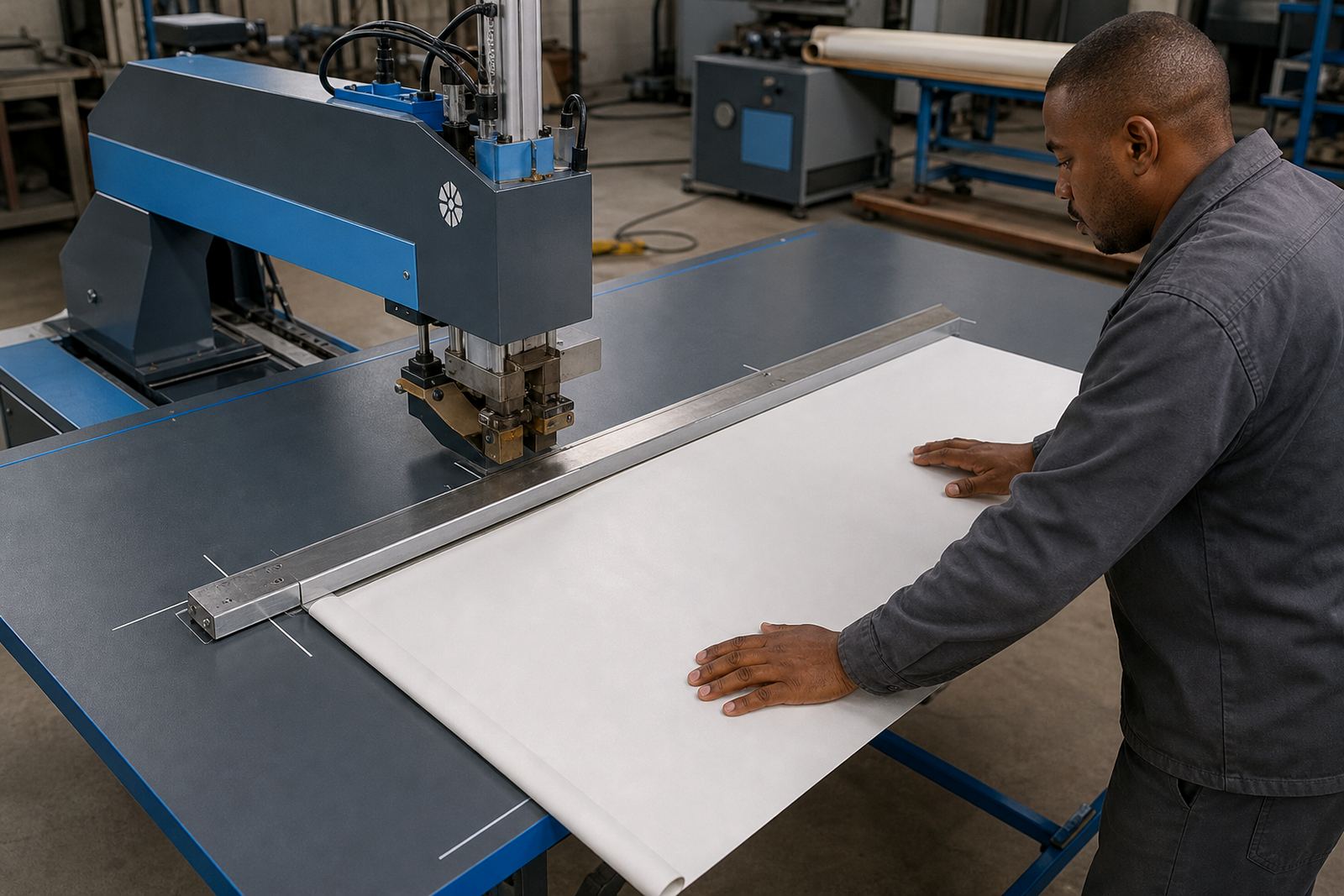
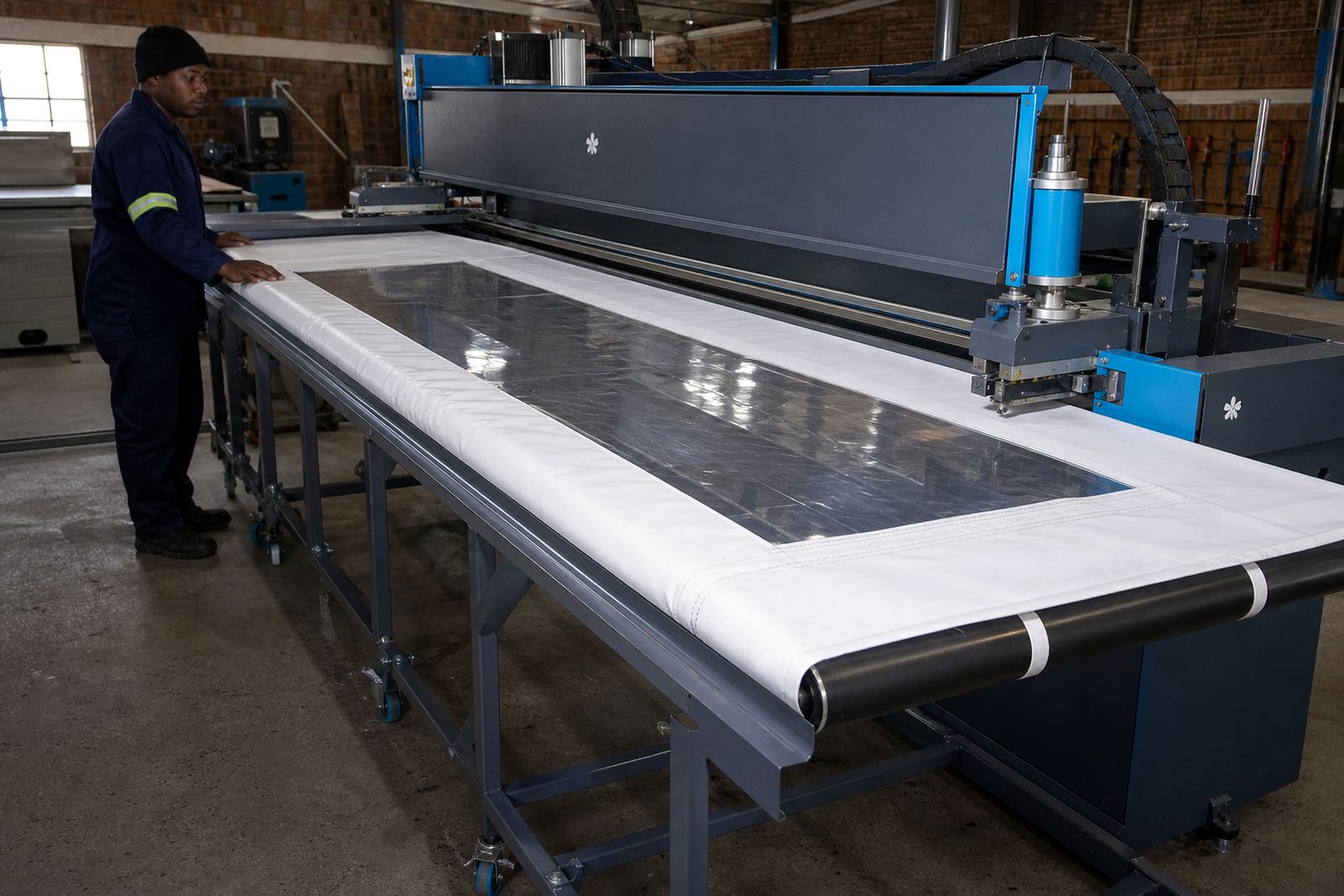
This machine is used where standard welding widths are too tight for the job. It suits transport side curtains, truck covers, large tents, protective screens and wide banner assemblies that need a clean welded line over longer lengths. In practice, that means less fighting with material drift and better control on panels that must sit square when they are hung or tensioned.
On PVC-coated fabrics, the welder is used for overlap seams, edge hems, pocket formation, reinforcement patches and joined sections where strength and appearance both matter. For curtain makers in Germiston, Boksburg, Durban or Cape Town, the wider throat and longer working table help when handling bulky rolls and large assembled pieces in a busy workshop.
- Suitable for PVC-coated polyester and similar coated fabrics
- Useful for long seams, hems, lap joints and reinforcement strips
- Designed for repeated production work on larger curtain assemblies
Radio frequency or hot-air welding, matched to the fabric
Depending on the fabric build and the finish required, this class of machine can be supplied for high-frequency welding or hot-air and hot-wedge work. High-frequency welding is commonly used for PVC-coated materials where a consistent sealed seam is needed along the full length of the joint. Hot-air and hot-wedge systems are used where the material, seam profile or job layout calls for thermal bonding at controlled speed.
The right choice depends on the thickness of the coating, the seam width, the type of reinforcement and how the finished article will be loaded in service. Transport curtains often need neat, repeated welds with enough bond area to handle vibration, movement and daily handling. On banner and display work, the seam must stay flat and not pull the face of the material out of line.
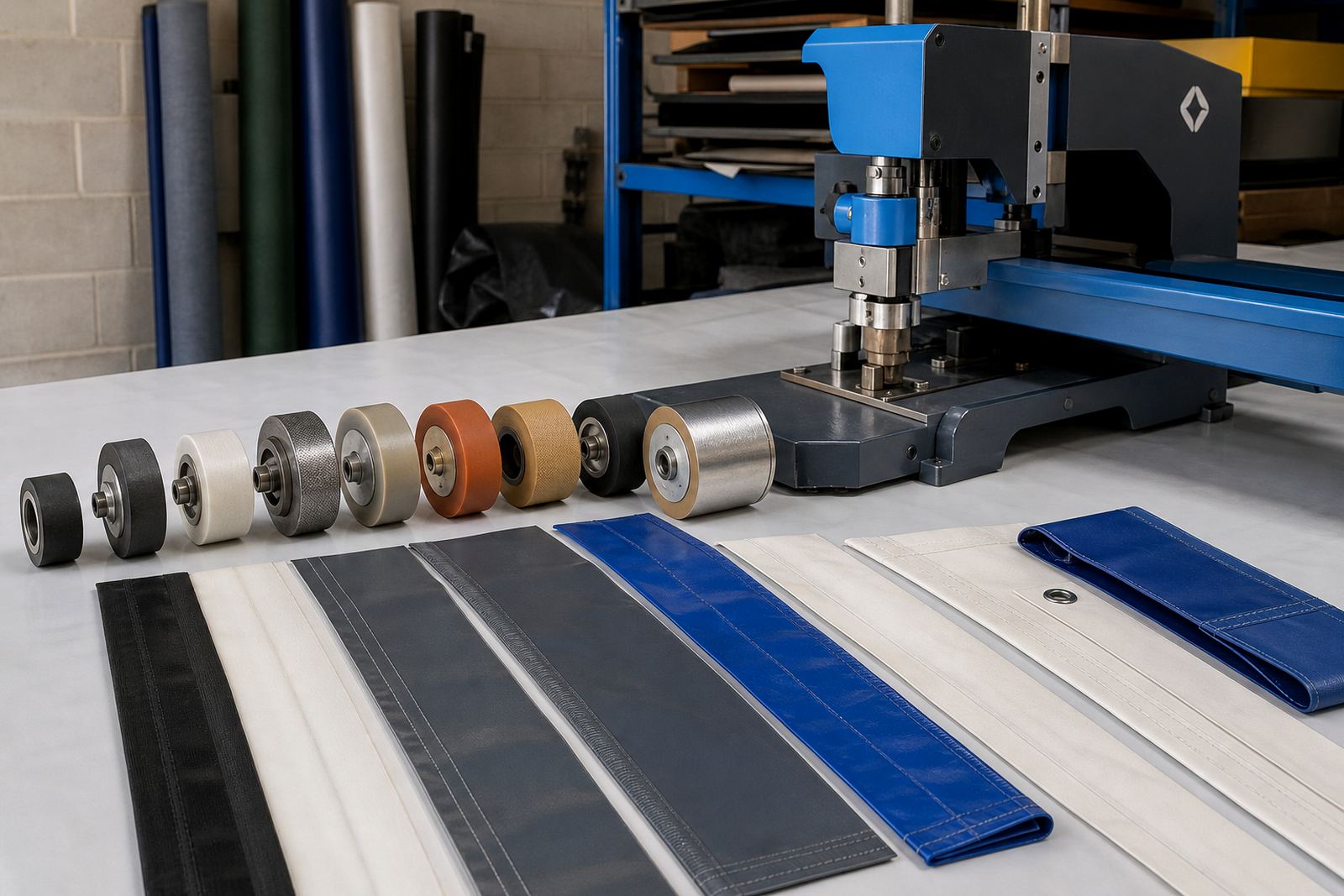
- Overlap seam welding for curtain joins and panel extensions
- Hem welding for clean edges and load-bearing finishes
- Keder welding for track-in curtain systems and hanging edges
- Eyelet strip and reinforcement work where hardware is fitted later
Typical sizes, controls and workshop options
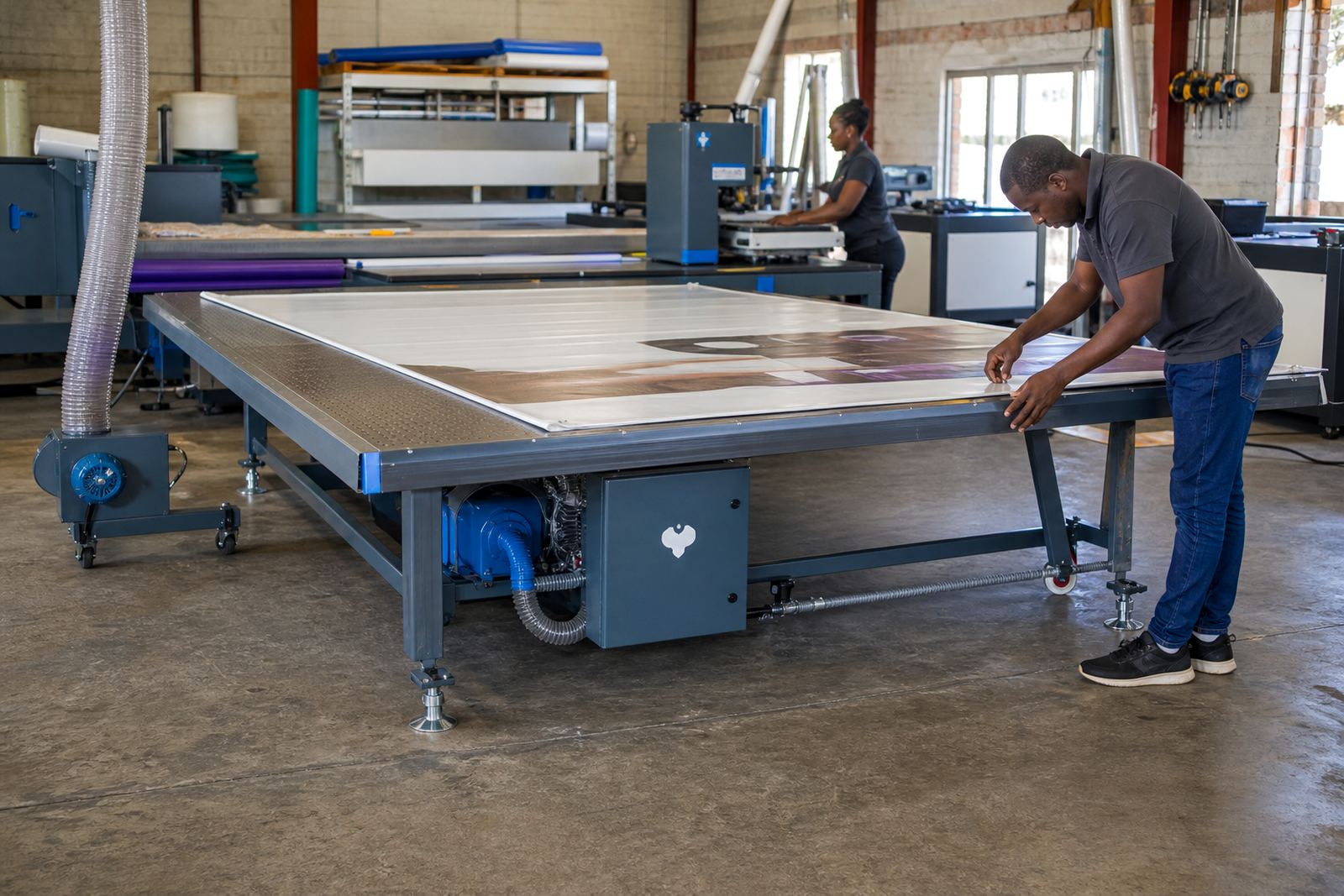
Side curtain welders are usually specified by the working length needed in the shop. Wider formats are selected for long curtain panels and larger signage assemblies, while more compact units suit smaller bays or mixed production. Controls are normally arranged for temperature, pressure and dwell or travel speed, with mechanical guides or fixtures to keep the weld line straight.
Options may include interchangeable tooling for hems, seam guides, edge stops, keder profiles and fittings for eyelet reinforcement. A good setup should also allow the operator to position heavy rolls without strain, because wide PVC sheets can pull unevenly if the feed table and support arrangement are not matched to the job. In humid coastal areas like Durban, material storage and workshop handling matter as much as the welding itself.
- Working length matched to curtain width and panel size
- Temperature and pressure control for consistent bonds
- Guides and fixtures for straight seams and repeat work
- Tooling support for hems, keder and reinforcement details
Where this machine earns its place
This welder suits transport curtain makers, tarpaulin shops, tent fabricators, sign workshops and industrial cover manufacturers that work with PVC-coated assemblies day after day. It is a practical fit where wide panels need to be joined, repaired or finished with the same seam quality across several metres. A well set machine helps keep edges even on large pieces that would be hard to manage by hand alone.
It is also useful for work that has to hold up on South African roads and at outdoor sites, where dust, sun and repeated movement test every seam. For crews in Johannesburg, Pretoria and Bloemfontein, the demand is often on accuracy and repeatability. For coastal work in Durban and Cape Town, the finish must also resist the kind of handling that comes with damp conditions and frequent loading.
- Transport side curtains and truck fitments
- Large tarpaulins, covers and industrial sheets
- Banner assemblies and display backings
- Tent walls, flaps and reinforced openings
Installation, operator safety and machine servicing
Fitting a side curtain welder correctly makes a difference to seam quality and operator comfort. Installation normally includes positioning, levelling, electrical connection where applicable, tooling alignment and test welding on the actual material to confirm heat, pressure and travel settings. On high-frequency equipment, screening and grounding must be checked carefully. On hot-air or hot-wedge units, guards, airflow paths and heating elements must be set and tested before production starts.
Operator safety is not just about the switch position. Hands must stay clear of closing points, heated surfaces and moving parts, and the material feed path should be clear of loose offcuts and tools. Regular servicing keeps rollers, electrodes, guides and seals in shape, while worn parts should be changed before they mark the seam or slow production. In workshops running hard through the week, planned servicing is usually cheaper than chasing faults after a breakdown.
- Tooling alignment and seam testing on site
- Preventive servicing for electrodes, rollers and guides
- Fault finding for uneven seams, poor bonding and tracking issues
- Operator training for safe handling and repeatable output
What to confirm before ordering
To match the right side curtain welder to the job, it helps to confirm the material type, fabric thickness, seam width and the widest panel you plan to weld. The machine choice also depends on whether you mainly do overlap seams, hems, keder, eyelets or a mix of all four. If the workshop handles both new work and repairs, that changes the tooling and support needed.
It is also worth confirming the available workshop space, supply requirements for the chosen machine, and whether the operator will need training on setup and seam checks. For businesses servicing customers across Germiston, Johannesburg, Pretoria, Durban, Cape Town and Bloemfontein, service access and spare parts support matter as much as the machine itself. A proper order should line up with the way your team actually works, not just the size on paper.
- Fabric type and coating thickness
- Maximum working width and seam layout
- Need for hems, keder, eyelets or reinforced patches
- Workshop space, supply details and support needs
Service coverage from Germiston into the main centres
PVCWelder supports side curtain welding work from Germiston, Ekurhuleni, with installation, commissioning, operator training, preventive servicing, parts supply and site callouts available through the normal enquiry process. That support reaches transport and fabrication businesses in Johannesburg, Pretoria, Durban, Cape Town and Bloemfontein, with branch support also covering Boksburg and Benoni.
For shops that depend on steady output, it helps to have one contact point for the machine, the tooling and the service work. Whether the job is a new curtain line, a repair bench or a larger production room, the aim is to keep the welder set for straight seams and reliable daily use. If the machine is matching long panels, it should be matched to the support behind it too.
Key facts
| Product type | Side curtain welder for wide-format PVC curtain and reinforced fabric work |
|---|---|
| Welding methods | High-frequency (radio frequency), hot-air or hot-wedge depending on specification |
| Typical materials | PVC-coated polyester, transport curtain fabrics, banner stock and similar coated assemblies |
| Working output | Overlap seams, hems, keder, reinforcement patches and eyelet strip work |
| Controls | Heat, pressure and timing or travel settings with seam guidance |
| Support | Installation, commissioning, operator training, servicing, parts and site callouts |