Pocket seams that hold a banner straight
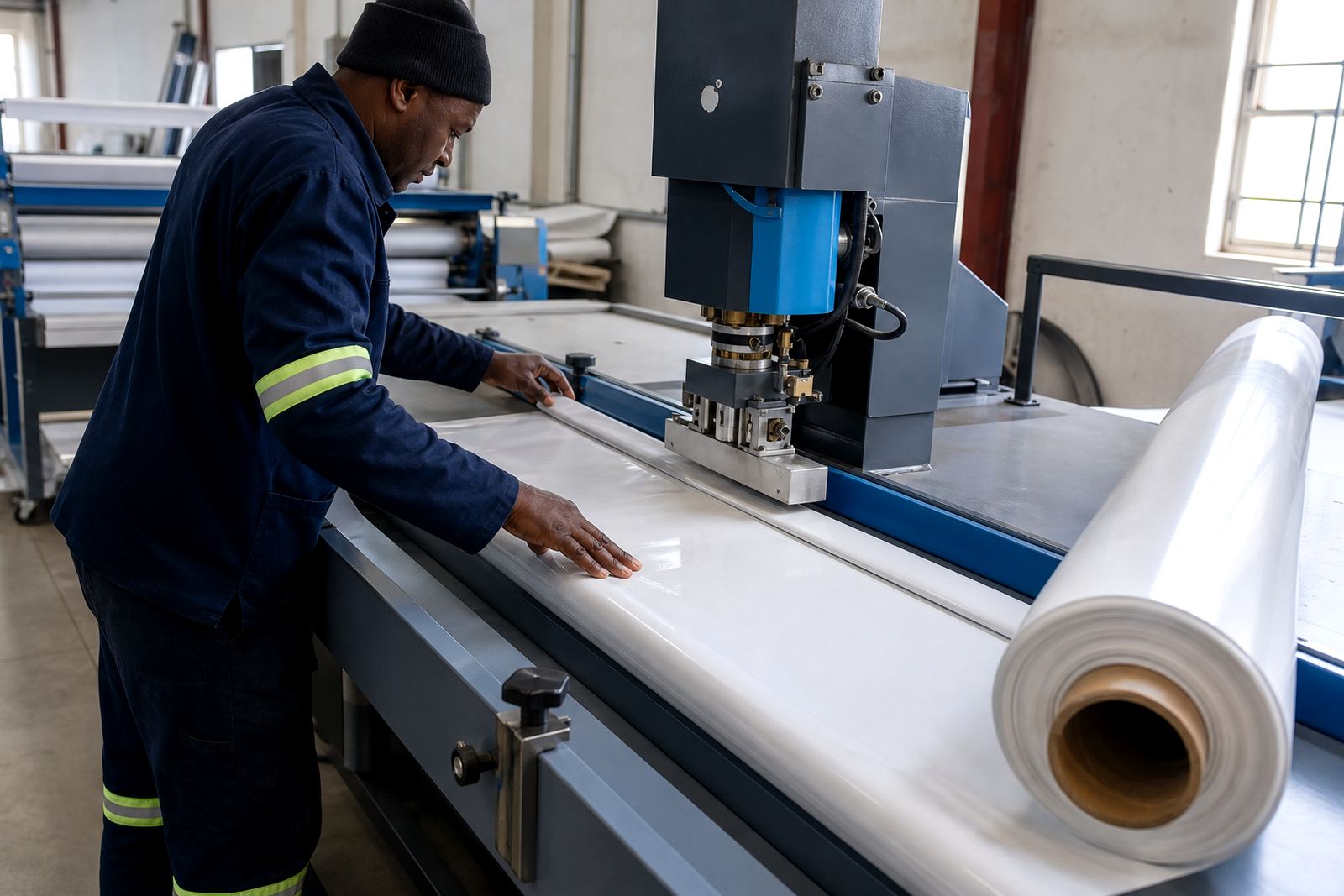
This unit is set up for welding pockets onto PVC-coated banner material, usually along the top or side edge where a pole, tube or tension bar must sit. In signage and display work the finished pocket needs to run straight, keep the banner square and leave enough space for easy threading without wrinkling the print. On heavier tarpaulin grades, a wider pocket with a second pass can help when the banner is exposed to wind or handled often.
For printed work, the seam line must be placed accurately so the image does not wander into the fold. A good pocket weld also avoids sharp creases at the weld edge, which helps when the banner is rolled for transport or mounted on site in Johannesburg, Pretoria, Durban or Cape Town where handling often happens in a hurry.
- Suitable for PVC-coated banner stock, tarpaulin and display sheeting
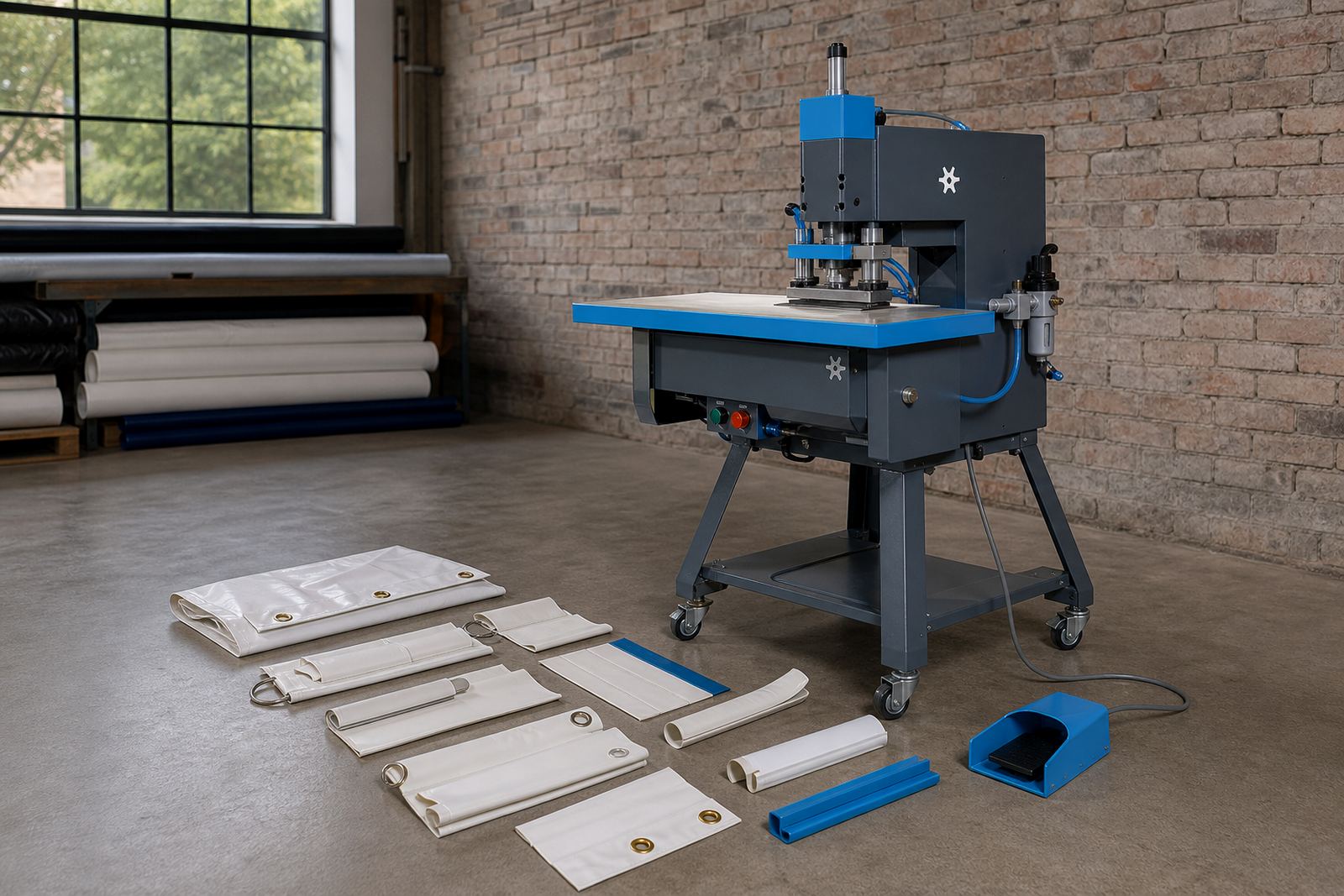
- Produces pole pockets, sleeves and folded reinforcements
- Works with straight-edge runs and corner returns
- Useful for indoor and outdoor banner systems
High-frequency and hot-air options for the job at hand
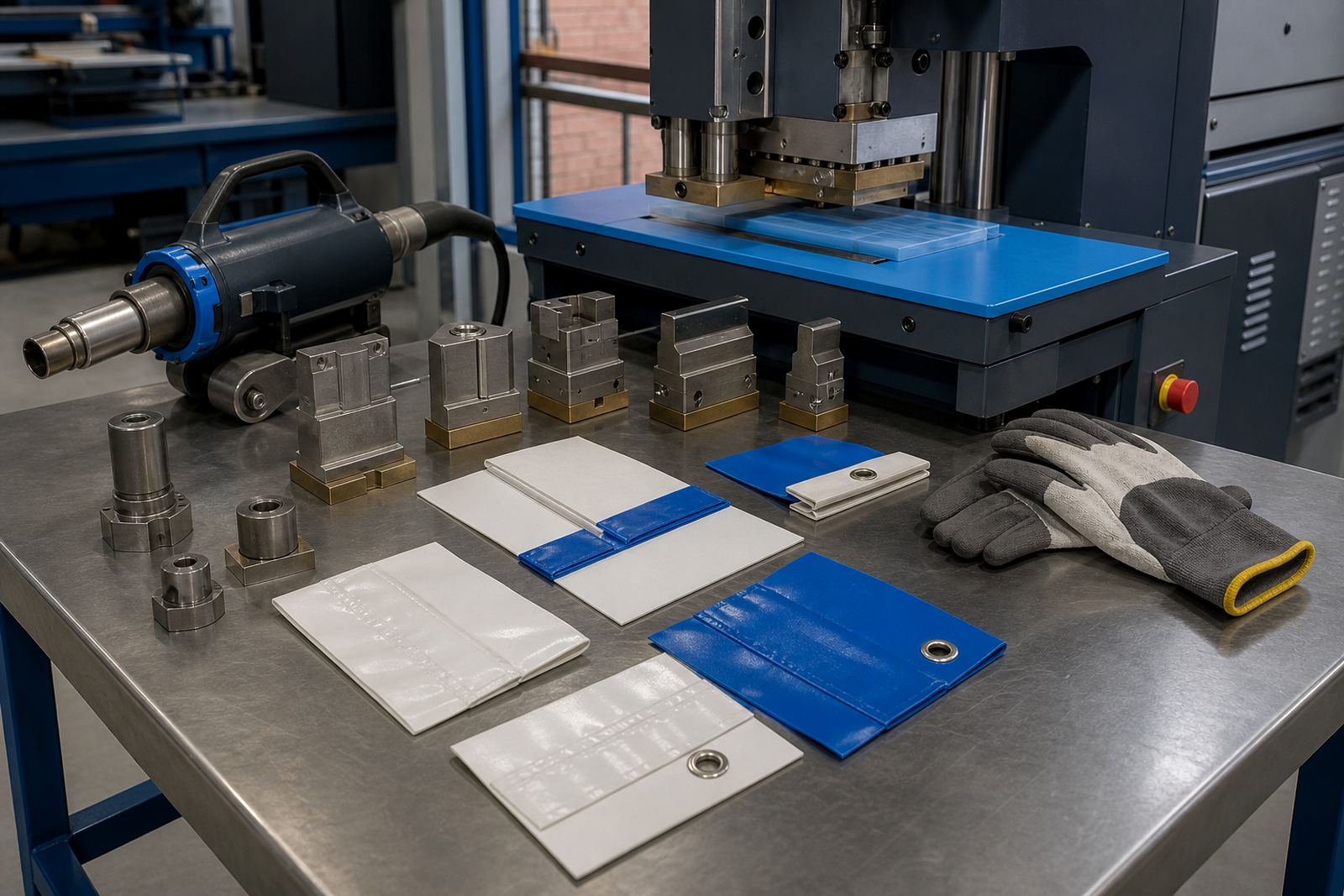
Pocket work can be done with high-frequency welding on compatible PVC-coated fabrics, or with hot-air and hot-wedge systems where the material and seam design call for thermal welding along the fold. High-frequency welding is valued for controlled, even bonding on matching PVC layers, while hot-air or hot-wedge methods are often used for longer seams, hems and reinforcement work on larger formats. The right setup depends on material thickness, pocket width and the type of printed banner you are making.
Typical pocket sizes in the trade range from 40 mm to 100 mm, with larger sleeves used for heavier poles or tension bars. A narrower pocket may suit small event banners, while wide sleeves are better for outdoor advertising frames and tall fence panels. Matching the pocket size to the support hardware matters, otherwise the pole can bind or the banner can sit uneven.
- Available for straight seams, folded hems and sleeve formation
- Can be matched to light and medium duty PVC-coated fabrics
- Set-up may include guides for repeat pocket width
- Useful where clean, repeatable seam placement matters
Where pocket welding earns its keep
This type of machine suits banner makers, tent makers and fabrication shops producing printed PVC work that needs a sleeve or pocket edge. It is common for sporting banners, roadside advertising, market signage, stage backdrops and fence covers. In coastal areas like Durban, seam quality and material handling matter because humidity and salt air can affect stored stock and any metal parts around the shop floor.
For tent and marquee work, pocket welding is also used on reinforced sleeves for side curtains, tension strips and edge supports. In Germiston and across Ekurhuleni, many shops also use the same setup for short-run repairs, replacement pockets and custom widths where one job may need a 50 mm sleeve and the next a 75 mm return. The unit gives better consistency than hand folding on repeated work, especially where multiple banners need the same finish.
Fitting, power and workshop layout
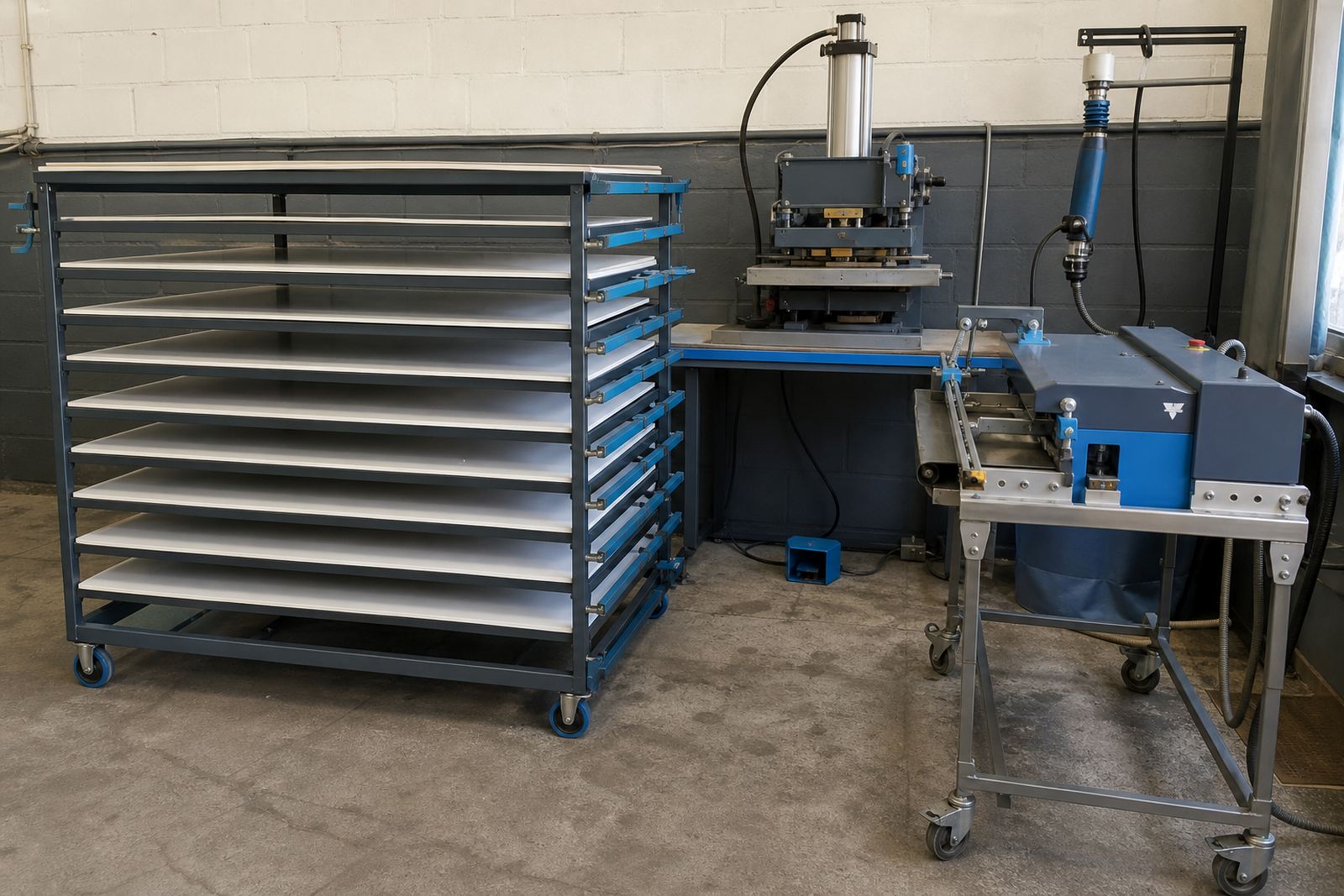
These units are normally fitted into a fabrication line with space for feeding, alignment and finished stacking. Depending on the model, installation may involve single-phase or three-phase electrical supply, machine levelling, air supply for clamping systems, and alignment checks on guides, rollers or pressure bars. For larger workshops in Johannesburg or Pretoria, the machine is often placed near cutting and finishing benches so the operator can move straight from print trimming to pocket welding without unnecessary handling.
Good access around the unit helps with safe feeding of wide banners and reduces drag on long panels. If the machine includes foot controls, edge stops or guide rails, those should be set to suit the usual pocket widths used in the shop. A tidy install also makes later servicing easier, especially when the machine needs electrode adjustment, roller checks or replacement of wear parts.
Key facts
| Product type | Pocket welding unit for PVC-coated banners and reinforced sleeves |
|---|---|
| Welding methods | High-frequency welding, hot-air welding, hot-wedge welding depending on model |
| Typical pocket widths | 40 mm to 100 mm, with wider sleeve options available |
| Common seam work | Pole pockets, hems, sleeve joints, corner returns and reinforcement strips |
| Material suitability | PVC-coated banner material, tarpaulin and tent fabric used in sign and display work |
| Installation needs | Electrical supply, floor space for feed and exit handling, alignment and operator set-up |