What the cooling stacker does on the floor
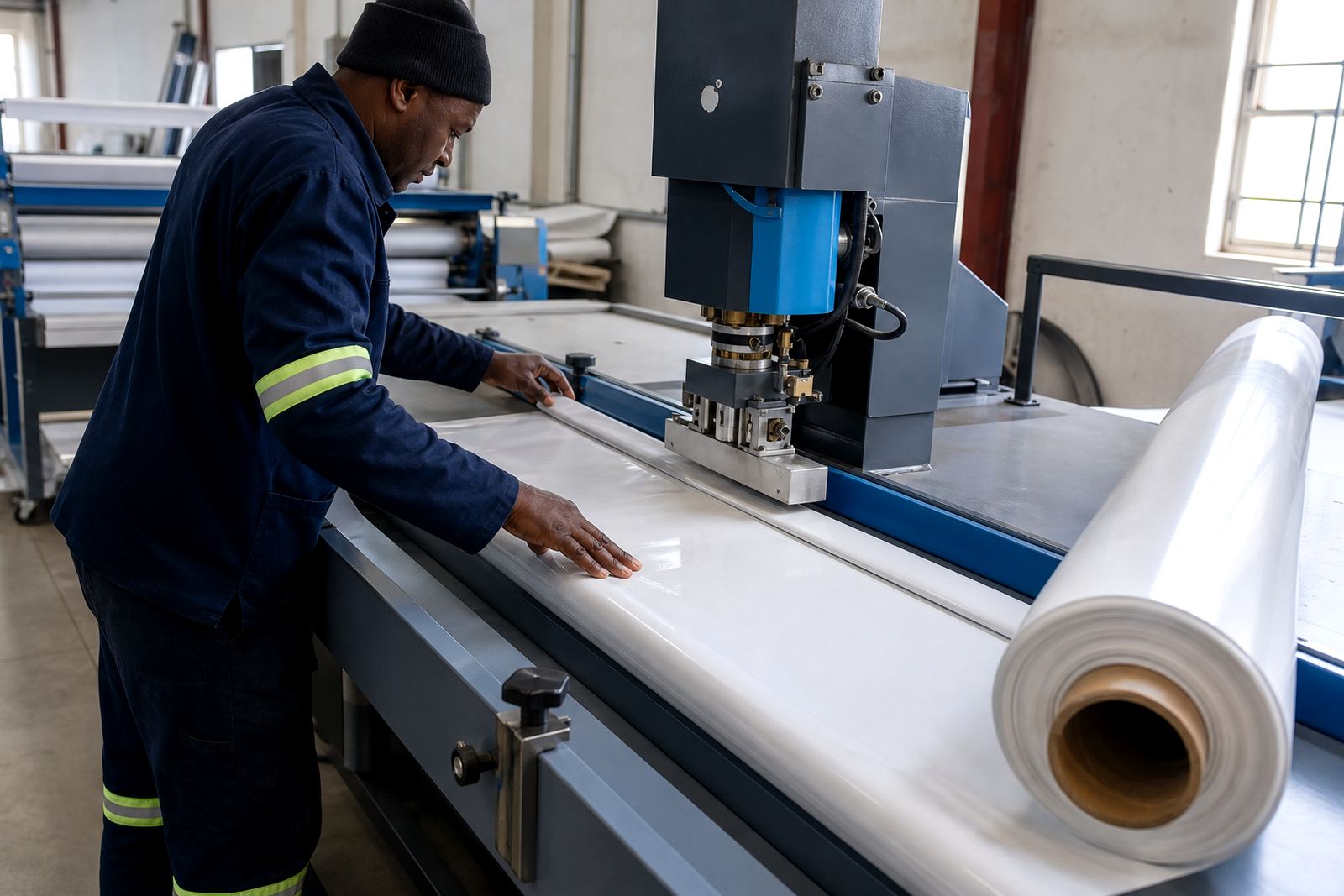
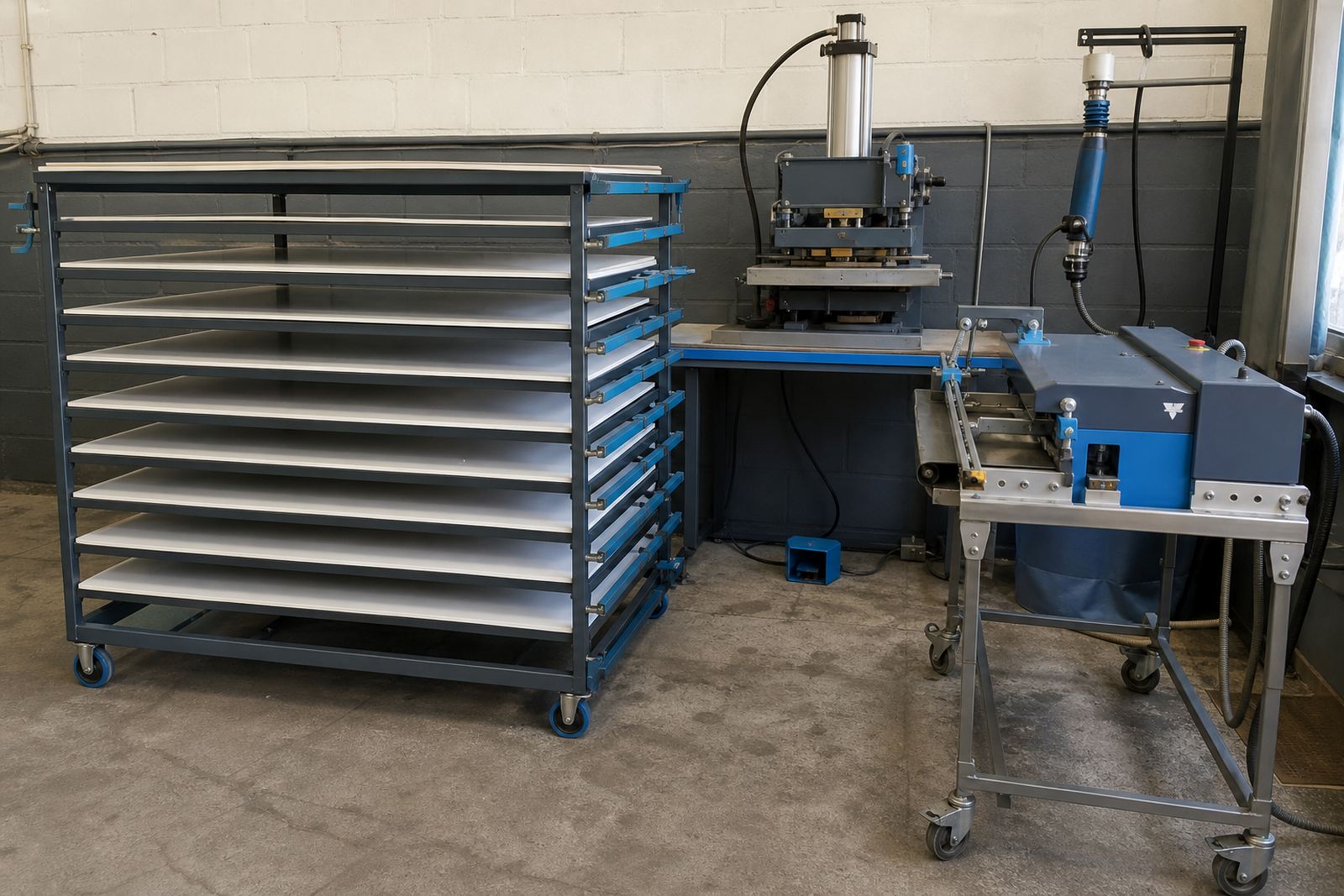
A cooling stacker is a handling unit placed after a high-frequency welder, hot-air welder or hot-wedge machine to support the finished panel while the seam cools and sets. It keeps large PVC-coated fabric panels from dragging on the floor, curling at the edge, or picking up dust while the material is still warm and flexible. In tarpaulin and signage work that means cleaner folds, straighter packs and less handling damage at the bench.
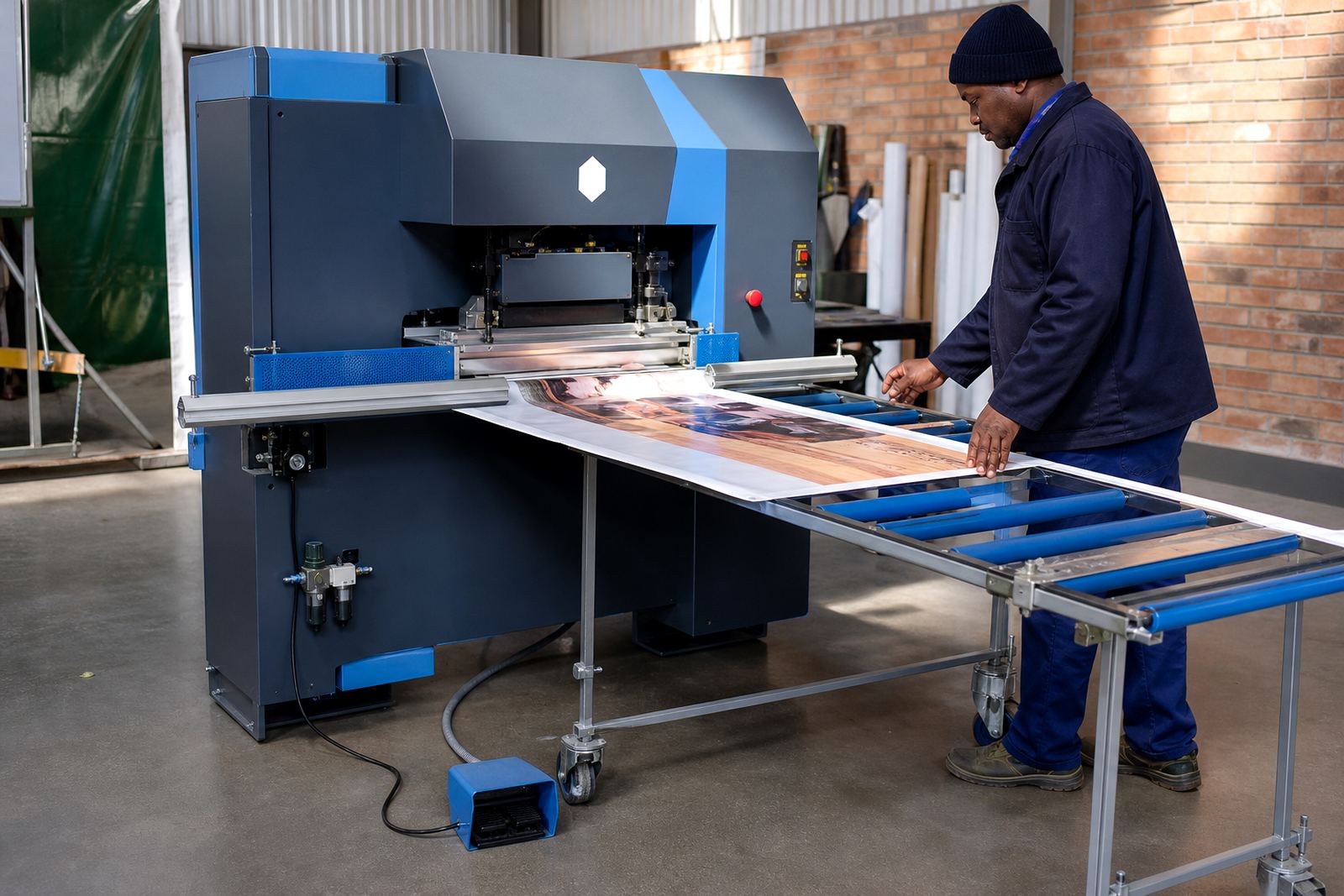
For workshops in Germiston, Johannesburg, Pretoria, Durban, Cape Town and Bloemfontein, the benefit is practical. Long welded lengths can be guided over the support surface instead of being left to hang awkwardly from the machine. That helps when you are running side seams, top hems, pocket hems, keder strips or eyelet borders on PVC banner stock and heavier tarpaulin grades.
- Supports welded panels while heat leaves the seam area
- Helps keep flat seams aligned for folding or stacking
- Reduces scuff marks on printed or coated surfaces
- Suits straight lengths and wider format panels
Sizes and support formats that suit South African workshops
Cooling stackers are usually selected to match the width of the welded work, the bench height and the way the material moves out of the welding line. A smaller unit suits compact sign shops working on narrow hems and shorter banners, while wider support sections are better for tent walls, tarpaulin curtains and long truck side sheets. Some units use fixed rollers, others use low-friction support arms or folding frames that can be moved near the welder.
The right setup depends on panel length, material weight and how the team packs finished work. In humid coastal areas such as Durban or Cape Town, warm PVC can stay pliable a little longer so extra support length may help. In larger inland workshops handling multiple seams at once, a longer cooling path keeps the workflow moving without forcing warm panels into a tight stack.
- Working width matched to your panel size
- Fixed or movable support section
- Light to heavy duty frame options
- Suitable for flat pack, roll and fold handling
Where it fits in welding lines
This support unit is used after seam creation in banner, tarpaulin and tent production. It works with overlap seams, double folded hems, pocket hems, keder insertion work and eyelet borders where the material has just passed through a welding station. The stacker keeps the work path organised so the operator is not forced to hold the weight of the panel while the seam is still soft.
It suits firms making event marquees, shade covers, truck tarps, printed displays and stage wraps. When panels are still warm, corners can lift and printed faces can rub. A controlled cooling path makes the next step easier, whether that is trimming, checking seam straightness, punching eyelets or preparing the sheet for packing and dispatch.
- Use after seam welding on PVC-coated fabrics
- Supports hems, lap seams and reinforcement strips
- Helps before eyelet setting and final packing
- Useful on long runs and wide sheets
Fitting the support into your workshop layout
Installation depends on how the welding line is laid out and how panels leave the machine. The support should sit close enough to receive the warm sheet without a sharp drop, but far enough to avoid crowding the operator at the welding head. On some floors the frame is set level with the machine exit. On others it is positioned slightly lower so the material slides naturally and does not snag at the edge.
For powered drive systems or adjustable frames, the electrical supply and control position should be checked during installation. The fit should allow clear walking space, safe access to the welding station and an open path for larger panels. In plants with multiple operators, the cooling section should not block the route to trimming, eyelet pressing or folding tables.
- Check machine exit height and panel flow direction
- Allow space for operator movement and safety access
- Match the support level to the welder outlet
- Confirm whether the frame needs powered adjustment
Keeping the stacker clean and ready for daily use
PVC dust, adhesive residue and fabric offcuts can build up on any support surface used near welding equipment. Wipe rollers and contact points regularly, and inspect moving parts for stiffness, loose fasteners or worn surfaces that might mark the fabric. If the unit includes guide rollers or height adjustment, those parts should be checked during planned servicing so the support stays level and easy to handle.
In workshops running through summer heat or near the coast, surface build-up can happen quickly, especially where panels are handled with damp hands or where dust collects on warm seams. A simple cleaning routine protects the finish and helps the stacker support the work evenly from one shift to the next. Replace worn rollers, bent guides and tired bushes before they start marking finished material.
- Clean contact surfaces with a non-marking cloth
- Check rollers, bearings and fasteners for wear
- Keep the support area free of offcuts and scrap packing
- Include the stacker in preventive servicing schedules
Details to confirm before you order
To specify the correct cooling stacker, confirm the maximum panel width, the average sheet length, the type of welding used and the way the finished material is packed. A shop making short printed banners will need different support from a team producing long tarpaulins or tent side walls. Also confirm whether the support must sit beside one welding machine or serve several stations in the same area.
Useful details include frame width, support length, height range, roller or arm style, finish, and whether the unit must be fixed or movable. If the line includes keder work, eyelet setting or seam inspection at the exit point, mention that too so the support can be matched to the workflow. For service planning, it helps to note the workshop location, machine type and whether the unit will be used in a dusty inland site or a coastal environment with higher humidity.
- Maximum panel width and typical seam length
- Type of welded product and packing method
- Required support height and working width
- Need for movable, fixed or powered adjustment
- Location, floor space and service access
Key facts
| Product type | Cooling stacker for welded PVC-coated fabric |
|---|---|
| Primary use | Supports fresh seams before folding, packing or next-stage handling |
| Typical materials | PVC tarpaulin, banner stock, tent fabric and coated textiles |
| Compatible work | HF seams, hot-air seams, hot-wedge seams, hems, keder and eyelet borders |
| Support options | Fixed frame, movable support, roller or low-friction surface |
| Workshop fit | Suitable for single-station or multi-station welding lines |