Sample Checks Before the Full Run
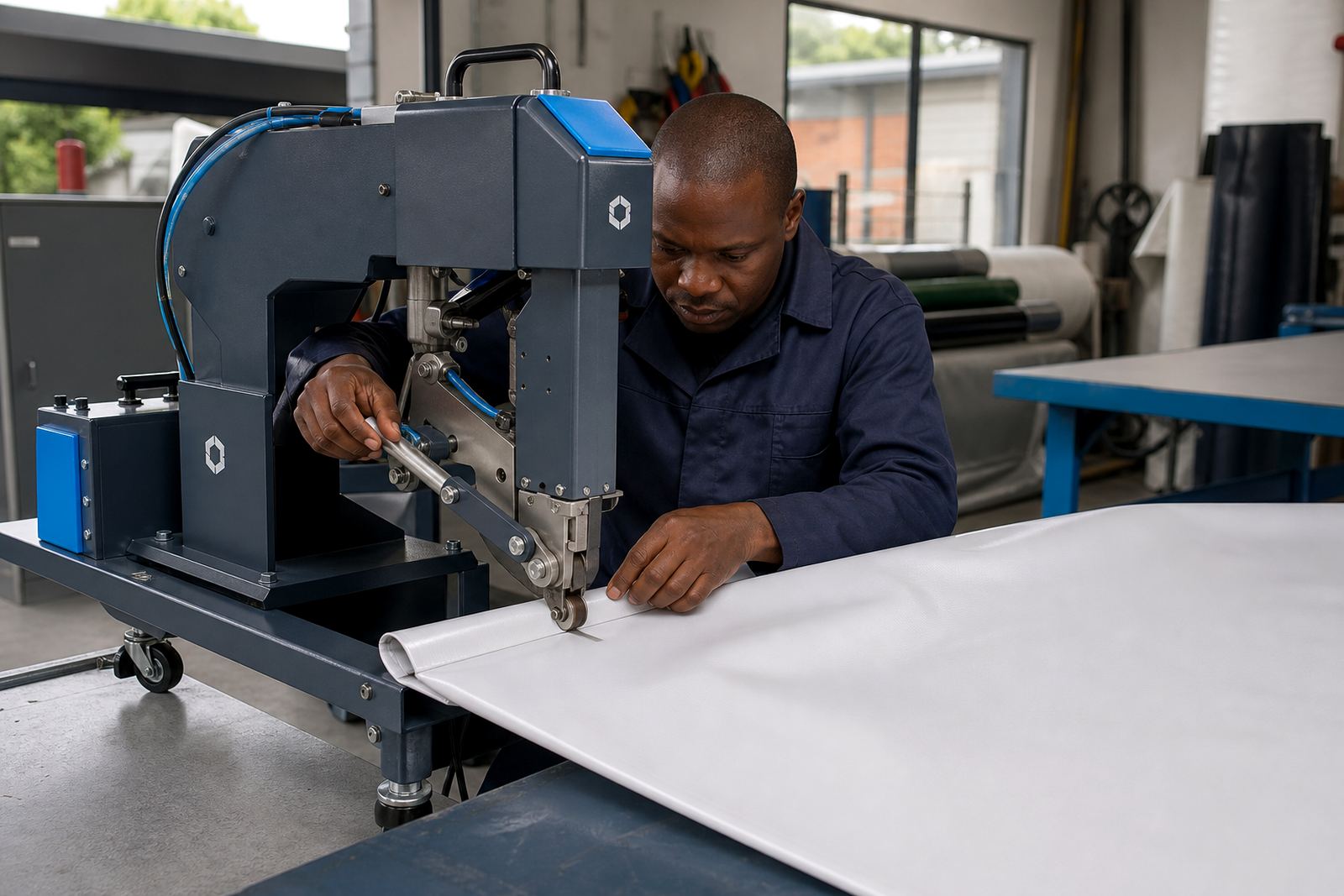
The seam test rig is a compact checking station for welded samples taken during machine setup, changeovers and routine quality checks. It is used with PVC-coated fabrics for tarpaulins, banners, tent panels and related signage work, where seam strength and neat appearance both matter. By testing short sample strips first, the operator can confirm whether the seam is holding evenly across the width, whether edge melt is clean and whether the weld line is sitting where it should.
For high-frequency welding, the rig helps confirm that the RF field, pressure and timing are matching the material build-up. For hot-air or hot-wedge welding, it gives a practical way to confirm temperature, pressure and feed speed before the line is put back to full output. In workshop use this can save a lot of wasted material when a fabric batch, thickness or coating changes mid-job.
What The Rig Is Built To Check
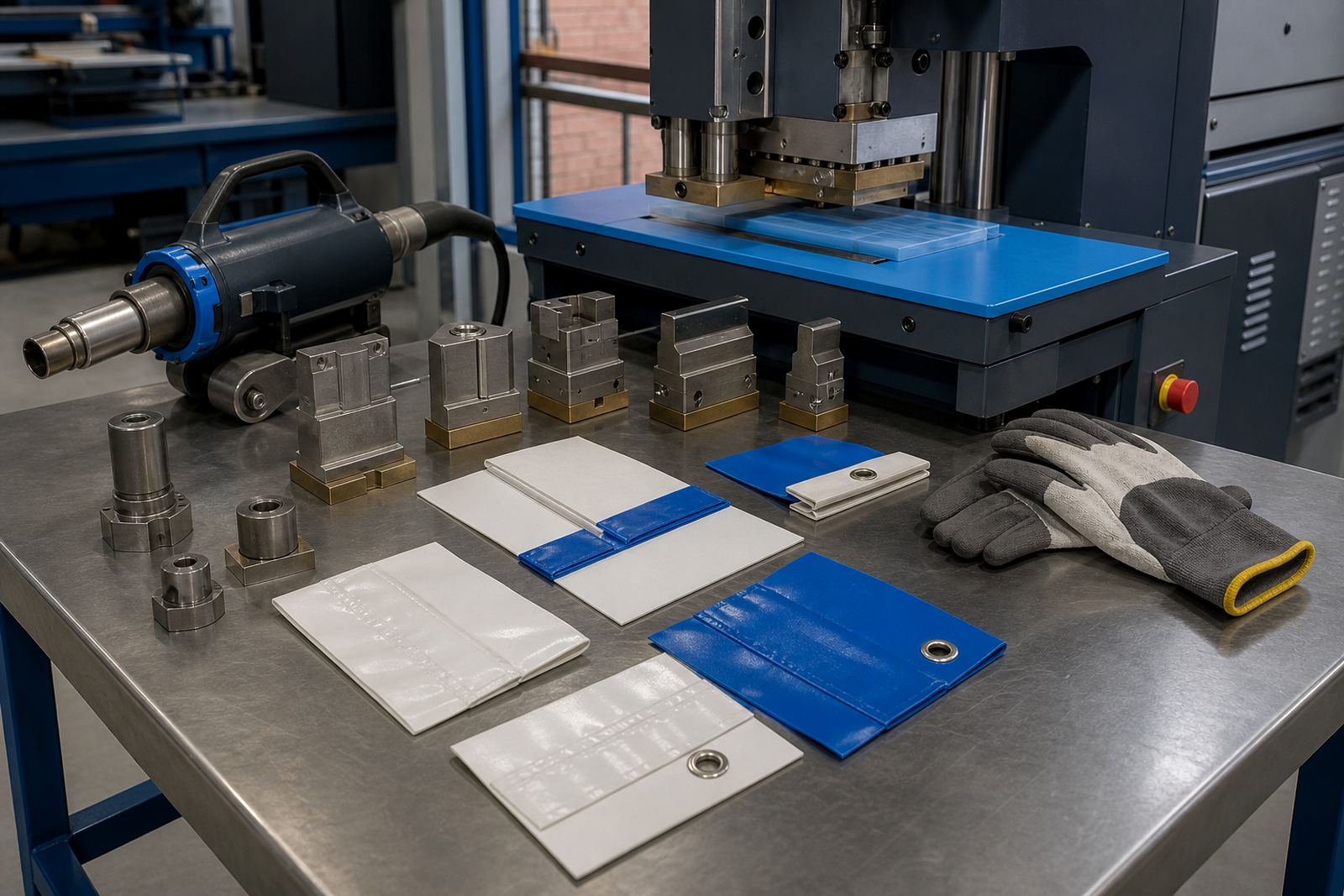
The rig is meant for sample seam evaluation, not full production welding. It is typically used with short offcuts or test strips from coated PVC fabric, banner substrate and tent-grade material. Operators can check overlap seams, lap seams, hems, reinforcement strips, keder attachment trials and eyelet strip preparation. The results are easier to judge when the sample is cut square and held flat in the clamp area.
- Sample seam consistency across the full weld width
- Edge alignment for hems and folded returns
- Keder bead positioning and capture depth
- Eyelet strip preparation before punching or pressing
- Changeover checks after tooling or recipe adjustments
In busy shops the rig is often kept close to the welding line so a test can be done without interrupting the whole workflow. That matters where a job is running to tight panel sizes and the seam needs to land exactly on a printed mark or a stitched guide line.
Sizes, Clamping And Working Set-Up
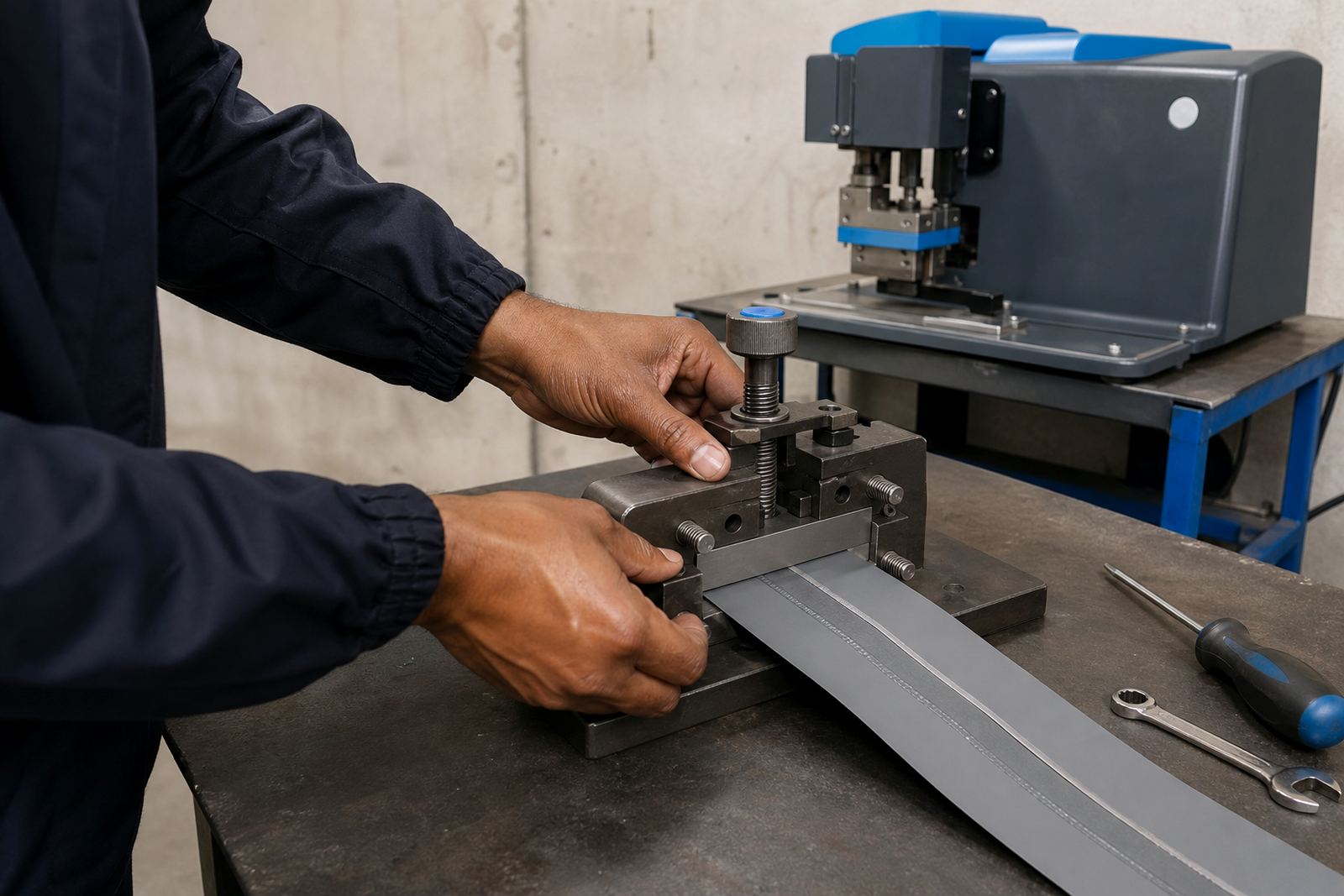
Different workshops ask for different clamp lengths and sample widths, so the rig is usually supplied in a few practical options. The common working widths suit narrow samples for troubleshooting as well as wider strips for full seam comparison. Some units are bench mounted, while others can be fixed to a service trolley or a dedicated testing table beside the welders.
Typical options include adjustable clamping pressure, a marked alignment bed and replaceable sample hold-down parts. A straight edge guide is useful where repeat samples are being measured against the same seam line. On heavier PVC-coated material, a firm clamp helps stop the test piece from creeping during the trial, which can make the reading unreliable.
- Working width options for narrow and wide samples
- Adjustable clamp pressure for different fabric weights
- Bench or table mounted fitting
- Replaceable contact parts where wear is expected
- Alignment markings for repeat checks
Where It Suits In Tarpaulin, Banner And Tent Workshops
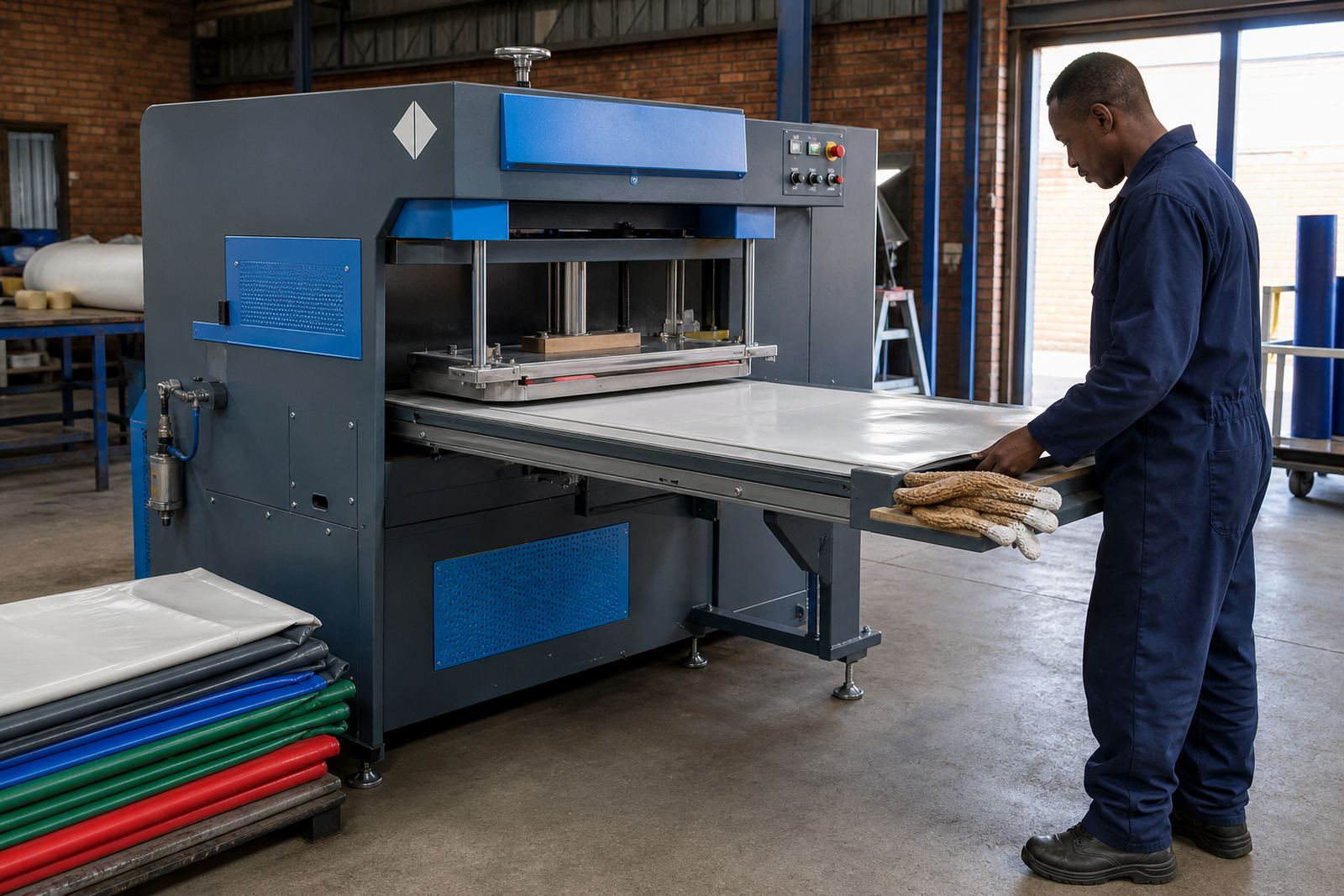
The rig suits Germiston, Johannesburg, Pretoria, Durban, Cape Town and Bloemfontein workshops that weld PVC-coated fabrics on a daily basis. It is useful in advertising production, tent manufacturing, truck tarpaulin work and event cover fabrication. Coastal humidity in Durban and Cape Town can affect material handling and stored offcuts, so a sample check before the main run is especially helpful when fabric has picked up moisture or has been sitting in a warmer store room.
It also fits well in shops that switch between different seam types during the same shift. A clean test on a hem, then on a keder strip, then on an overlap seam gives the operator a clearer picture of how the machine is behaving after a tooling change or electrode adjustment. In larger plants the rig is often part of the normal service area rather than a separate station, because quick checks are needed when a line is being tuned for the next order.
Fitting, Power And Workshop Placement
Depending on the build, the seam test rig can be supplied as a simple manual station or with powered components for clamping and measurement. Where it forms part of a larger welding setup, placement should allow safe access around the machine and enough space for the sample, trimming tools and inspection. Good lighting is important, because operators need to see weld line edge quality, scorch marks, bubbles or cold spots clearly.
When the rig is installed in a production workshop, the surrounding layout should keep the sample area close to the welder but away from foot traffic. The unit should sit level on a stable surface and any powered parts must be checked for proper cable routing and safe guarding. If the rig is used with a measuring press or pull check attachments, the operator needs enough room to load and remove test pieces without strain.
Care, Servicing And Operator Safety
Regular care keeps the rig consistent. Clamps should be cleaned of dust, PVC residue and cut fibre. Moving points need light maintenance where appropriate, and any worn pads or guides should be replaced before they mark the test sample. If the rig is used with heated tooling nearby, the surrounding area should be kept clear of loose scraps and offcuts that can catch on edges or pick up heat.
Operator safety matters just as much on a test station as on the main welder. Hands should stay clear of pinch points, hot tooling and any moving press parts. Sample edges can be sharp after trimming, so gloves are often useful when handling cut strips. On a serviced line, the test rig should be checked for level, clamp grip and repeatability so the readings reflect the machine setting, not wear in the fixture.
- Clean contact faces and guide points regularly
- Check clamps, pads and fasteners for wear
- Keep the area free of loose offcuts and scrap
- Inspect powered connections where fitted
- Use repeatable sample sizes for fair comparison
Details To Confirm When Ordering
Before ordering, confirm the seam type you want to test, the material thickness range, the sample width you normally use and whether the rig will sit beside a high-frequency unit, a hot-air machine or a hot-wedge line. It also helps to know if you need bench mounting, wheel castors, a measuring scale, or fittings for a particular panel size. If the rig will support keder work or eyelet preparation, say so at the start, because the clamp layout and guide spacing may need to suit those jobs.
For mixed production shops, it is worth confirming what seam checks are done most often, for example hem returns, lap seams, welded reinforcement strips or sample pull checks after a machine setup change. That lets the right fixture and accessories be matched to the way the workshop works. If the unit will be used in a service bay, a production floor or a training area, the layout can be matched to that space from the start.
- Material type and thickness range
- Typical sample width and seam style
- Bench, table or floor placement
- Need for measuring marks or pull-check fittings
- Use with HF, hot-air or hot-wedge welding lines
For workshops in Germiston and across South Africa, the seam test rig is a practical shop-floor tool for keeping weld checks consistent from one job to the next. It suits teams that want a cleaner sample read before moving into full panel production.
Key facts
| Product type | Sample seam testing rig for PVC-coated fabric welding lines |
|---|---|
| Typical use | Checks seam consistency during setup, changeovers and production monitoring |
| Compatible work | High-frequency, hot-air and hot-wedge welded PVC fabrics |
| Common seam checks | Overlap seams, hems, keder strips, eyelet strip prep and reinforcement welds |
| Mounting options | Bench mounted, table mounted or service-bay fitting |
| Workshop use | Tarpaulin, banner, tent and signage fabrication |