Feed control for wide PVC rolls
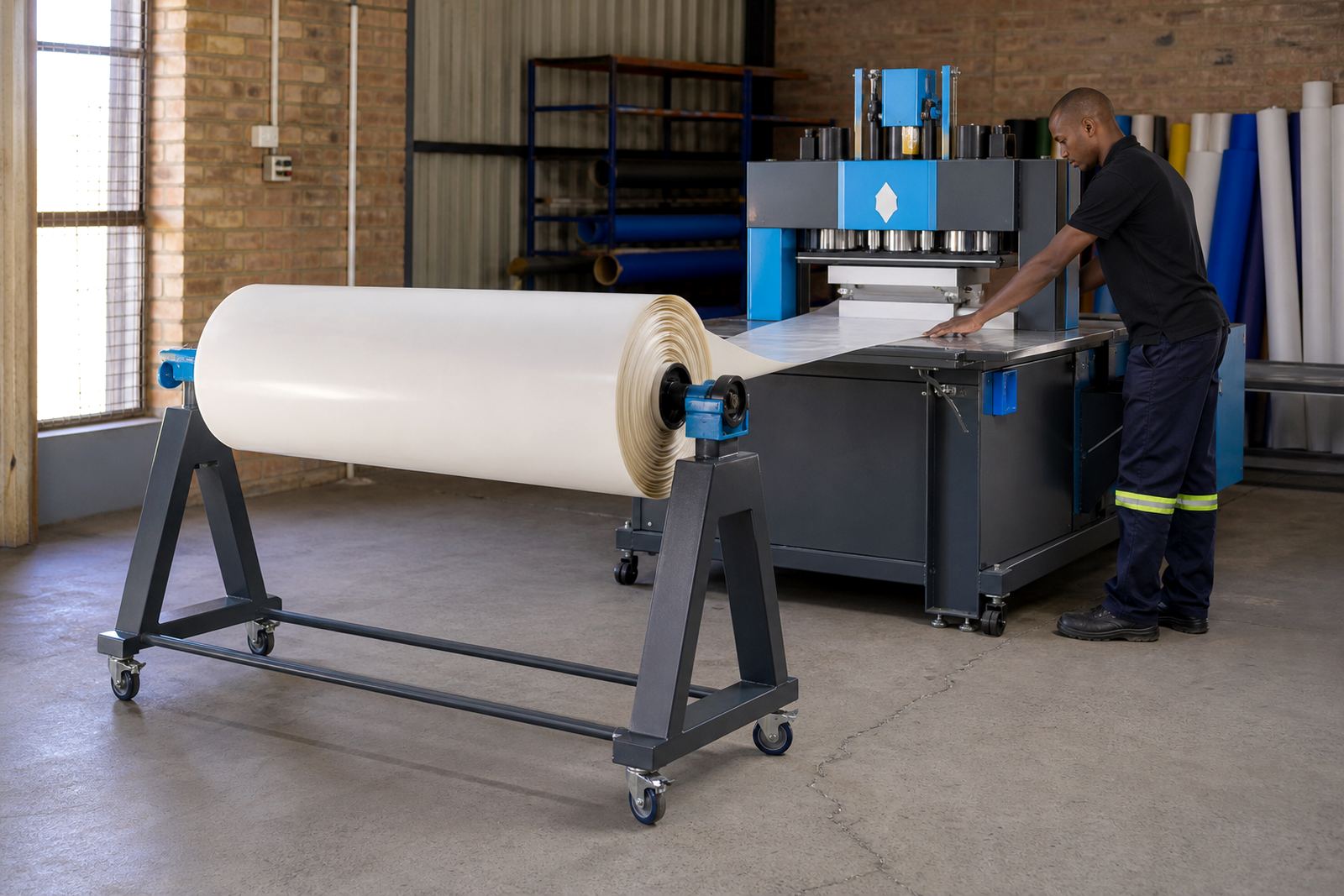
A roller stand is a material support frame used to hold and guide bulky rolls of PVC-coated fabric into welding equipment. In tarpaulin and banner work, that means the roll sits at a workable height, turns freely and feeds without snatching at the edge or pulling the operator off line. On long sheets, that steadier feed helps keep the lap, hem or welded edge aligned from start to finish.
For shops handling coated polyester, banner stock or tent fabric, the stand is usually fitted in front of the welder or cutting table. The roll carries its own weight on the rollers while the operator controls the material path into the machine. That matters on wide goods where the outer layers are heavy, especially when the roll has been stored tightly wound or has picked up humidity from coastal air in Durban or Cape Town.
Typical sizes and build options
Roller stands are supplied in different widths and roller lengths to suit the fabric format being processed. A smaller stand may suit narrow banner rolls, while wider frames are used for tarpaulin and tent panels where the roll diameter changes through the day. The frame should match the machine opening, the table height and the way the operator prefers to feed the material.
- Working width: common options for narrow to wide roll stock
- Roll diameter support: for light rolls through to bulky full rolls
- Frame height: suited to bench level or floor standing feed lines
- Roller surface: smooth turning for easy pull-through
- Leg spacing: stable base for workshop floors and uneven concrete
Some shops need a single roll cradle, while others want a twin-roller layout for back-up material or a feed and unwind setup. In higher output workshops, the stand can be paired with a measuring guide or cutting stop so the operator keeps consistent lengths before welding hems, keder strips or eyelet panels.
Where it fits in PVC fabrication
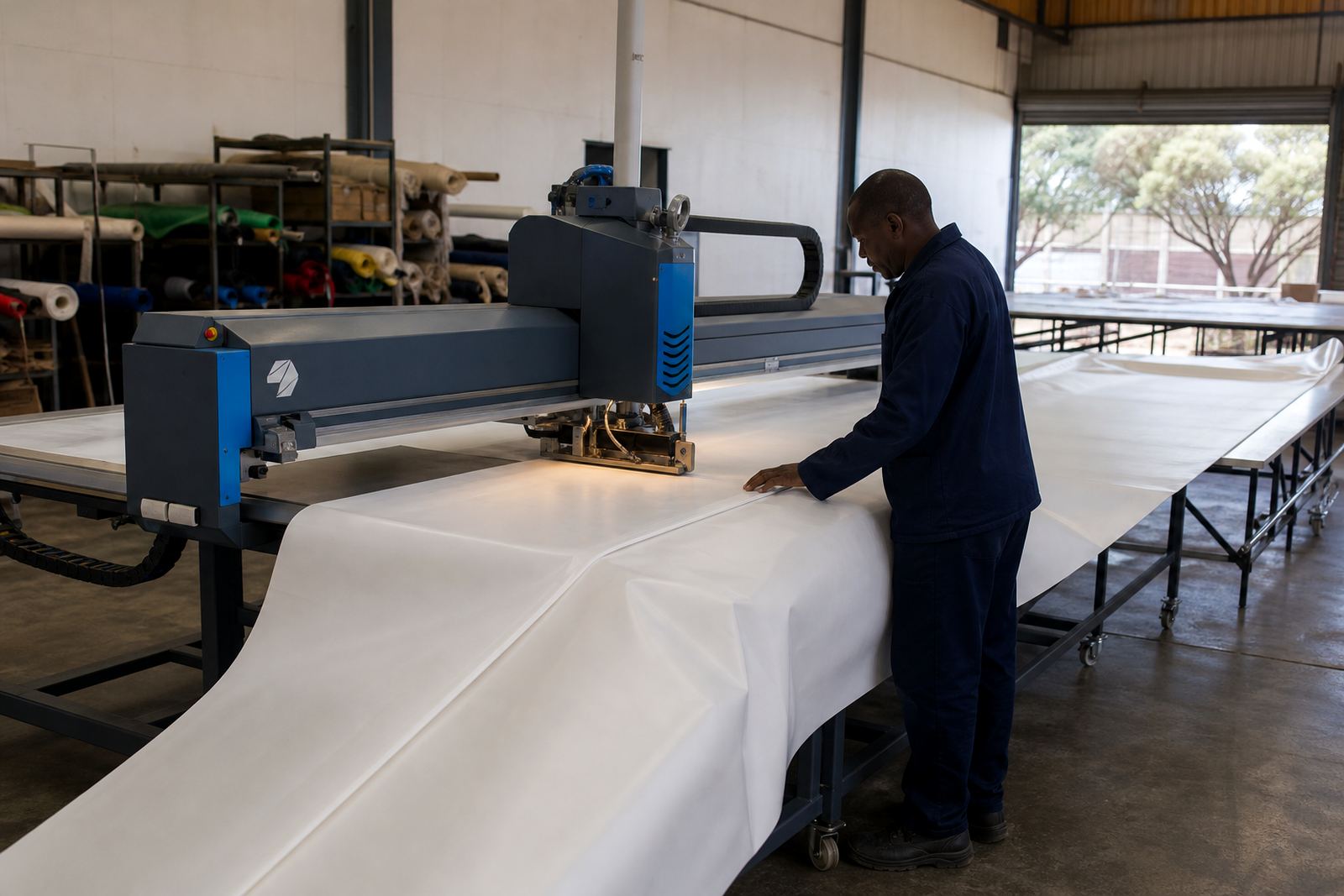
This type of stand suits any workshop that handles repeated feeding of coated fabric into a high-frequency welder or hot-air machine. It is useful for sign shops making banners, for tent makers joining large panels and for tarpaulin producers working on side curtains, covers and cargo sheets. The main benefit is better handling of the roll before the seam is formed, which helps reduce twists, edge damage and drag marks.
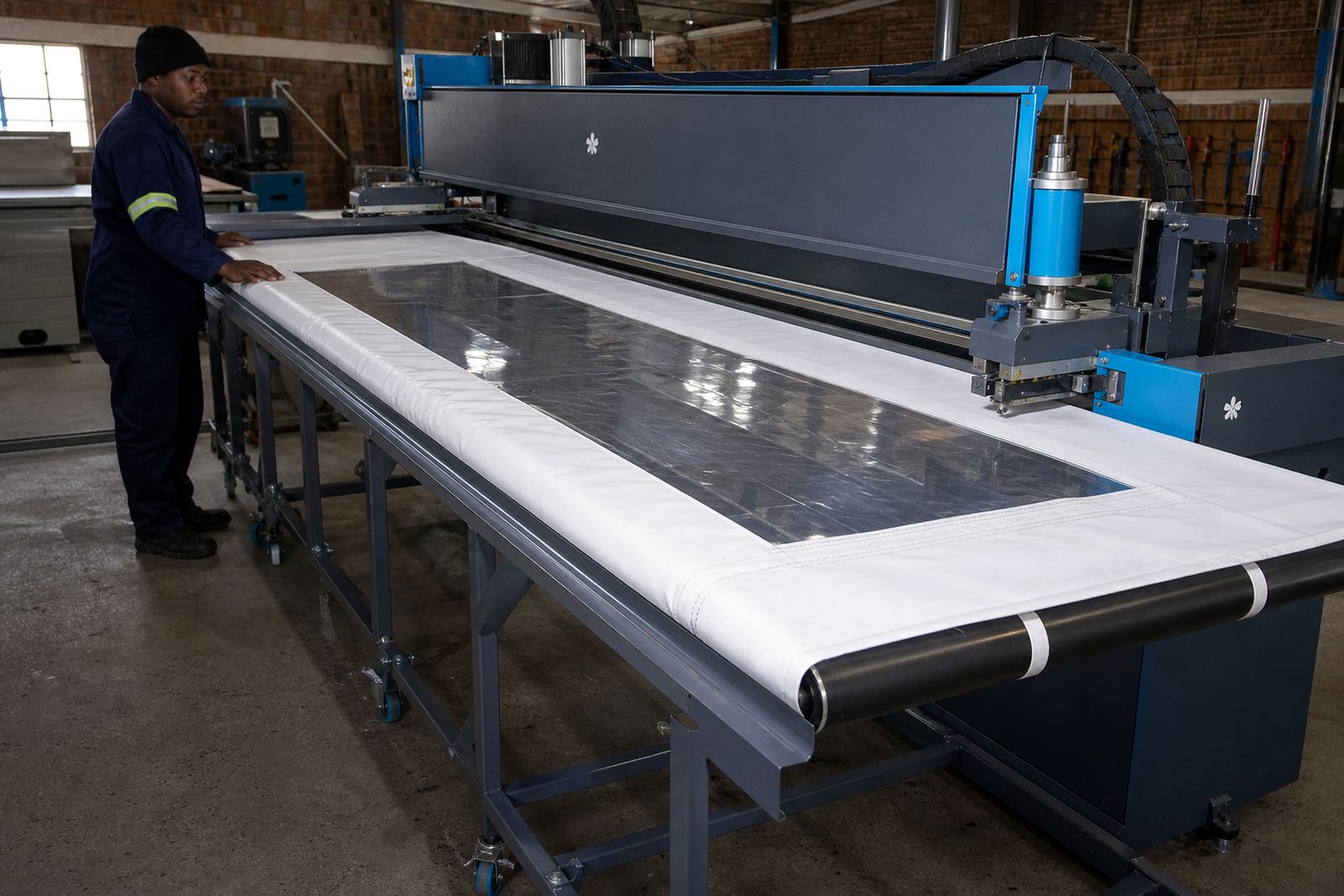
It is also practical for jobs that need consistent seam layout, such as lap seams, welded hems and reinforcement strips. When the fabric is feeding smoothly, the operator can hold the overlap more evenly and keep the weld path aligned with the line marked on the material. That makes a difference on long runs where small feed errors build up and affect the finished panel.
- Tarpaulin side curtains and load covers
- Banner panels and display sheets
- Tent walls, canopies and join panels
- Hems, keder edges and eyelet reinforcement areas
Installation and fitting on the workshop floor
Most roller stands are fitted as part of the feeding line rather than as a separate item tucked against a wall. The stand must sit square to the welder, with the roller path in line with the material entry point. If the frame is out of line, the sheet can wander and the operator will spend more time correcting the feed than welding the job.
On site, the installer will normally check the floor level, machine height and working clearance around the roll. In busy spaces, the stand may need to be positioned so loaded rolls can be swapped without blocking the cutting area or the operator's path. If the workshop runs on a fixed production bench, the stand should match that bench height, otherwise the fabric can dip or rise before it reaches the weld zone.
For heavier stock, the stand should be anchored or placed on a stable base so it does not creep during pull-through. That is particularly helpful where operators handle wide tarpaulin rolls and longer lengths that put sideways force on the frame.
Care, cleaning and workshop handling
A roller stand needs only light maintenance, but it should be kept clean and free of cut-off offcuts, adhesive dust and grit. Dirt on the rollers can mark the underside of the fabric or make the roll stick when the operator starts a feed. In coastal workshops, a light wipe-down is useful where salt air and damp conditions can dull moving parts and fasteners over time.
Check the bearings, roller ends and frame joints during routine machine servicing. If the stand starts to chatter, bind or tilt, the roll will not unwind evenly and the feed line can pull off square. Keep the rollers turning freely and inspect for bent brackets, loose hardware or damaged surface finish. If the stand is used near a hot-air welder, keep it clear of heat spill and trimmed PVC offcuts that may curl under the feet.
- Wipe rollers and frame after cutting or trimming
- Check bearings and fasteners during servicing
- Keep the stand square to the welder and table
- Store spare rollers and fittings off the floor
What to confirm before ordering
Before a roller stand is supplied, the workshop should confirm the width of the widest roll, the typical roll diameter and the working height of the machine line. It also helps to know whether the stand will feed one roll at a time or needs space for more than one material path. If the site handles both banners and heavy tarpaulin, the support frame must suit the larger roll, not only the lighter stock.
The following details are useful when matching the stand to the job:
- Fabric type, such as tarpaulin, banner stock or tent PVC
- Roll width and approximate roll diameter
- Machine height and feed direction
- Floor space available around the welder
- Need for a single roll, twin roll or wider cradle layout
- Whether the stand must suit a mobile workshop or fixed production line
For operators in Johannesburg, Pretoria, Durban, Cape Town, Bloemfontein, Germiston, Boksburg or Benoni, the right support stand can make daily feeding easier and keep the weld line steadier on long jobs. The final choice depends on the roll sizes used, the seam work being done and how the workshop is set up around the machine.
Key facts
| Product type | Material support roller stand for PVC-coated fabric rolls |
|---|---|
| Typical use | Feeding tarpaulin, banner and tent rolls into welding equipment |
| Construction | Steel frame with free-turning rollers |
| Size options | Multiple widths and frame heights to suit workshop layout |
| Compatibility | High-frequency and hot-air welding lines |
| Common workshop fit | Lap seams, hems, keder edges and eyelet reinforcement work |