Built for long seams in tent fabric work
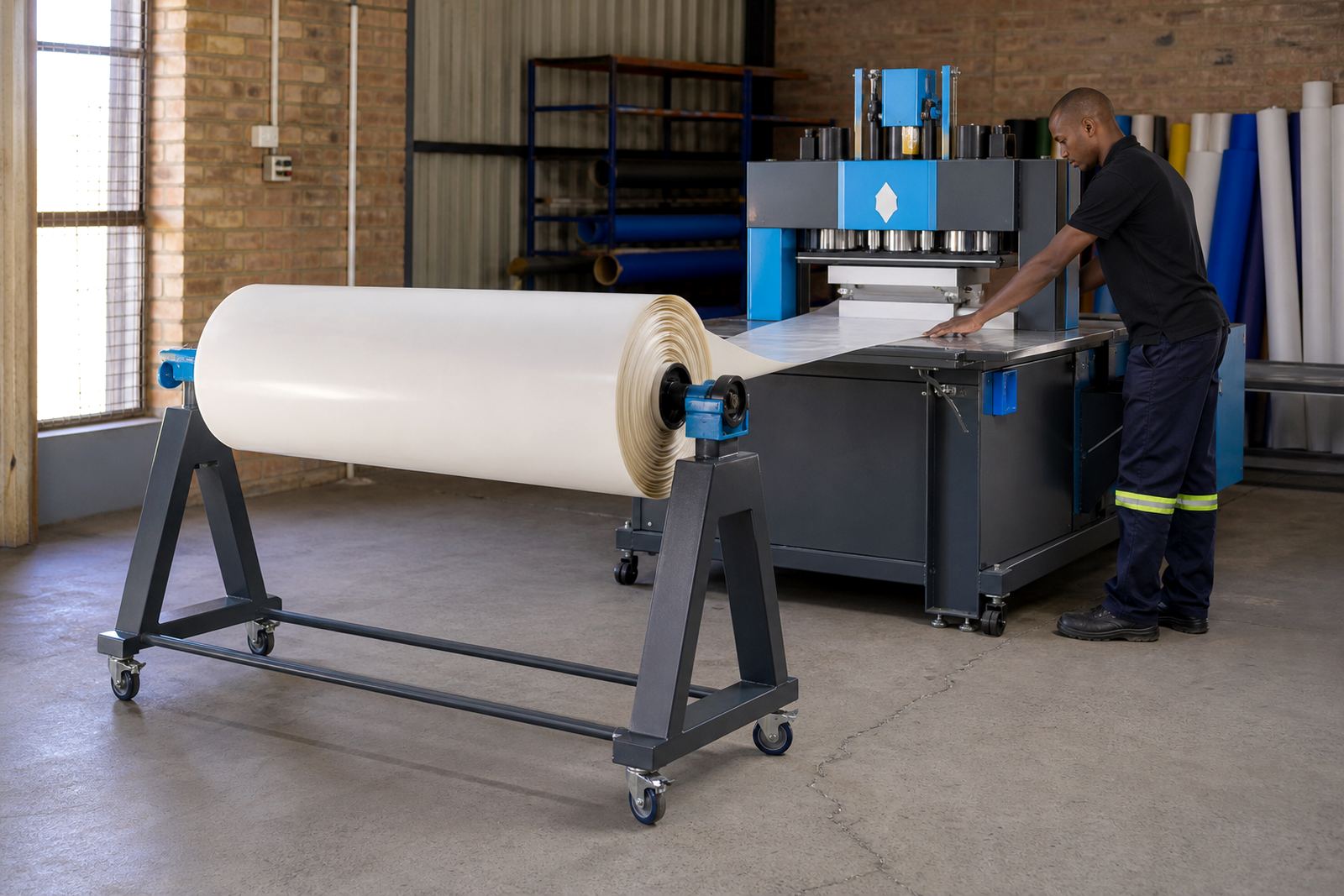
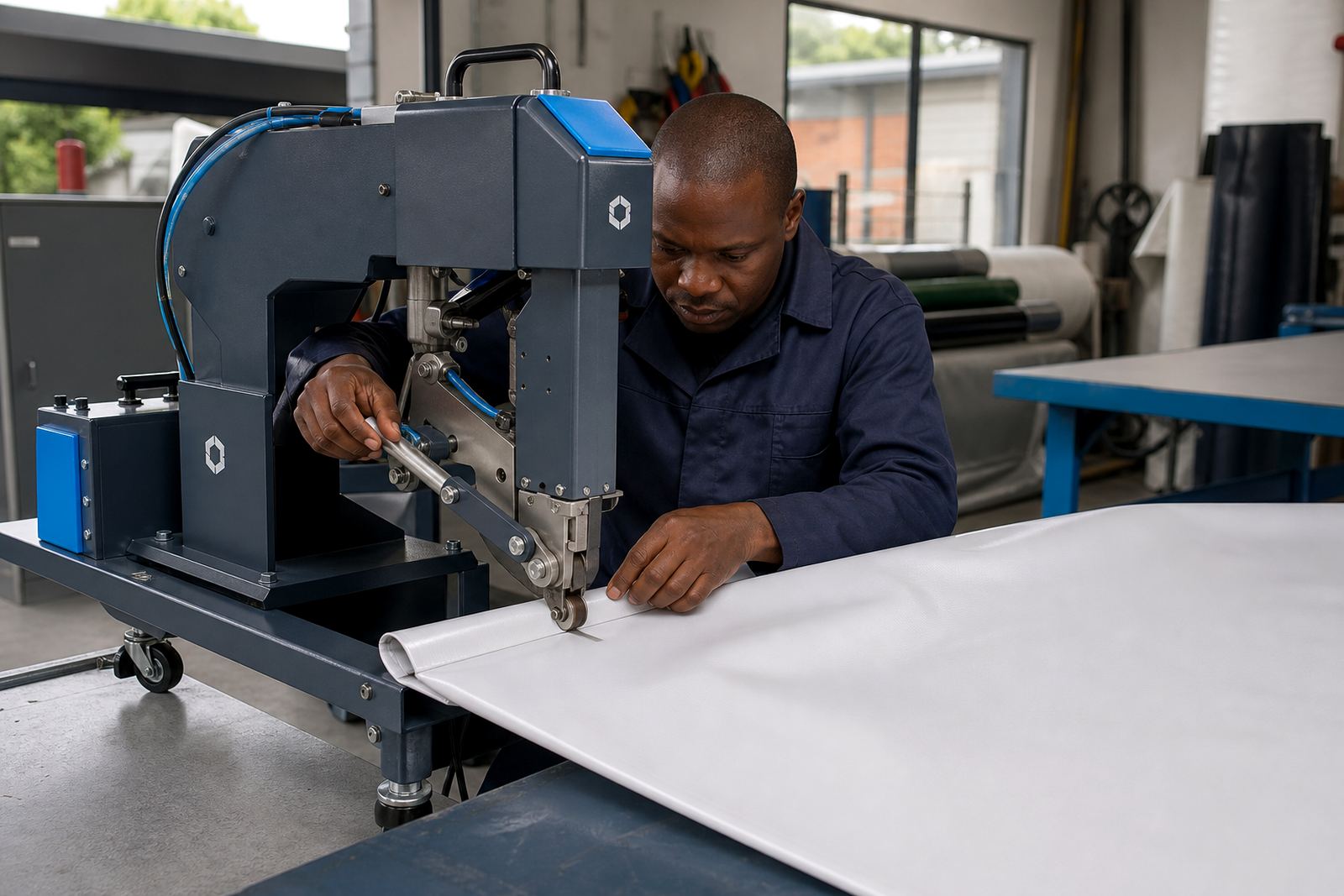
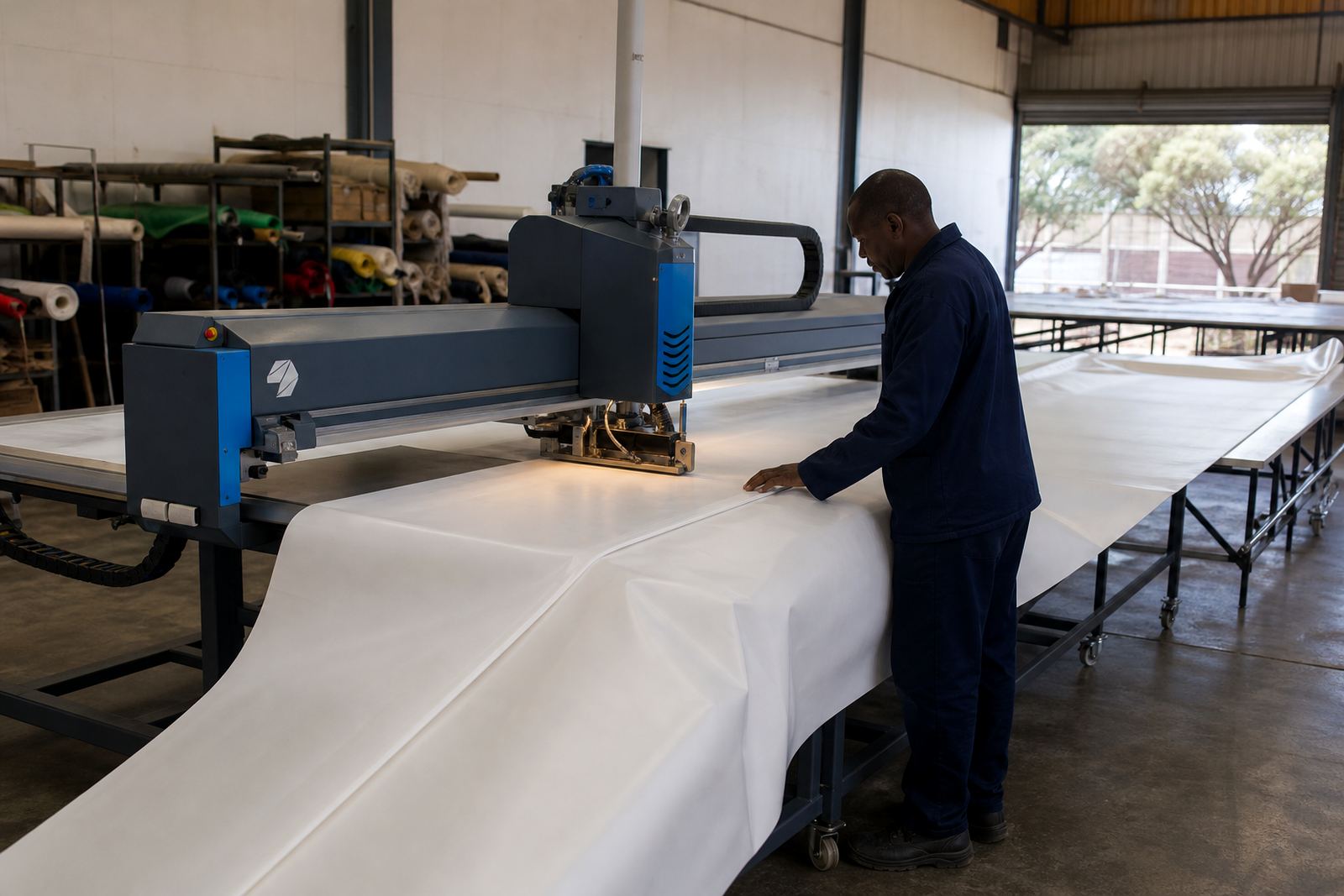
This machine is set up for the long panel runs common in tent manufacture, where roof sheets, side walls and end panels must hold a straight line over metres of material. In practice that means reliable joining on PVC-coated polyester, with repeatable seam width and steady heat control so the weld stays even from start to finish.
High-frequency welding uses radio frequency energy to fuse the coated layers from the inside of the material, while hot-air and hot-wedge systems use directed heat on the seam area. For tent shops, the right choice depends on fabric weight, seam style and how often the line is changing between panels, hems, reinforcements and accessories.
Seam styles and accessory work on the same line
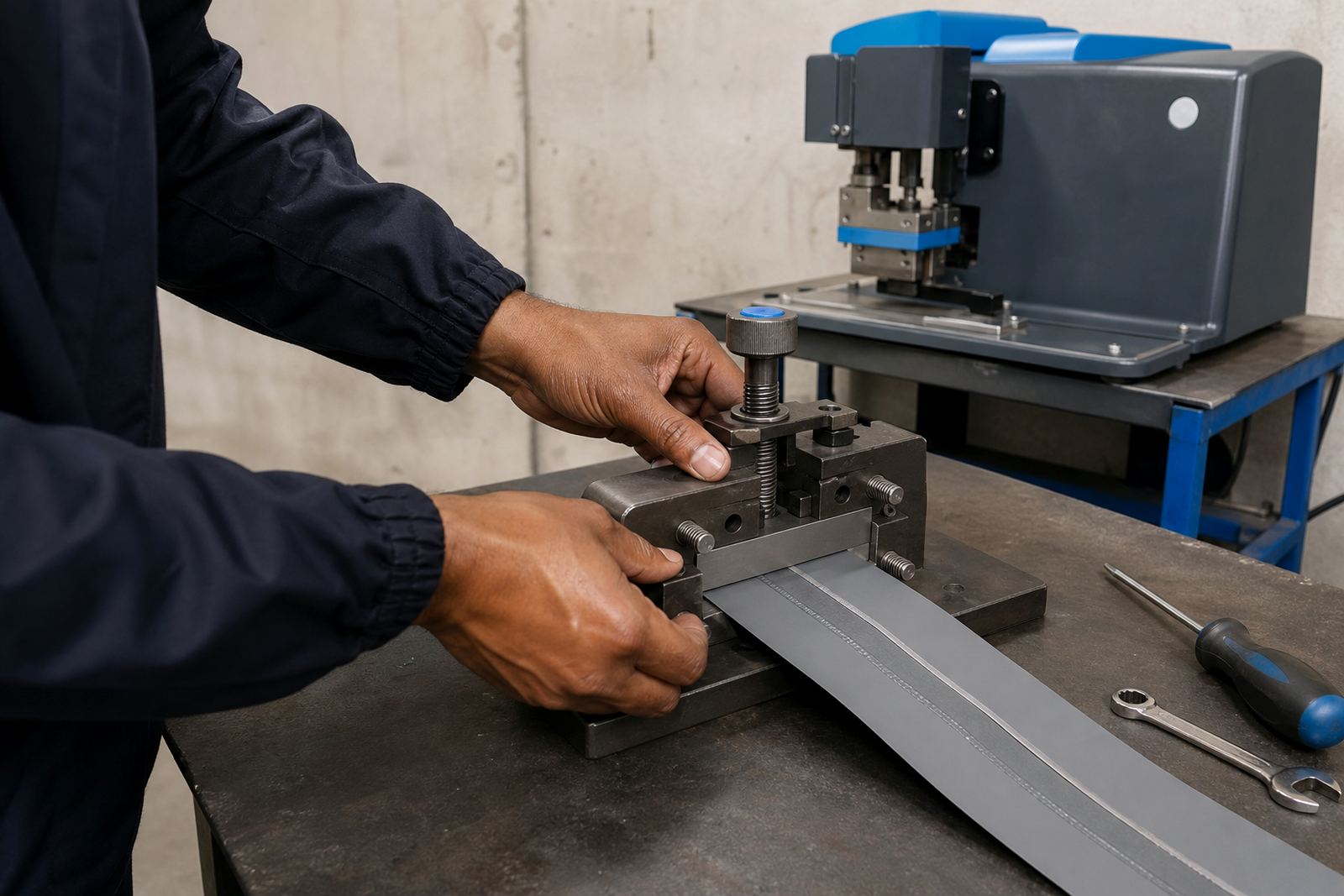
The tent panel welder can be set up for plain lap seams, reinforcement strips, hems, pocket seams and formed edges for keder rope. It is also used for eyelet work where the panel needs fixing points for ropes, lacing or tie-downs. Good alignment matters here, because a tent panel that is out by only a few millimetres can give trouble when the roof and wall sections are assembled on site.
- Lap seams for roof and wall panels
- Hems for edges, sleeves and webbing returns
- Keder welds for track-fed edges
- Eyelet reinforcement patches and fixing points
- Repair sections and replacement strips
For smaller shops, one machine often has to cover several jobs during the week, so adjustable guides and a practical table layout make a real difference.
Sizes and working widths to match the shop floor
These welders are available in working widths suited to narrow panel work as well as wider tent sections. The right size depends on the largest panel you regularly handle, the seam allowance you build in, and whether two operators feed material together or one person runs the line with a helper at the discharge end. Long, straight tent panels need enough table space and support rollers so the material does not drag or skew.
- Working widths for narrow seam work and wide panel runs
- Adjustable guides for repeated seam spacing
- Pressure and heat control for lighter and heavier PVC-coated fabrics
- Optional fixtures for hems, keder and eyelet reinforcement
In humid coastal towns like Durban or Cape Town, stored material can behave differently to dry inland stock, so a machine with stable temperature control helps keep seam quality more consistent through the day.
Installation and fitting for South African workshops
Installation normally includes positioning the frame, levelling the work surface, checking the electrical supply and setting the welding head or heating assembly for the chosen material. High-frequency units generally need a suitable mains supply and proper earthing, while hot-air and hot-wedge systems need the correct heating settings, nozzle or wedge alignment and airflow or pressure setup as applicable. If the shop handles tent panels in shifts, it is worth planning the layout so cut pieces, welding and inspection all move in one direction.
For Germiston and the wider Ekurhuleni area, many workshops also want equipment that can be moved through a standard industrial doorway or fitted into an existing production bay without major rework. Where panels are being cut, welded and finished in the same room, space for stacking, inspection and edge trimming should be allowed for at the start.
Care, servicing and operator safety
A tent panel welder works best when the sealing surfaces stay clean and the pressure faces are kept in line. Dust, offcuts and adhesive residue should be cleared away regularly, and worn electrodes, rollers or wedges must be checked before they start marking the fabric. Routine servicing also helps avoid uneven seams, scorching and weak ends at the start or finish of a panel.
- Keep guide surfaces clean and free of fabric dust
- Check alignment before long production runs
- Inspect cables, heating elements and moving parts
- Replace worn tooling before seam quality drops
- Train operators on safe handling of hot parts and pinch points
Safety matters because tent makers often work with long, awkward lengths of fabric, and a sheet can pull suddenly if it is not supported properly. Clear feed paths, guarded moving parts and proper operator training all help reduce avoidable faults and handling injuries.
What to confirm before ordering
Before ordering a tent panel welder, confirm the fabric type, the coated face, the thickest panel section and the seam styles you need most often. It also helps to note whether your work is mainly straight roof panels, wall sections, keder edges or accessory patches, because the tooling and working width can differ from one job to the next.
- Fabric type and coating thickness
- Preferred seam width and lap size
- Power supply available in the workshop
- Need for keder, hems, eyelets or reinforcement work
- Floor space, table length and panel handling method
- Whether installation, training and servicing are required
PVCWelder supplies and services tent welding equipment from Germiston, Ekurhuleni for workshops in Johannesburg, Pretoria, Durban, Cape Town, Bloemfontein and other centres across South Africa. The focus is on practical setup, proper seam formation and ongoing support for production that has to hold together in the field.
Key facts
| Product type | Tent panel welder for PVC-coated fabric |
|---|---|
| Welding methods | High-frequency, hot-air and hot-wedge options |
| Typical applications | Roof panels, wall panels, hems, keder edges and eyelet reinforcement |
| Working width | Available in multiple widths to suit workshop output |
| Power requirement | Depends on model and welding method selected |
| Support offered | Installation, training, servicing, parts and fault finding from Germiston |