How the overlap wedge does the seam work
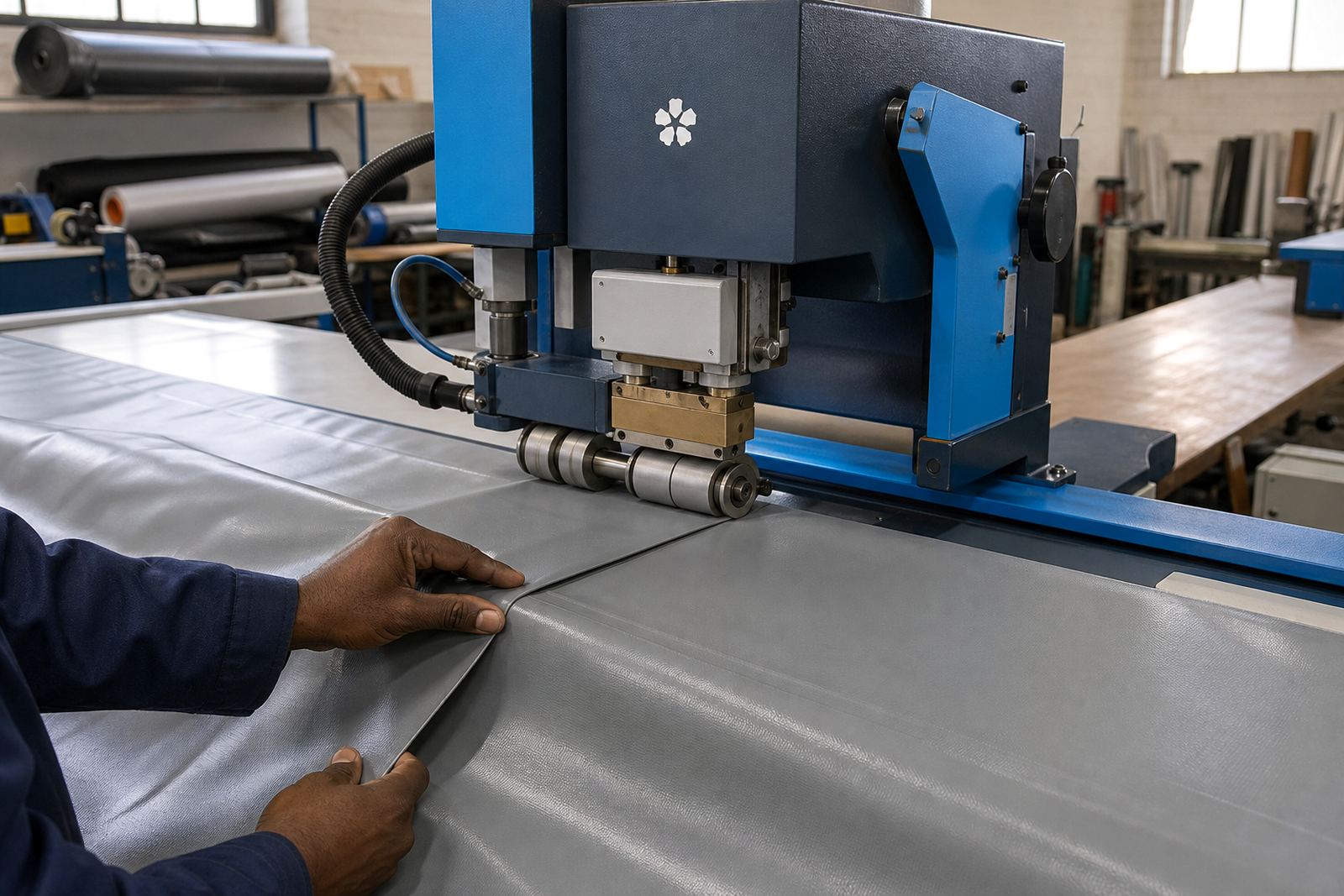
A hot-wedge machine drives a heated wedge between two layers of PVC-coated fabric while pressure rollers close the seam behind it. The result is a continuous overlap weld that is suited to long runs, especially on tarpaulins, shade panels, truck covers and larger banner assemblies where hand welding would take too long or vary too much from one section to the next.
This method is different from radio frequency welding, which is used on suitable materials where the weld is formed by electromagnetic energy. Hot-wedge welding is the practical choice for many PVC-coated textiles when the job needs controlled heat, steady travel and a neat lap seam. It can also be set up for hems, reinforcement tape, keder attachment and related finishing work on large panels.
What this machine is built to handle
For busy workshop use, the machine is typically selected for seam width, roller pressure and travel control. The right setup depends on the cloth weight, coating thickness and the type of overlap you need. A lighter banner fabric does not need the same setting as a heavy industrial tarpaulin used in coastal humidity or a tent panel that must stay taut in wind and rain.
- Overlap seam welding for tarpaulins, banners and tent panels
- Hem finishing on long edges and open widths
- Keder attachment for track fitted edges and perimeter profiles
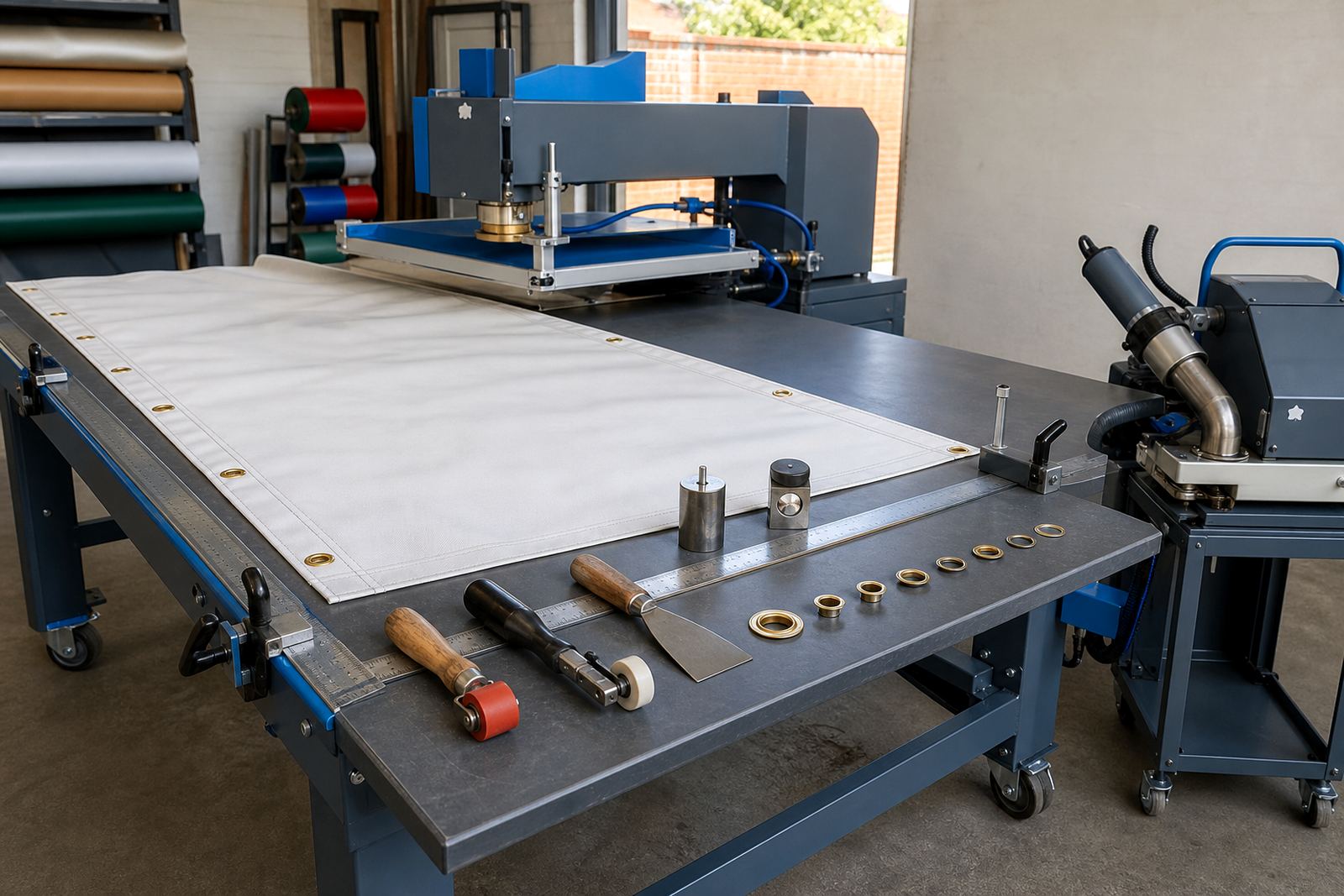
- Eyelet reinforcement zones before punching or pressing
- Repair welding on straight sections and long field panels
For many sign makers and fabricators, the value is in repeatability. Once the temperature, pressure and speed are set for the material, the seam can be run consistently along metre after metre of fabric with less rework at the ends and overlaps.
Sizes, controls and setup choices
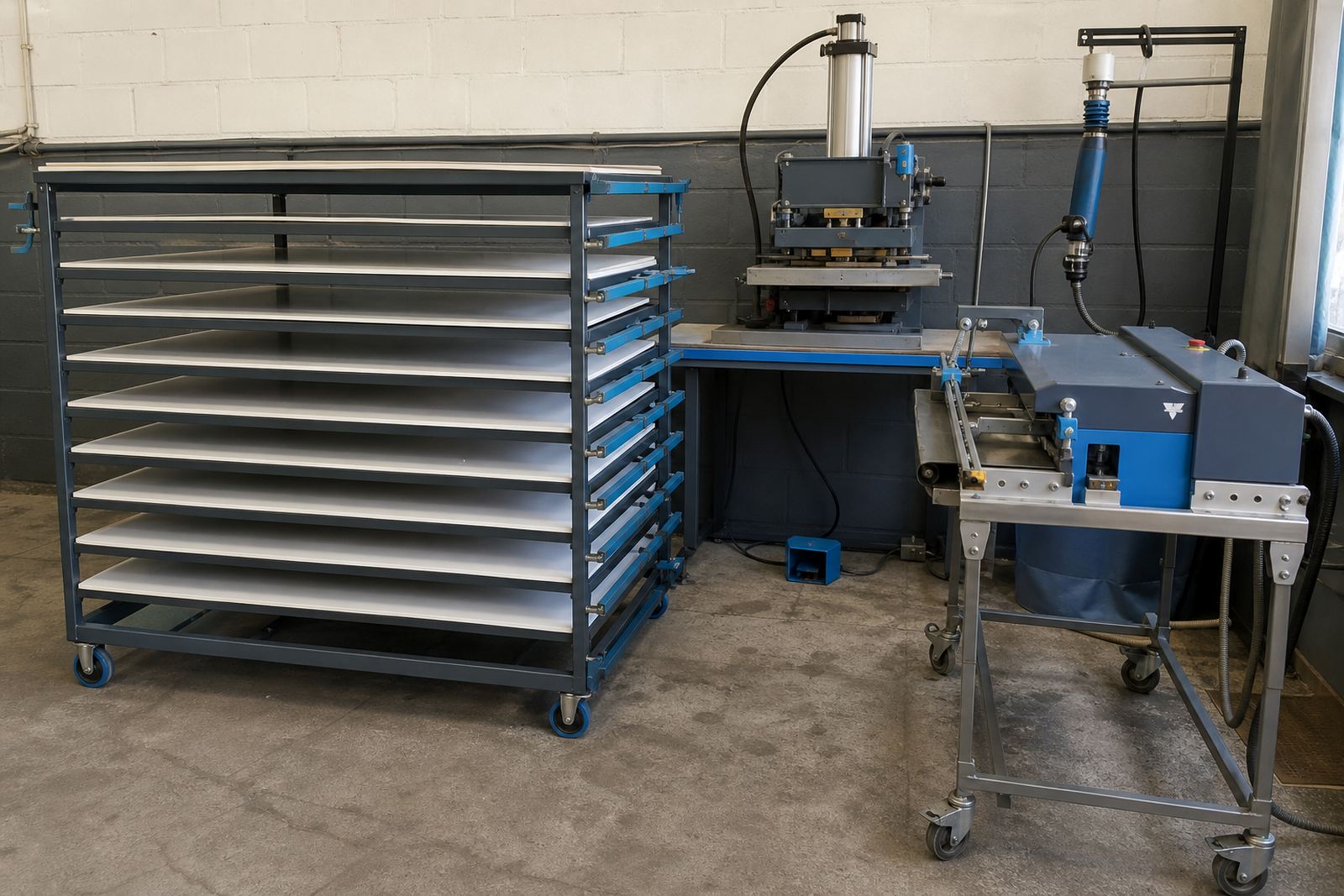
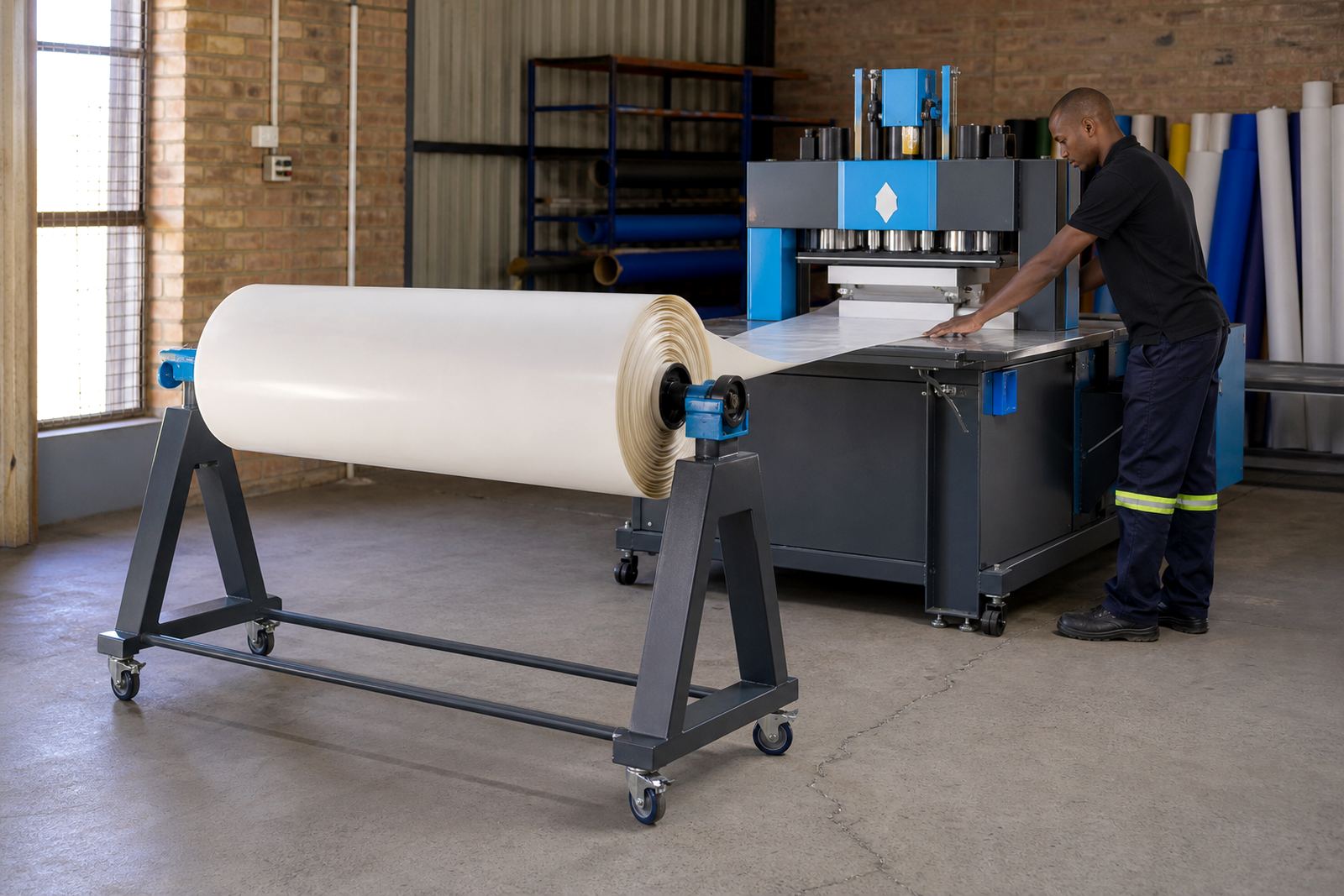
Hot-wedge overlap welders are supplied in different working widths and control layouts. Smaller units suit lighter workshop volumes, while larger floor machines are chosen for broader sheets and continuous production. Some units are built for bench work, others for stand mounted or wheeled use where long panels need steady feed alignment.
Important options to confirm include wedge width, roller style, adjustable temperature control, variable speed feed and guides for keeping the overlap straight. On some jobs you may need a narrower weld track for visible banner work, while on heavy-duty tarpaulins a wider seam gives better distribution across the coating and base fabric. The machine should match the seam detail you want, not only the fabric width.
- Working width to suit panel size and workshop floor space
- Adjustable temperature and travel speed
- Guide rollers for straight tracking on long seams
- Pressure control for lighter banner fabric or heavier PVC-coated cloth
- Accessory fitment for hems, reinforcements and keder profiles
Where it fits into local production
This machine suits fabricators making advertising banners, tensioned signage, truck tarps, tent walls, canopies and protective covers. In Johannesburg and Pretoria it is often used where volume is steady and long straight seams are common. In Durban and Cape Town, the same equipment is useful for coastal work where moisture, salt air and sunlight put extra strain on finished edges and seam quality. Bloemfontein workshops often use it for cover work and event items that need straight runs without visible waviness.
It also fits workshop lines that include cutting, eyeletting, heat sealing and final trimming. If your team already works with hems and welded reinforcements, a hot-wedge overlap unit can slot into that process without changing the whole production method.
Installation, commissioning and safety checks
Good installation starts with level positioning, correct electrical supply and enough working room for the fabric to feed without snagging. The machine needs proper grounding, checked controls and a clear feed path so operators can guide the overlap without strain. On-site commissioning should include a weld test on the exact material you plan to run, because coating formulation, fabric thickness and reinforcement layers all affect the final seam.
Operator safety matters on heated tooling and moving rollers. Guards, heat awareness, safe loading practice and correct hand position should be part of training from the start. In a busy tarpaulin shop, a rushed feed can pull the layers out of line and leave a weak seam, so the operator needs to watch tracking, temperature stability and roller pressure during the run.
Servicing that keeps the seam line steady
Hot-wedge machines need regular cleaning, inspection and alignment checks. Dust, adhesive residue and fabric fines can build up around the wedge and rollers, affecting seam consistency. The heating element, pressure rollers, guide parts and moving bearings should be checked on a routine basis, with worn parts replaced before they start marking the cloth or drifting the seam track.
- Keep the wedge clean and free of coating residue
- Inspect rollers for wear, flat spots and alignment drift
- Check temperature control and feed stability before production runs
- Test seam strength after adjustments or parts replacement
- Use preventive servicing to reduce downtime on long jobs
For sites across South Africa, servicing can include site callouts, fault finding, tooling alignment, roller replacement, electrode refurbishment where applicable, parts supply and training refreshers for operators. That support matters when a production line must keep moving on banner orders, tent repairs or tarpaulin runs.
Details to confirm before you order
When ordering a hot-wedge overlap welder, confirm the fabric type, seam width, expected panel length and the kind of finish you need at the edge. If the work includes keder, hems or eyelet zones, say so upfront because the machine setup and accessories should match the sequence of operations in your workshop.
It helps to specify the material weight, the overlap allowance, the roller width and whether the unit will be used for straight production or mixed repair work. If you need a machine for Germiston, Johannesburg, Pretoria, Durban, Cape Town or Bloemfontein, local support planning should also take installation access, workshop layout and servicing access into account. That saves trouble later when the machine is in daily use and the seam line has to stay true.
Key facts
| Welding method | Hot-wedge overlap welding for PVC-coated fabrics |
|---|---|
| Typical materials | PVC tarpaulin, banner stock, tent fabric and coated sign cloth |
| Seam styles | Overlap seams, hems, reinforcement strips and keder attachment |
| Control features | Adjustable temperature, travel speed and roller pressure |
| Working format | Suitable for long straight runs and workshop line production |
| Support services | Installation, commissioning, training, servicing and parts supply |