A proper bench for hem marking and eyelet spacing
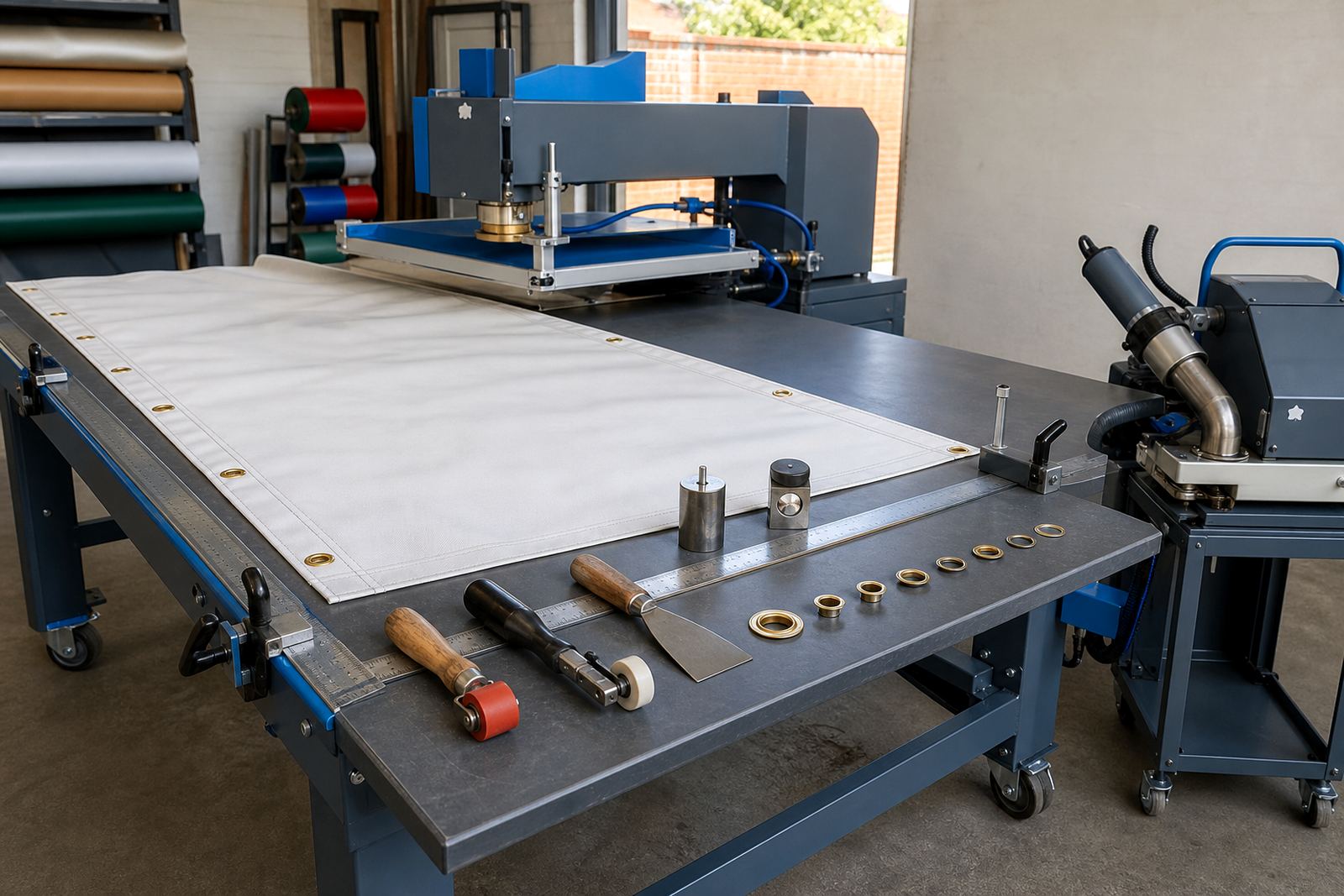
This table is used before the eyelet machine or hand setting tool comes in. On banner and cover work, the operator needs a level surface that makes it easier to measure fold lines, hold the hem in place, and keep eyelets evenly spaced from the edge. The table suits PVC-coated polyester, tarpaulin, banner substrate and similar coated fabrics used for signs, covers and side curtains.
Most workshops use it for straight hems, reinforced corners, patch panels and long runs where the spacing must stay consistent from one end to the other. The top is usually kept smooth and flat, with a marked working line or guide points so the fold, eyelet position and seam allowance can be checked before setting. That saves rework and gives a cleaner finish, especially on larger sheets that can drift out of square during handling.
Sizes, working widths and practical options
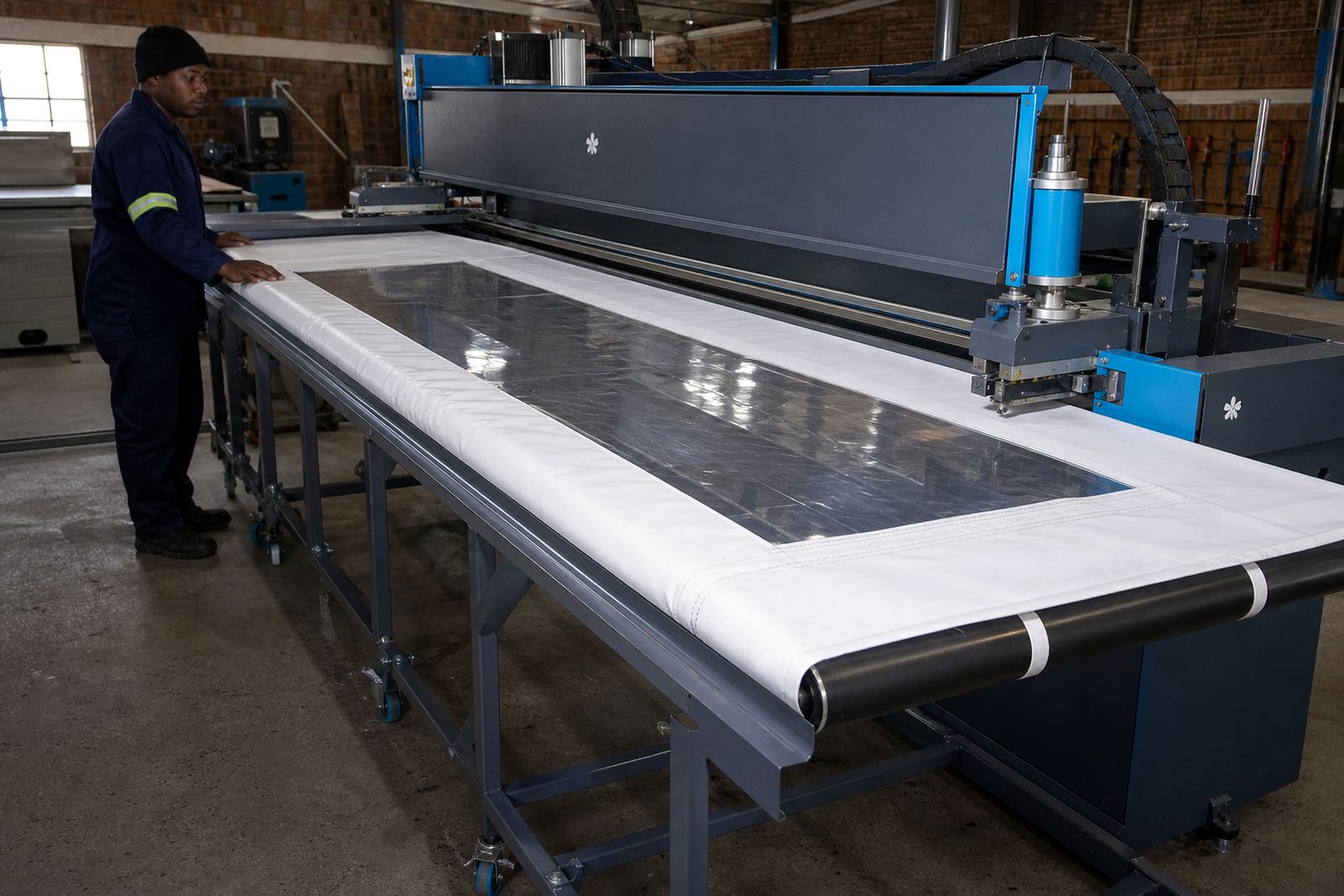
Eyelet prep tables are normally built to suit the size of the work that passes through the shop. A compact table works well for small banners and repair work, while a longer table is better for truck tarpaulins, tent skirts and oversize signage. The surface width needs enough room for the hem fold, a ruler or tape measure, and the eyelet spacing marks without crowding the operator.
- Typical working lengths: 2 m, 3 m or custom-built to suit the shop floor
- Typical working widths: 1 m to 1.5 m for most banner and cover work
- Flat top with clear edge access for marking and checking fold lines
- Optional measure rail, stop points or guide marks for repeat work
- Sturdy frame for daily use in a busy welding and finishing bay
Some tables are fitted with low-friction top layers, while others use a harder surface that stands up better to regular measuring and handling of heavy PVC sheets. In Durban and other coastal areas, a powder-coated frame or treated steel base is often preferred because humidity can be hard on untreated metal.
Where it fits in the banner and tarpaulin workflow
This table suits businesses that weld, hem and finish PVC-coated fabric before eyelets are fitted. It is common in signage shops, tarpaulin makers, event cover workshops and tent production areas where hems must be measured before the eyelets are punched, riveted or set. The table also helps where keder strips are prepared at the edge of a curtain or cover, because the operator can keep the edge straight before the final hardware is fitted.
It is especially useful on jobs with repeated panel sizes. Once the first piece is marked correctly, the rest of the run can follow the same spacing, which keeps banners hanging evenly and helps with tension across the finished item. For large-format work in Johannesburg, Pretoria or Cape Town, that consistency makes a noticeable difference to the final look.
- Banner hem prep before eyelet setting
- Tarpaulin edge marking and corner reinforcement
- Cover panel layout for truck sheets and side curtains
- Repeat work for event walls and display panels
- Keder edge preparation on selected fabric assemblies
Fitting the table into your workshop layout
Installation needs depend on the table size and the way the workshop is arranged around cutting, welding and finishing. A long prep table should sit where material can be lifted on and off without bending or twisting the sheet too much, and where the operator has enough room for measuring tools and finished stock. If the table is placed too close to the welding line, hot material and tools can crowd the marking area, so it is worth planning the flow properly.
For fixed installation, the frame may be levelled and anchored depending on the floor surface and the amount of daily use. If the workshop handles heavy rolls or large sheets, the area should allow safe movement of loaded material and clear walking space around the table. Our Germiston team supports setup across Ekurhuleni and other main centres, including Johannesburg, Pretoria, Durban, Cape Town and Bloemfontein, with site callouts when a workshop needs the table matched to the rest of its finishing line.
Care, cleaning and workshop upkeep
Good care keeps the surface accurate and comfortable to use. PVC dust, adhesive residue and metal shavings from eyelet work should be cleared off regularly so measurements stay true and the top does not pick up scratches that throw off the marking line. If the table is used near hot-air or hot-wedge welding, allow enough cool-down space nearby so the prep area stays clean and the surface is not damaged by heat or debris.
- Wipe the surface with a soft cloth and mild cleaner
- Check the frame for loosened fasteners and uneven feet
- Keep tape measures, rulers and marking tools in one place
- Do not place hot weld tools directly on the prep surface
- Inspect guide marks often, especially on high-use tables
Where the table is used in coastal conditions or in a dusty factory bay, regular cleaning helps prevent grit from marking the PVC film. A neat prep station also reduces mistakes when the same operator is handling hems, eyelets and final pack-off in one run.
What to confirm before ordering
To match the table to the job, confirm the fabric types, the usual panel size and the eyelet spacing you work to. It also helps to state whether the table is for banners, tarpaulins, tents or mixed work, because that affects the length of the bench and the amount of clear space needed for marking. If the workshop uses keder or welded hems on side curtains, that should be mentioned too, as the edge handling can differ from plain banner work.
Please confirm the following details before supply:
- Required working length and width
- Typical sheet size handled in the workshop
- Material type, including PVC-coated fabric or tarpaulin
- Whether you need guide marks, stop points or measure rails
- Floor space available for placement and movement around the table
- Any matching equipment in the finishing line, including eyelet tools or welding stations
For servicing, spare parts or workshop planning, clients across South Africa can use the enquiry form on our contact page. Our Germiston base supports supply and servicing for eyelet prep work, seam testing, tooling alignment, preventive servicing and general finishing equipment used by banner, tarpaulin and tent makers.
Key facts
| Product type | Eyelet prep table for banner, cover and tarpaulin finishing |
|---|---|
| Main use | Measuring hems, spacing eyelets and checking edge alignment |
| Working sizes | Common lengths from 2 m to 3 m, with custom sizes available |
| Surface | Flat prep top for marking, layout and repeat spacing work |
| Frame | Workshop-duty welded frame for daily handling |
| Typical application | PVC-coated fabrics, banners, truck covers, tents and side curtains |