Heat Capture Over the Weld Line
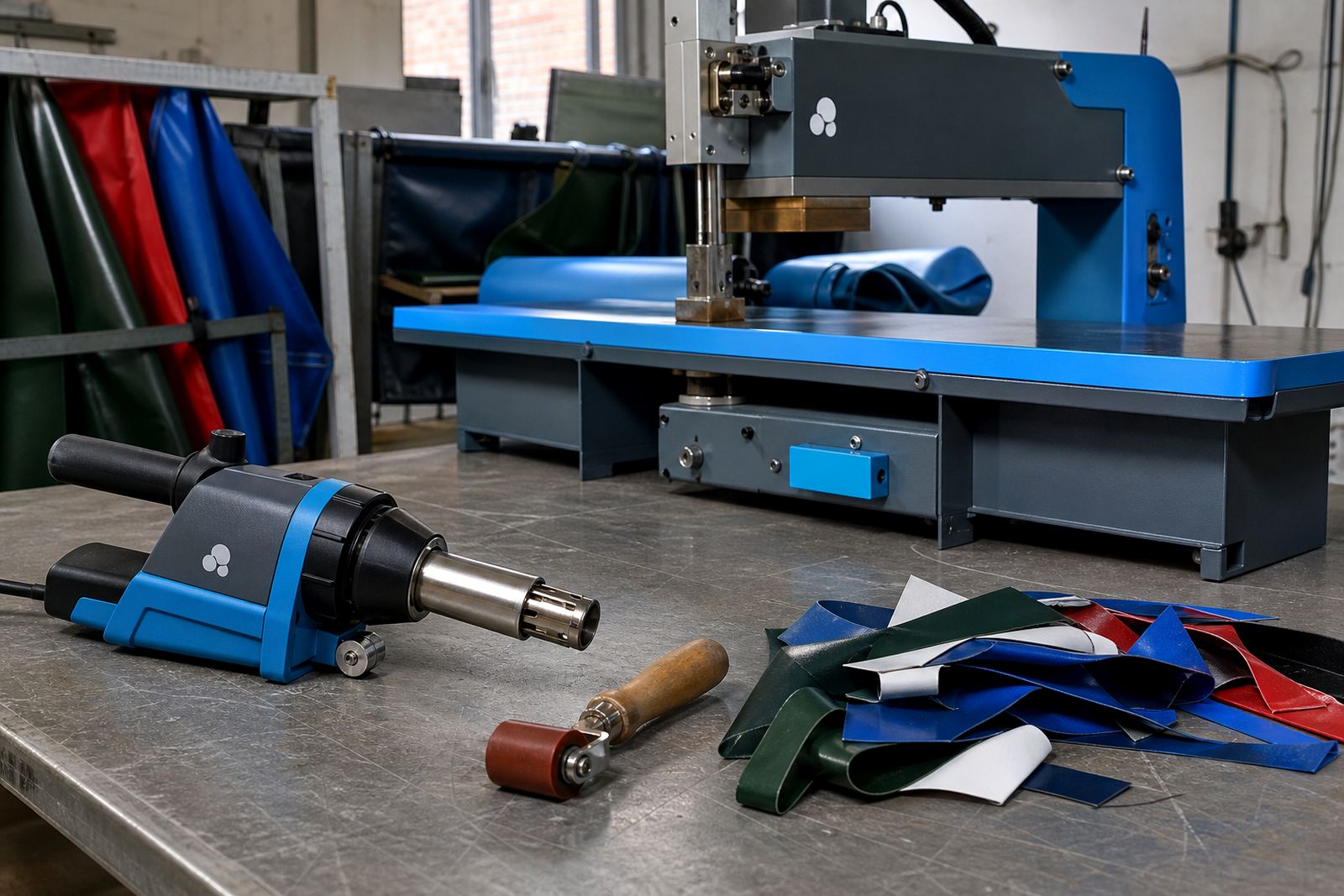
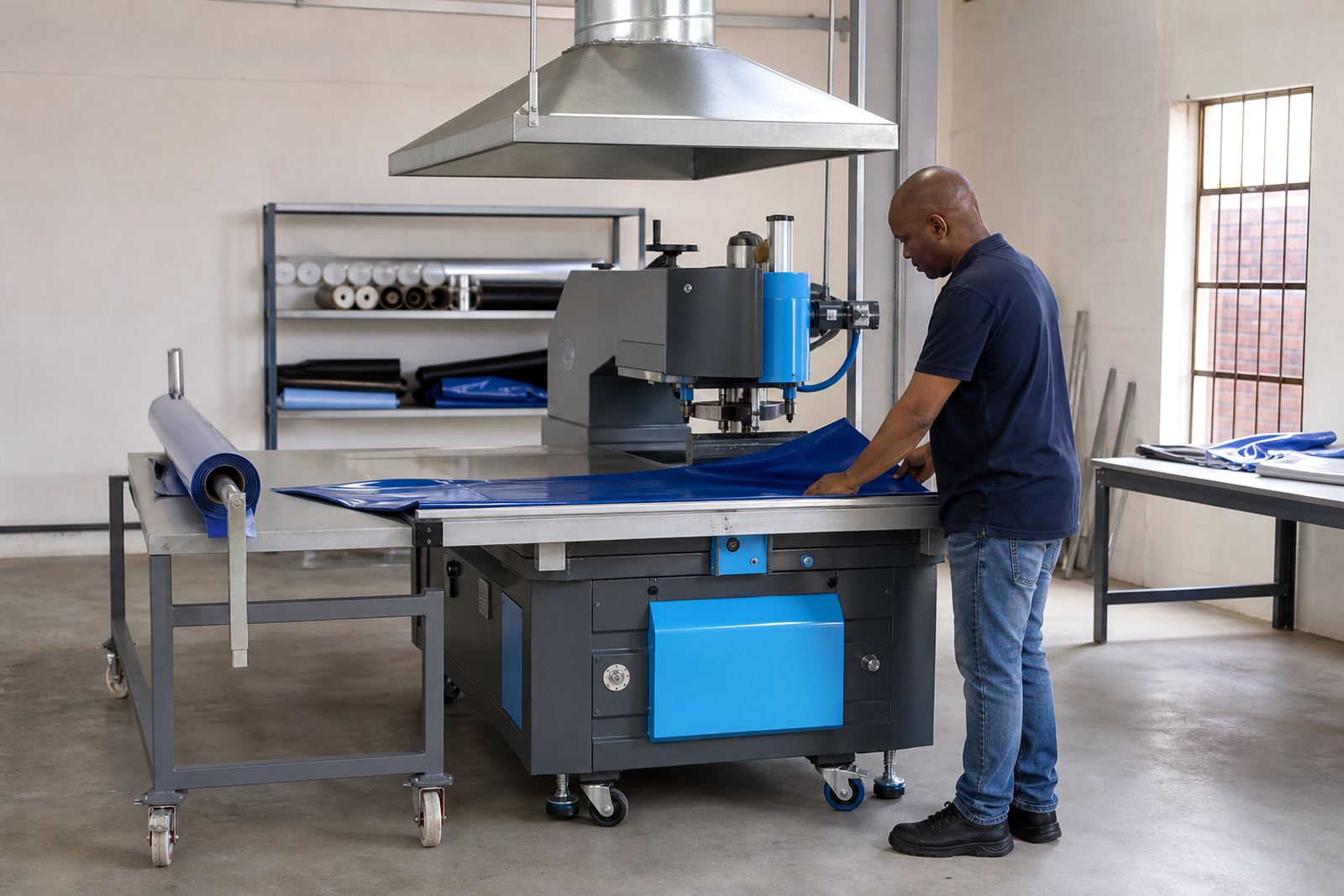
This extractor hood is fitted above or beside a welding station to pull warm air, light fumes and fine particles away from the operator during PVC welding work. It is used around high-frequency welding, hot-air seam work and hot-wedge joining where the material gives off vapour as it is fused under heat and pressure.
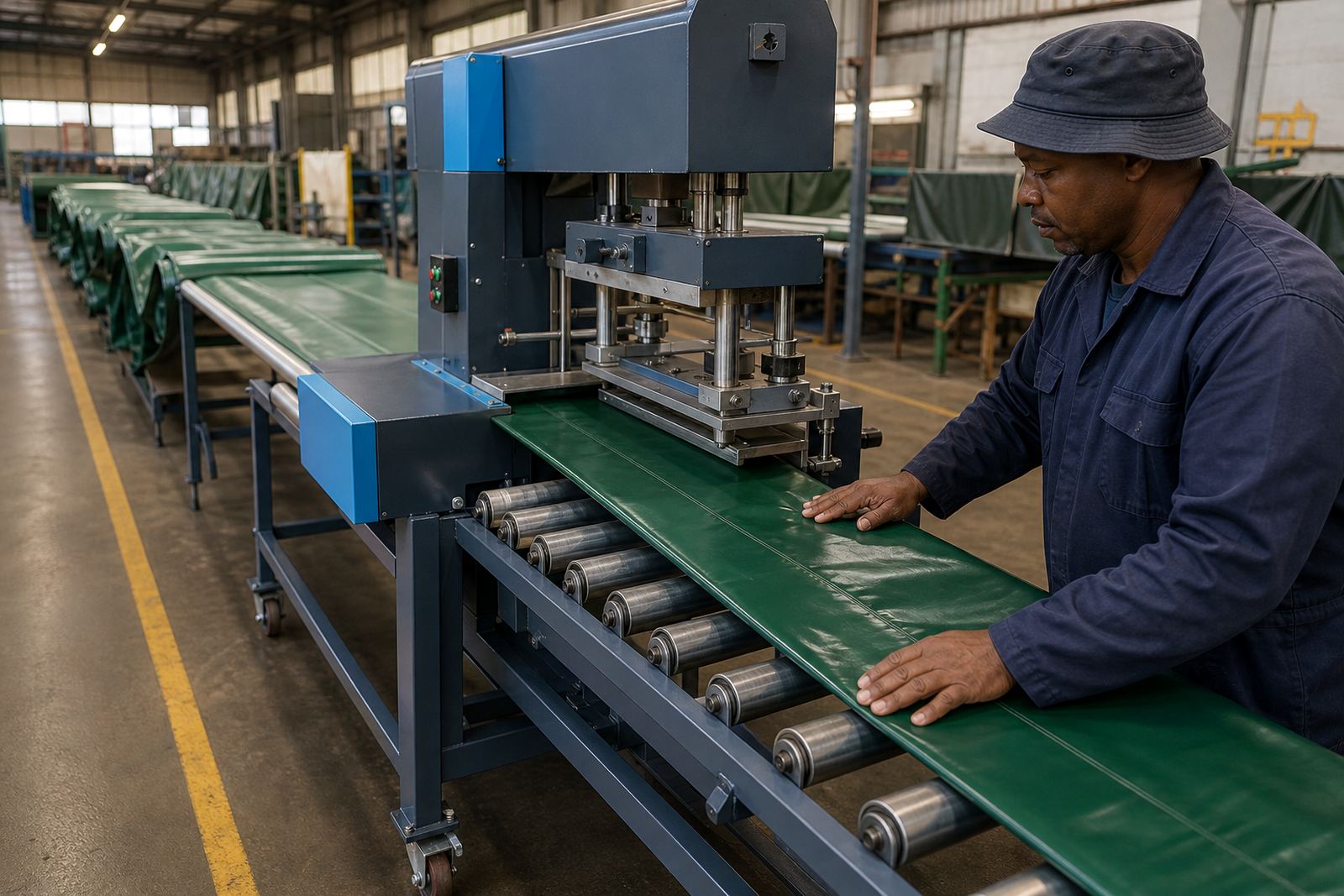
In a tarpaulin shop, banner workshop or tent-making line, the hood helps keep heat from hanging over the seam area. That makes it easier to see the weld line, inspect overlap widths and keep the working zone less stuffy during long runs.
- Suitable for PVC-coated fabrics, banner stock and tarpaulin panels
- Supports work at straight seams, boxed corners and reinforced edges
- Useful where operators work close to heat heads or RF tooling
Where the Hood Fits Best
The hood suits production rooms where a welder is used for hems, keder, pocket welds and eyelet strip preparation. It is often placed over a fixed bench or beside a machine line where repeat work is done on medium to large panels. In humid coastal towns like Durban, a cleaner extraction point also helps reduce the sticky feeling that builds up around heated PVC work.
It can be matched to workshop layouts in Johannesburg, Pretoria, Cape Town, Bloemfontein and the wider Ekurhuleni area. The right position depends on the machine height, operator reach and the direction in which the heated air rises from the weld area.
- Workshop benches used for sheet joining and hemming
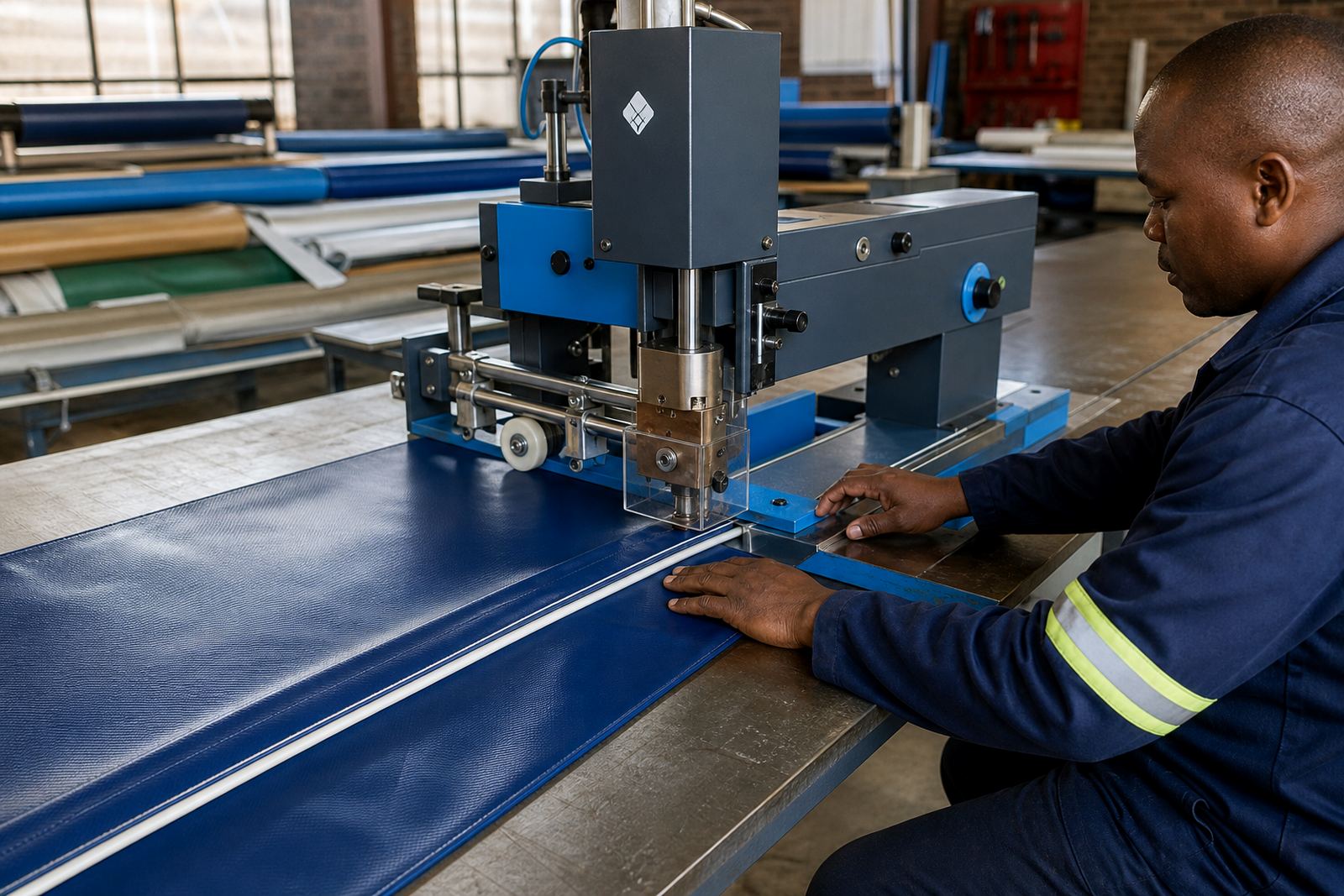
- Areas where keder rope channels are welded into banners or tent panels
- Stations handling repeated eyelet strip or reinforcement work
Sizes, Reach and Fitting Choices
Extractor hoods are usually selected by the width of the weld station and the size of the heated work area. Common options include narrower hoods for single operator benches and wider units for longer panels. The hood opening, duct connection and mounting height need to suit the machine layout so the capture zone sits where the heat rises from the weld.
For larger fabrication floors, a longer hood can cover a table section used for banner joins or wide tarpaulin panels. On compact lines, a shorter hood may be enough for seam finishing and localised heat capture. The fitter will also check clearance above tooling, roller paths and any moving carriage on the welding machine.
- Available in different hood widths for single or extended work zones
- Can be mounted to wall, frame or overhead support depending on the station
- Outlet size is matched to the duct run and extraction fan connection
Installation Around a Welding Station
Fitting is normally done with the weld station layout in mind, so the hood does not interfere with seam guiding, operator movement or access to the machine head. The unit must be positioned at the correct height and angle to catch rising heat without blocking the workface. On some sites the hood sits above the bench, on others it is offset to one side to keep the front edge clear.
Where a shop runs several welders, the installer may plan separate capture points for each line rather than one central hood. That is common in busy sign and tent workshops where operators move from hem welding to pocket work and then onto eyelet preparation. A neat fitting saves time during daily use and keeps the station easier to service.
- Check bench height, machine footprint and operator reach before fitting
- Allow room for maintenance access to heating heads and rollers
- Confirm duct routing, fan connection and mounting support before drilling
Servicing, Cleaning and Wear Points
Like any workshop extraction part, the hood should be kept clear of dust, trim offcuts and adhesive build-up. A soft wipe on the visible surfaces and a regular check on fasteners, brackets and duct joints will help it stay in good order. If the station is used in a dusty yard or near open loading bays, more frequent cleaning is worth doing.
The capture opening should be checked for dents or blocked edges, and any loose section should be corrected before it starts to rattle. If the hood is linked to a fan system, the installer or service technician may also inspect the full extraction path so airflow stays even across the weld area. On busy lines a neglected hood can drift out of position and that makes the work area less comfortable to use.
- Clean surfaces to remove PVC dust and workshop grime
- Inspect brackets, bolts and joints for movement
- Keep ducting clear so extraction does not lose pull across the seam area
Details to Confirm Before Ordering
To supply the correct extractor hood, it helps to know the weld station size, the machine type and the kind of work done most often. A shop making tarpaulins may need a different hood arrangement from one doing banner pockets or tent panel joins. The operator height and the bench length also matter, because a hood that sits too low can crowd the work and one that sits too high may miss the rising heat.
It is also useful to confirm whether the hood must suit one machine or a shared production line. Where the station handles special seams such as overlap welds, hems or keder channels, the fitter can match the hood position to the point where the operator spends most time. That gives the shop a better working space around the heat source and keeps the seam area easier to watch.
- Working width of the bench or machine line
- Type of welding used: high-frequency, hot-air or hot-wedge
- Usual products: tarpaulins, banners, tents, keder strips or reinforcements
- Mounting preference and available support points
- Whether the hood is for one station or several work positions
Support From Germiston Across South Africa
From our Germiston base in Ekurhuleni, we support PVC welding shops across Johannesburg, Pretoria, Durban, Cape Town and Bloemfontein, with service coverage also reaching Boksburg and Benoni. Our work includes machine installation, commissioning, operator training, preventive servicing, fault finding, tooling alignment, electrode refurbishment, roller replacement, parts supply, seam testing, site callouts and service plans.
For workshops that need the extractor hood matched to an active welding line, the details matter: machine size, work height, extraction route and the kind of seam being made. That practical information lets the hood sit properly over the station and work with the way the shop is run.
Key facts
| Product type | Local extractor hood for PVC welding stations |
|---|---|
| Use area | High-frequency, hot-air and hot-wedge welding benches |
| Typical fit | Tarpaulin, banner and tent fabrication work |
| Mounting options | Wall, frame or overhead support |
| Matching points | Hood width, outlet size, bench height and duct routing |
| Service support | Installation, inspection, cleaning and extraction alignment |