Hand-held heat control for coated fabric work
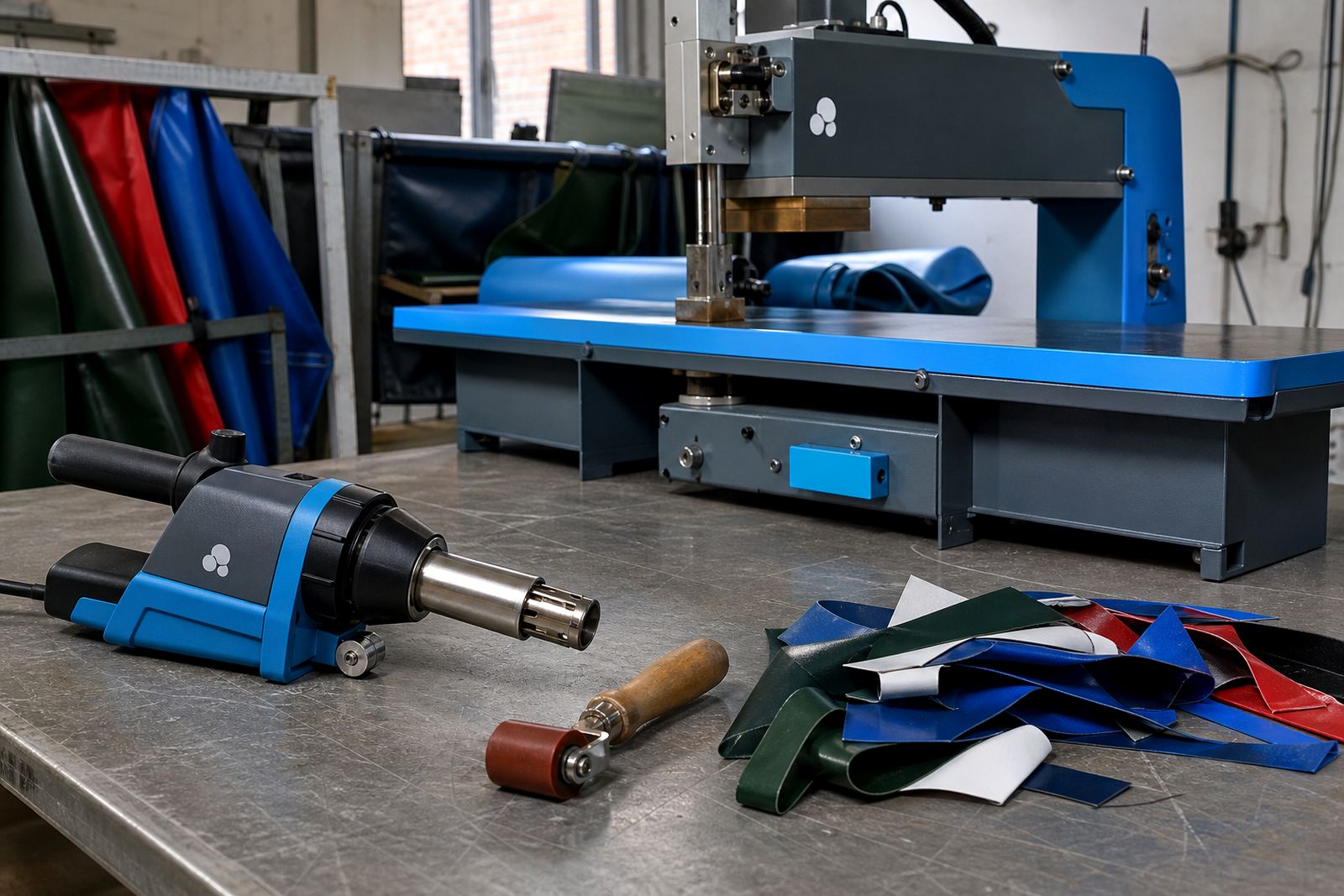
This portable hot-air unit is built for PVC-coated fabrics used in tarpaulins, banners, marquees and tent panels. It directs heated air onto the overlap so the operator can soften the coating and press the seam with a roller or nozzle shoe for a neat bond. In the field it is practical for touch-up work after fitting, small panel repairs, and short seams where a larger workshop machine is not the best fit.
The unit is commonly used on lap seams, hems, corner patches, pipe pockets, and detail work around eyelets or keder strips. For signage and display work it helps with edge finishing on flexible PVC materials where the cut line needs to be closed off cleanly. The heating range must be matched to material thickness, airflow and travel speed, because too much heat can scorch the coating and too little leaves the join weak.
- Suitable for PVC-coated fabrics, banner material and tarpaulin sheeting
- Useful for spot repairs, short seams and site adjustments
- Works with hot-air welding accessories for folding, pressing and seam shaping
- Can be used for hems, overlap seams, keder applications and eyelet area finishing
Where it fits in the shop and on site
Portable hot-air welding suits sign shops, tent makers, tarpaulin repair bays and installers working on customer sites. In Durban coastal air can leave coated fabrics slightly more demanding to handle, so a clean, controlled weld is important when finishing repairs near loading bays, storage yards or outdoor event structures. In Johannesburg, Pretoria, Germiston and Boksburg the unit is often used for small production runs and last-minute adjustments before dispatch.
It is also useful for work that changes from day to day, such as closing a damaged seam on a truck curtain, patching a banner after wind damage, or repairing a tent panel after transport wear. The hand-held format gives the operator better access to corners, folds and awkward shapes than a fixed machine. For repeated production work, it can support the main line by handling extras, touch-ups and special pieces that do not suit full-width welding.
- Site repairs on installed tarpaulins, banners and tents
- Short-run seam work for small orders and urgent jobs
- Detail finishing around curved edges, corners and fittings
- Useful for workshops in Pretoria, Johannesburg, Durban, Cape Town and Bloemfontein
Sizes, nozzle choices and control options
Portable hot-air units are usually selected by heat output, airflow range and the nozzle set supplied with the tool. For PVC-coated fabrics, the operator needs enough heat to activate the coating without shrinking the fabric or marking the face side. A slim nozzle gives a tight heat path for hems and narrow overlaps, while a wider nozzle helps on larger seams and tarpaulin panels. Some jobs call for a reducer nozzle to focus heat into a small repair area, and others use a roller shoe or pressure wheel alongside the heater to hold the join in place.
Depending on the model, control may include adjustable temperature, variable airflow and a stand or hanging point for safe rest between welds. A fitted carrying case can help when the unit is moving between workshops or site callouts. If the work includes thicker coated material, reinforced hem tape or keder pockets, confirm the heater range and available accessories before ordering so the tool matches the material weight and seam style.
- Heat output matched to light, medium or heavier PVC-coated fabric
- Temperature and airflow adjustment for different seam speeds
- Nozzles for narrow hems, overlaps, patches and detail joins
- Optional pressure rollers, guide shoes and spare heating elements
Installation, fitting and operator safety
Fitting a portable hot-air unit into a working space is usually straightforward, but the set-up should still suit the trade. The operator needs a stable bench area, safe cable routing, a clean surface for the fabric and enough room for the heated nozzle to move without touching the material face. If the tool is used on site, the extension lead, plug condition and supply load should be checked before work starts. A tidy route matters in busy yards where trailers, offcuts and rolled tarps can create trip risks.
Heat tools require attention to operator safety. Gloves should suit the task, loose sleeves must stay clear of the nozzle path, and the heated air stream should never be directed at skin, wiring or stored adhesives. When using the unit near eyelets, keder or stitched sections, the operator must keep the heat moving so one spot does not over-soften. For service work in windy areas or open docks, a sheltered position helps maintain seam consistency and reduces debris on the weld line.
- Check plug type, cable length and supply point before fitting into service
- Keep the nozzle clear of offcuts, thread and loose webbing
- Use a stable surface for seams, hems and patch work
- Allow the unit to cool before storage or nozzle changes
Care that keeps the weld path clean
Portable hot-air units work best when kept clean and inspected regularly. The nozzle should be free of carbon, glue residue and dust from cutting tables or workshop floors. Air inlets need clearing, and the cable should be checked for cuts, flattening or heat marks. On fabric jobs, dirt on the weld path can spoil the bond, so the surface should be wiped and dry before heating. If the material is dusty from a job site in Bloemfontein or a storage yard in Benoni, cleaning the seam area first makes a difference.
For service, the heating element, fan movement and controls should be checked by a technician when output changes, the airflow drops or the unit smells burnt. Spare nozzles, rollers and small wear items are worth keeping on hand because they affect finish quality. A machine that is handled carefully, cleaned after use and stored dry will hold its heat better and stay more consistent on repeat repair work.
- Clean nozzle and air paths after use
- Inspect cable, plug and handle before each shift
- Store dry and away from folded fabrics, dust and loose metal offcuts
- Arrange servicing if heat output or airflow changes
What to confirm before ordering
To match the right portable hot-air unit to your work, confirm the material type, seam style and typical job size. PVC-coated banner material, tarpaulin sheeting and tent fabric may all need different heat and nozzle choices. Also note whether the work is mostly hems, lap seams, keder pockets, edge patches or eyelet area repair. If you are joining thicker reinforced sections, that changes the heating requirement and the accessory set.
It helps to confirm the supply detail, the plug type used at your workshop or site, and whether the unit will move between Germiston, Pretoria, Durban, Cape Town or other branches and callout points. If the job involves only small touch-ups, a lighter hand-held set may be enough. If it will be used daily for long seam runs, ask for the right nozzle format, pressure roller and service support items at the same time.
- Material type and thickness
- Typical seam work: hems, overlaps, keder, patches or eyelets
- Supply details and plug type at the work point
- Accessories needed for the finish you expect
Key facts
| Product type | Portable hand-held hot-air welder for PVC-coated fabrics |
|---|---|
| Main use | Touch-up welding, small runs and site adjustments |
| Suitable materials | Tarpaulins, banners, tent panels and similar coated fabrics |
| Controls | Adjustable heat and airflow, depending on model |
| Accessories | Nozzles, pressure rollers, guide shoes and spare elements |
| Typical work | Hems, lap seams, patches, keder pockets and eyelet area finishing |