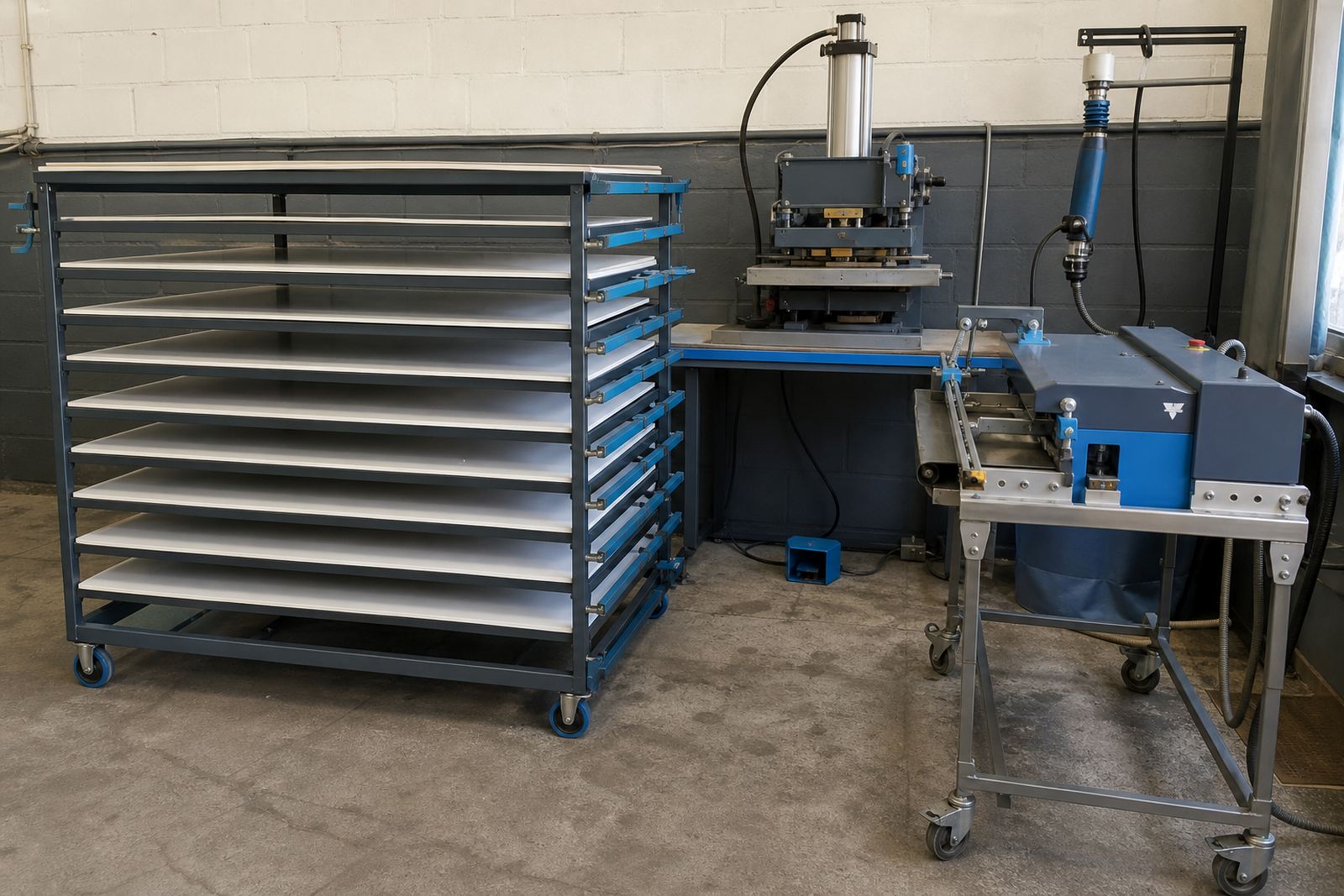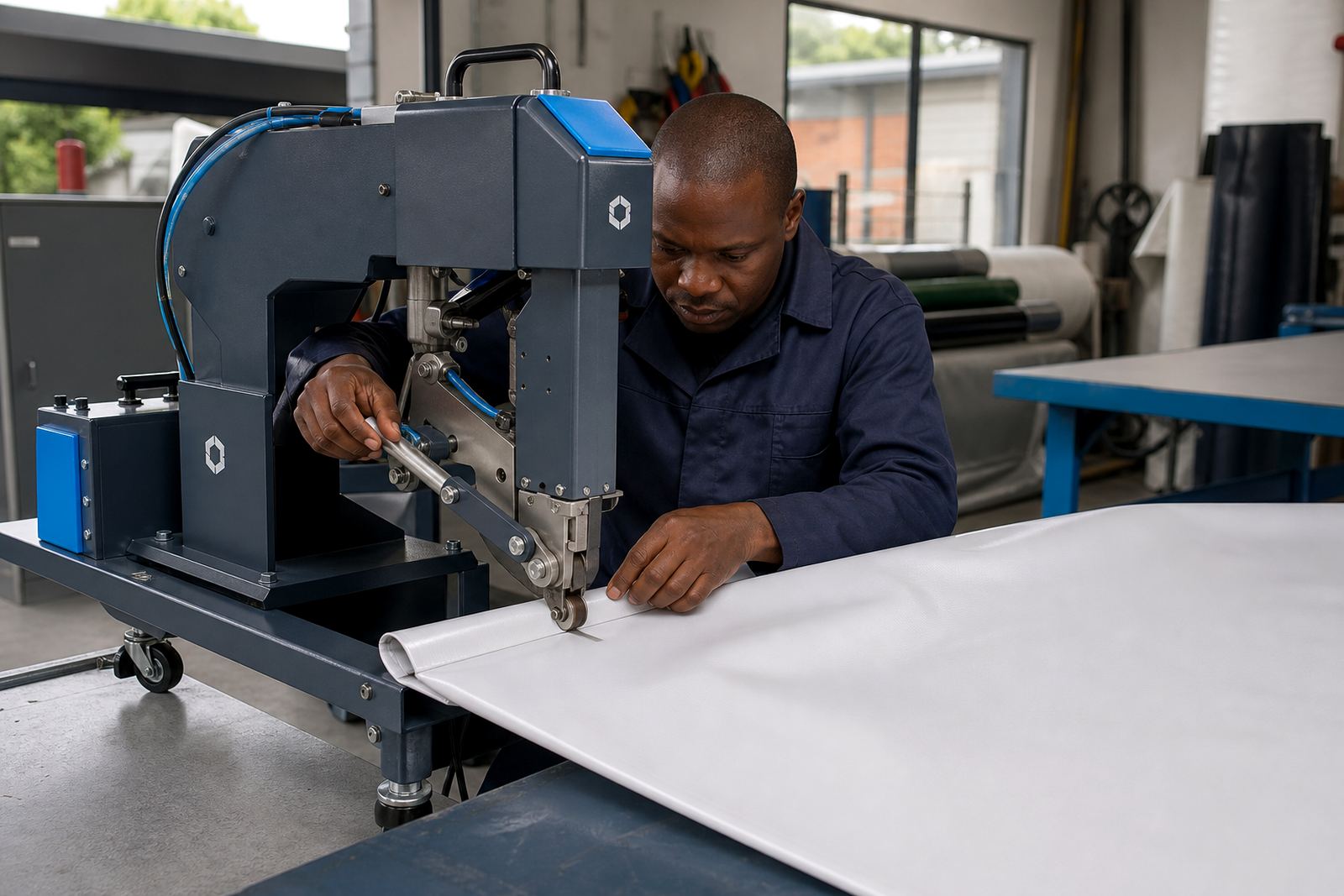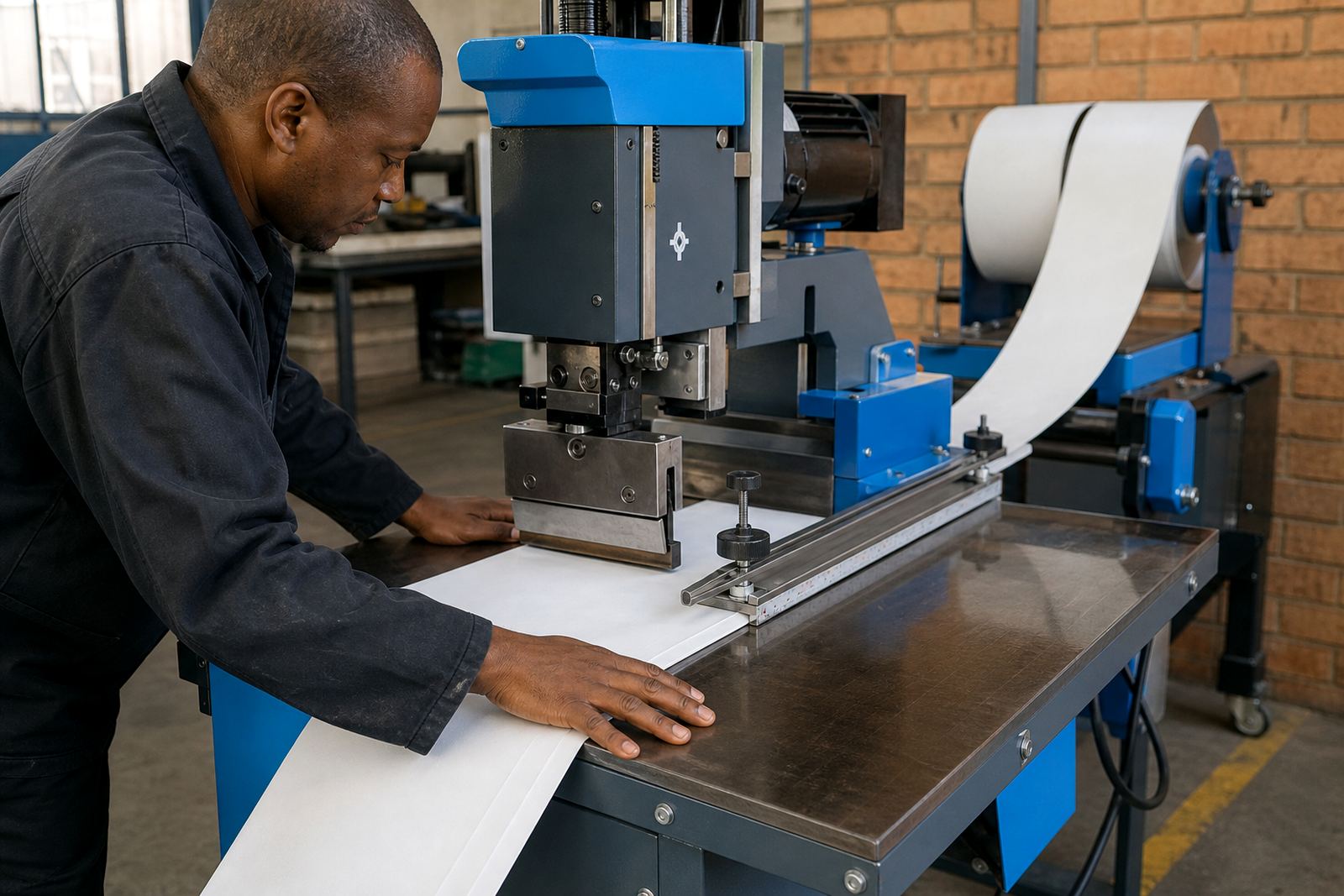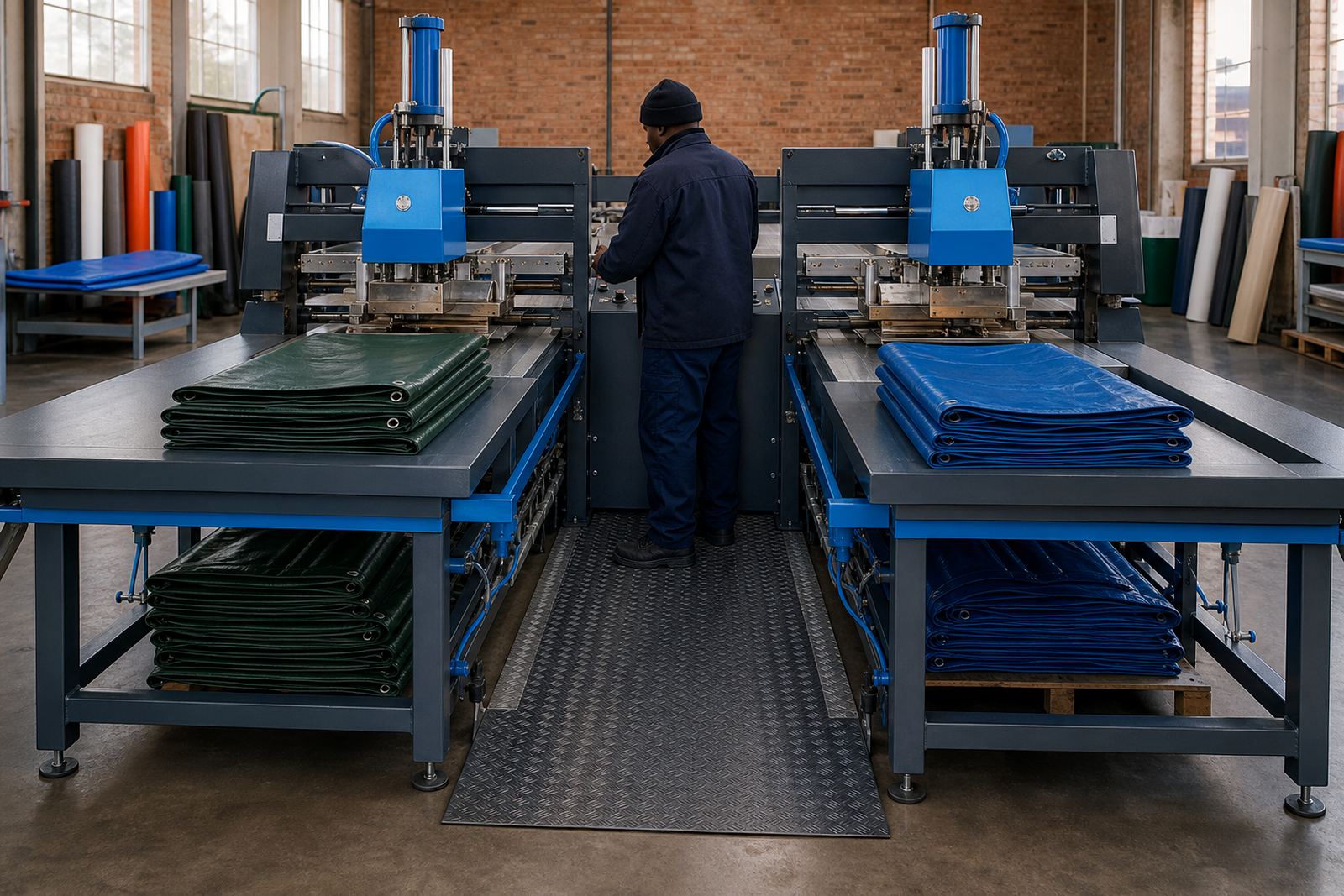
Twin stations for repeat seam work
This machine type uses two working heads so an operator can set up repeat jobs with less back-and-forth between seam stages. In a tarpaulin or banner shop, that matters on long straight runs, overlapped panels, reinforcement strips and repeat weld patterns where the same width and spacing must stay consistent from one piece to the next.
High-frequency, also called radio frequency welding, is used on PVC-coated fabrics where the material responds to dielectric heating. In the same workshop, hot-air or hot-wedge welding may be used for certain PVC fabric joins, hems or finishing operations depending on the membrane thickness, reinforcement and the required seam profile. The twin-head format is useful where production has a clear rhythm and the same job card keeps moving through the same operations.
- Suitable for overlapping seams on PVC-coated tarpaulins and banners
- Useful for repeat-width hems, panel joins and reinforcement welds
- Can support straight-run production where output consistency matters
- Helps reduce handling between successive weld operations
Seam types that sit well on this format
For signage, display and cover work, the twin-head setup is often used for seam sequences that must line up cleanly. That includes overlap seams, double hems, folded edges, pocket-style hems for banner edging, keder attachment and prepared areas for eyelets or reinforcement tabs. The correct sequence depends on the fabric coating, thickness and whether the finished piece will hang, tension or take repeated handling on site.
On PVC-coated fabrics, clean seam edges and even heat are important. A well set machine helps keep weld width, line position and corner behaviour steady, especially on larger pieces that have to hang flat in coastal humidity or take day-to-day movement on site. When eyelet work follows a weld, the material should be cooled and handled carefully so the punched area stays neat and does not fray at the coating edge.
- Overlap seams for panels, covers and side curtains
- Single and double hems for banner edges
- Keder prep for track-fed installations and temporary structures
- Eyelet reinforcement zones before punching or pressing
Sizes, build options and workshop fit
Twin-head welders are commonly specified by working width, head spacing, table or frame size, and the type of tooling carried on each station. Some workshops need a compact machine for narrower banners and smaller tarps, while others want a wider bed for large format panels, tent walls and long drop sections. The best layout depends on the largest panel size you handle, the seam allowance you use, and how much floor space is available for loading and turnaround.
In practice, buyers usually look at the clamp length, travel control, pressure adjustment, heat control range and how the machine handles changed tooling for different seam styles. For radio frequency work, material thickness and coating consistency are part of the setup. For hot-air or hot-wedge use, temperature, airflow or wedge control and guide alignment matter just as much. A workshop in Germiston or Boksburg may want a tougher frame for daily production, while a site-facing operation in Durban may pay more attention to corrosion control and cleaning between shifts.
- Working width matched to the largest repeat seam you produce
- Head spacing suited to the seam sequence used in your shop
- Frame and bed size for tarpaulin, banner or tent panel handling
- Tooling arrangement for hems, overlap seams, keder and reinforcements
Installation, commissioning and first runs
A twin-head welder needs proper positioning, levelling and alignment before production starts. The frame must sit square, the tooling must meet evenly, and the operator should be able to feed material without strain or twist. If the unit is RF based, the installation also has to account for power supply stability, earthing and safe access around the work zone. On hot-air or hot-wedge systems, set-up includes correct positioning of the heater, drive rolls and seam guide so the fabric tracks straight.
Commissioning normally includes test seams on the fabrics you use most often, checking for burn marks, weak edges, trapped air and weld consistency across the full seam length. Training should cover safe start-up, control settings, material handling, cleaning and shutdown. In a busy shop, one poorly set machine can waste metres of PVC-coated stock, so the first run should always be checked before a full production batch goes through.
- Machine levelling and head alignment
- Power, earthing and safe access checks where relevant
- Test welding on your actual PVC-coated stock
- Operator training on feed speed, pressure and seam control
Care that keeps the seams even
Regular care helps the machine hold its line and keeps the finished seams looking clean. Dust, adhesive residue, offcuts and coating build-up should be removed from the working area before they interfere with pressure or alignment. Rollers, guides and electrodes need inspection for wear, and the heat delivery parts should be kept in proper condition so the seam does not start drifting or marking the fabric. Coastal air can be hard on metal parts, so Durban and other humid areas often need stricter cleaning and rust checks than inland workshops.
Preventive servicing is worth doing before a fault shows up in production. That may include tooling alignment, roller replacement, electrode refurbishment, seam testing and replacement of worn parts. If the machine starts leaving uneven edges or inconsistent welds, the cause can be a small alignment issue rather than a major breakdown. Catching it early helps protect both the fabric and the schedule.
- Clean guides, rollers and contact surfaces after production
- Inspect alignment before long runs
- Check wear parts before they mark the PVC coating
- Keep records of servicing, adjustments and fault findings
Ordering details to confirm before supply
To match the right twin-head welder to your work, it helps to confirm the fabric type, the seam styles you use most, the largest panel dimensions and the daily output target. If the machine will be used for tarpaulins, banners or tent panels, note whether the main jobs are overlaps, hems, keder prep or eyelet reinforcement. For RF models, the available supply and site conditions matter. For hot-air or hot-wedge systems, the seam thickness and the travel speed you need should be stated clearly.
It also helps to confirm the workshop layout, operator skill level and whether you need installation, operator training, preventive servicing or a service plan after the machine lands on site. A clear order makes the fitting smoother and reduces the chance of choosing a head size or tooling set that does not match the way your team actually works.
- Material type and coating thickness
- Largest seam length and widest panel size
- Preferred seam styles, hems, keder or eyelet zones
- Power supply details for RF units and site layout for fitting
Key facts
| Machine type | Twin-head weld system for repeat seam production |
|---|---|
| Process options | High-frequency, hot-air or hot-wedge depending on application |
| Typical materials | PVC-coated tarpaulins, banners and tent fabrics |
| Seam work | Overlap seams, hems, keder prep and reinforcement zones |
| Installation needs | Levelling, alignment, commissioning and operator training |
| Support | Parts supply, servicing, fault finding and site callouts |