Cleaner panel control for repeat weld work
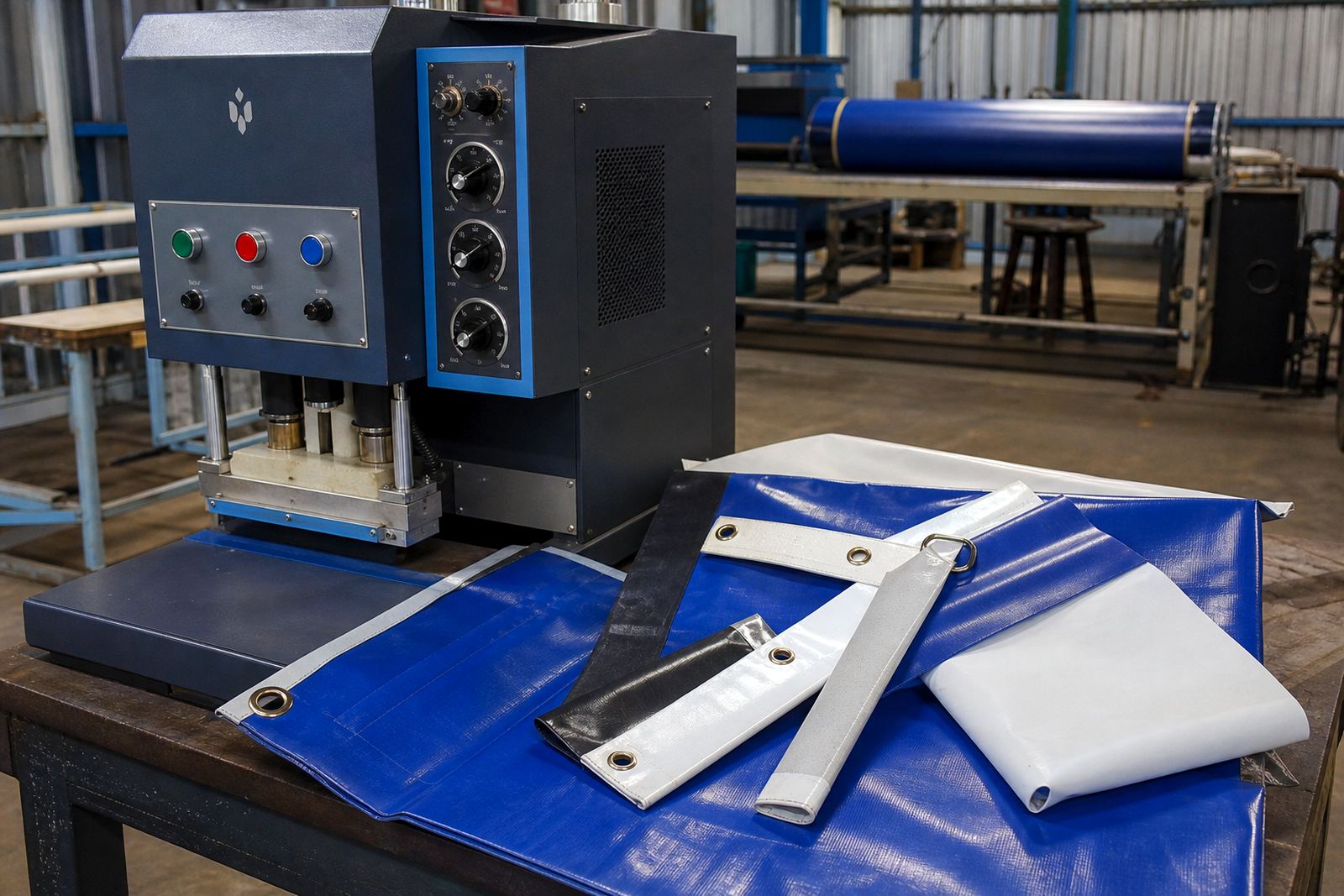
This control upgrade replaces older, harder to read control arrangements with a digital interface that gives clearer access to time, heat, pressure and cycle settings where the machine design allows it. In a tarpaulin shop or banner workshop, that matters when you are setting the same seam more than once, changing from a straight seam to a hem or switching between lighter banner stock and heavier PVC-coated material.
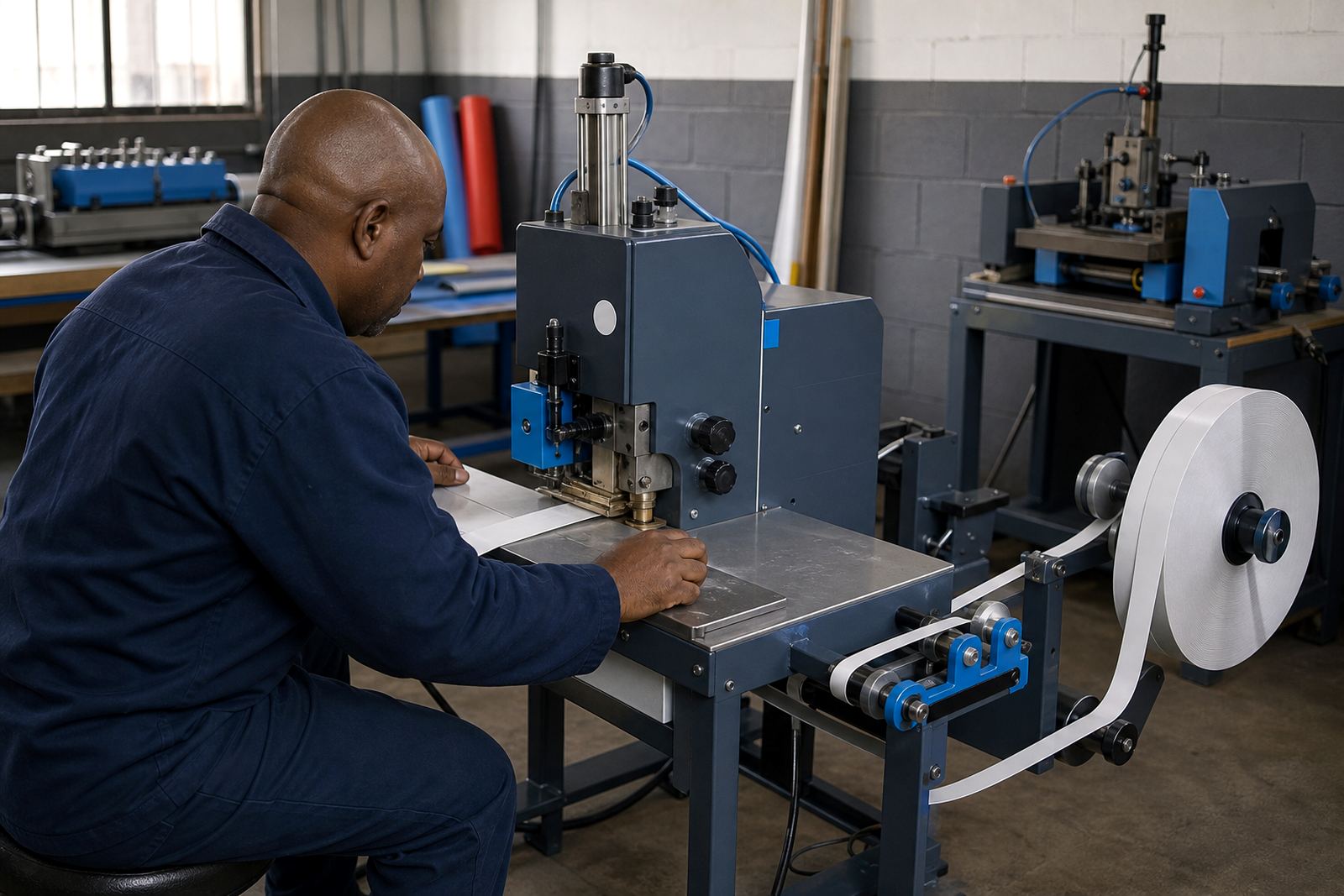
The upgrade is used to keep process settings more consistent across shifts and across operators. That helps on high-frequency welders for PVC-coated fabric and on hot-air or hot-wedge machines used for long seams, reinforcement strips, pocket folds and edge finishing. It is especially useful where the work changes often and the operator must move between different sheet sizes, weld lengths and accessory fittings during the day.
- Digital readout for process settings where the machine layout permits it
- Clearer setting changes for repeat jobs and batch production
- Useful for seam work, hems, keder and eyelet prep
- Suited to workshop use in Germiston, Johannesburg and across South Africa
Where the upgrade fits in the welding line
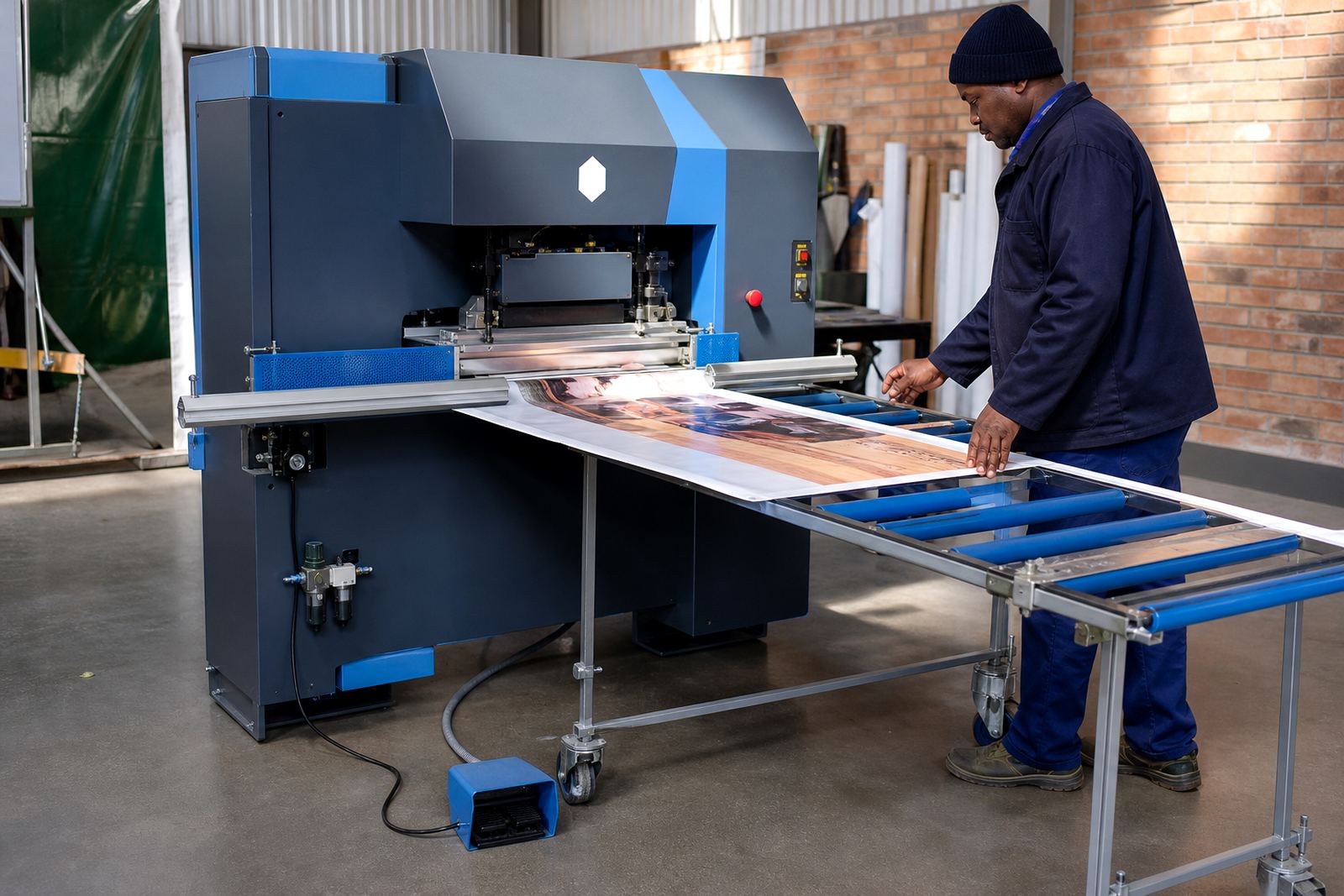
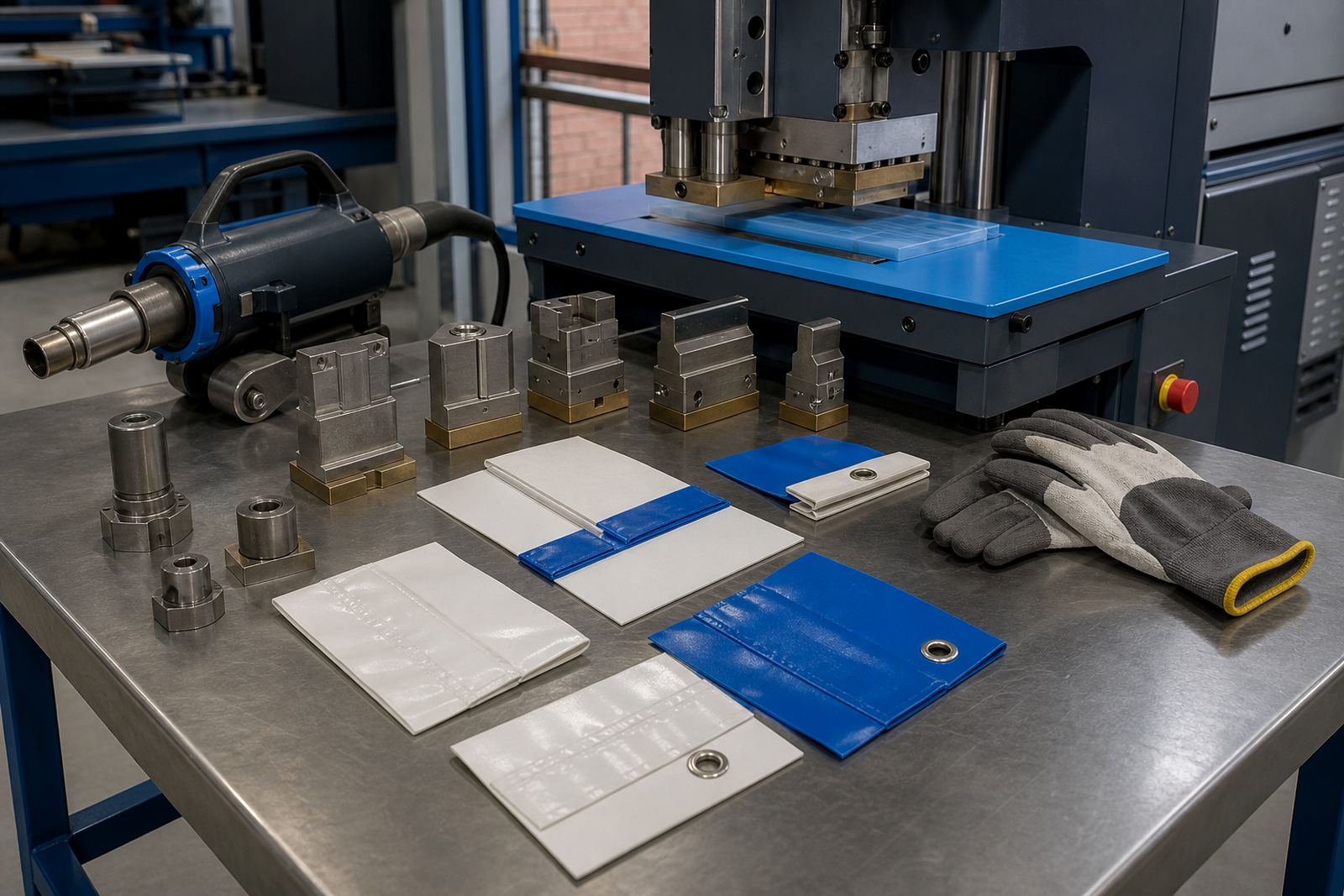
The upgrade suits workshops that weld PVC-coated fabrics for tarpaulins, banners, gazebo walls, tent panels and industrial covers. On radio frequency welders, it helps with controlled seam making on flat sheets, overlap seams and shaped sections where a neat edge is needed before eyeleting or keder insertion. On hot-air and hot-wedge machines, it helps maintain a steadier setting for hems, lap seams and reinforcing folds on longer runs.
For sign makers and event fabricators, the main value is control. A banner hem that is too hot can mark the face material, while a seam that is too cool can lift on the edge. A clearer digital control gives the operator a better reference point for the same job next week or on another machine in the same workshop. It also helps when a shop in Pretoria is running a different material thickness to a site in Durban, where humidity and storage conditions can affect handling.
- Tarpaulin seam production
- Banner hem and pocket work
- Keder rail, bead and track related welding steps
- Eyelet reinforcement zones before punching
Fitting details and workshop compatibility
Fitting depends on the make-up of the existing machine, the type of controller already in place and the control points available on the frame or console. In some cases the upgrade is a replacement panel or control box; in other cases it is a matched set of control components, wiring interfaces and input devices. The machine has to be checked for the correct supply, sensor layout and operating sequence before the work is done.
For high-frequency welders, alignment with the electrode and timing controls must be checked carefully so the seam closes cleanly and the weld is not affected by poor triggering. On hot-air and hot-wedge machines, the fitting needs to suit temperature control, travel speed and pressure consistency. If the machine is already in service, the technician should confirm the existing electrical arrangement, cable routing and any wear around switches, connectors and mounts before the upgrade is installed.
- Panel or console replacement where the machine design allows it
- Control box and wiring interface matching
- Sensor, timing and trigger checks before commissioning
- Final testing on the actual material used in the workshop
What to confirm before ordering
To supply the correct control upgrade, the machine details have to be clear. The control layout on a high-frequency welder is not the same as that on a hot-air seam machine, and even two units that look similar can use different boards, connectors or operating logic. A technician or buyer should confirm the model details, control type and the exact work being done on the machine.
It helps to know whether the machine is used for straight seams, hem folding, keder work, eyelet reinforcement or mixed production. The more detail there is about the current panel, the easier it is to match the upgrade and avoid unnecessary changes to the rest of the machine. If the unit is used in a coastal workshop in Durban or in a busy fabricating yard in Boksburg, the condition of the existing controls and housings should also be checked for dust, moisture and wear.
- Machine type: radio frequency, hot-air or hot-wedge
- Current control layout and panel style
- Supply details and wiring arrangement
- Main materials welded and typical seam widths
- Any existing faults on switches, displays or input buttons
Care after installation
Once the upgrade is fitted, it should be kept clean and dry, with the panel protected from solvent splash, dust and heavy handling. The operator must avoid forcing buttons or knobs and should keep the screen or display readable so settings can be checked quickly before each run. If the machine is in a workshop that handles offcuts, trimmings and adhesive residue, the control area should be wiped down regularly and the cabinet openings kept clear.
Regular servicing on the machine around the upgrade matters as much as the upgrade itself. Loose terminals, worn switches, heat build-up and damaged cables can affect control accuracy. On high-frequency equipment, the machine should be checked for stable operation and safe earthing. On hot-air and hot-wedge units, the heat control, drive movement and sensor response need periodic inspection so the operator gets the same result from one roll of PVC-coated fabric to the next.
- Keep the control face clean and legible
- Check cables, terminals and fixing points during preventive servicing
- Test settings on production material after any adjustment
- Let trained staff handle internal checks and fault finding
Safety, training and process control on the floor
A digital control upgrade is only useful when the operator understands the machine sequence and the safety points around it. On radio frequency welding equipment, the controls must be used with proper guarding, correct work positioning and attention to the seam area before the cycle starts. On hot-air and hot-wedge machines, the operator also needs to respect hot surfaces, moving parts and the path of the material through the weld zone.
Training should cover start-up checks, setting changes, stop procedures and how to recognise a poor seam before the whole batch is affected. That is important in shops producing large tarpaulins or banner runs for Johannesburg, Cape Town or Bloemfontein, where a small setting shift can show up across many metres of fabric. Clear controls help, but the operator still has to check the material feed, edge alignment and seam finish at the machine.
- Operator start-up and shutdown procedure
- Safe handling around heated parts and weld zones
- Setting checks before production runs
- Seam inspection during and after welding
Matched to tarpaulin, banner and tent production
This upgrade suits workshops that need cleaner setting control for PVC-coated fabrics and repeat production. It is a practical choice where the same machine may be used for a banner hem in the morning, a keder edge in the afternoon and a repair seam after that. It supports the kind of mixed work common in Germiston, Pretoria and Durban, where machine time is valuable and jobs often move between different sizes and seam types.
For sites that already run preventive servicing, tooling alignment and seam testing, the upgrade fits into normal machine care. The aim is not a flashy panel, it is clearer control over the weld process, easier repeat setting and fewer small errors when operators change over between jobs. For supply, fitting and service support across South Africa, the machine details and current control arrangement need to be confirmed before the upgrade is selected.
- Tarpaulin and banner fabrication
- Tent sidewalls, covers and repairs
- Mixed seam, hem and reinforcement work
- Workshop use where repeatability matters
Key facts
| Product type | Digital control upgrade for PVC welding equipment |
|---|---|
| Compatible machine groups | Radio frequency, hot-air and hot-wedge welders where the machine design allows conversion |
| Typical use | Clearer process setting for seams, hems, keder work and eyelet reinforcement zones |
| Control functions | Parameter setting, cycle control and repeat job reference points, subject to machine layout |
| Installation needs | Matched to the existing panel, wiring and control sequence on the machine |
| Workshop fit | Tarpaulin makers, banner shops, tent fabricators and industrial PVC repair work |