Pressure on the seam while the material is still warm
This kit is used at the finishing bench, where the welded joint needs firm pressure before it settles. The rollers help push air out of the seam, keep the bond even and shape the edge where two layers of PVC-coated fabric meet. On tarpaulin and banner work, that last pass can make the difference between a tidy edge and a seam that lifts at the corners.
For Germiston, Johannesburg and Pretoria workshops working with frequent short runs, the kit is handy on repetitive jobs such as panel joints, hems, pocket folds and reinforcement strips. In coastal areas like Durban and Cape Town, where humidity can affect handling and storage, a clean roller set also helps keep finishing work neat instead of dragging dust into soft welds.
- Used after high-frequency, hot-air or hot-wedge welding
- Suitable for PVC-coated fabric, banner vinyl and tarpaulin sheeting
- Helps press seams, hems and folded edges flat
- Useful for corners, curved sections and small repair work
What is in a proper finishing kit
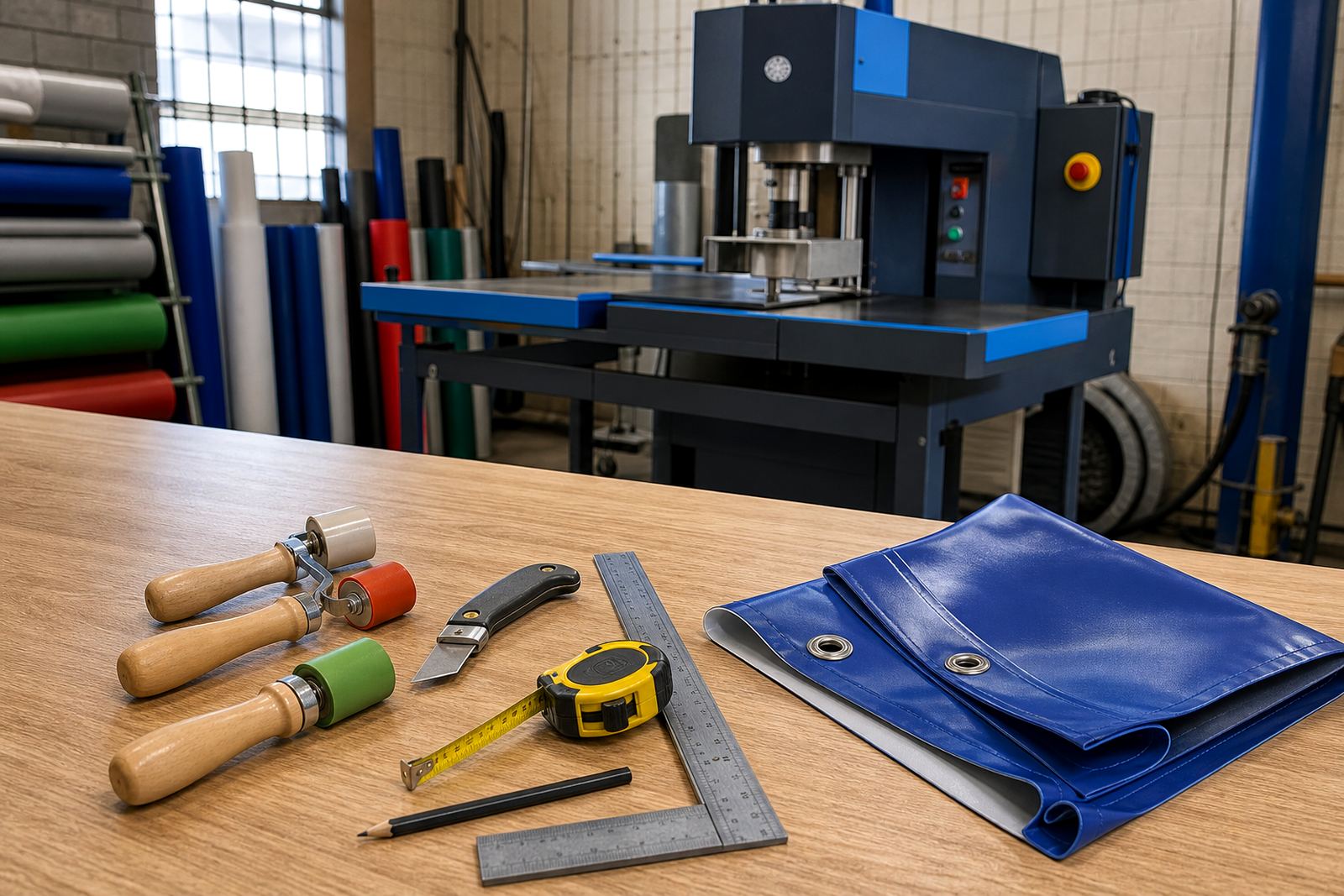
A working kit normally includes a mix of rollers and small hand tools for different seam shapes. Straight rollers are used on long runs, while narrower heads help in tight corners and around webbing, eyelet areas or keder pockets. Some kits carry a brass roller for heat transfer and a softer roller for delicate finishing on lighter banner stock.
For tent makers, banner shops and tarpaulin repair teams, the best kit is the one that matches the seam types they see every day. A heavy truck curtain panel needs a different touch to a narrow sign hem, and a keder edge needs a steadier hand than a plain lap joint.
- Rollers for flat seams and long hems
- Narrow tools for corners and small details
- Heat-resistant handles for close work near a fresh weld
- Options for heavier tarpaulin or lighter banner material
Sizes and options to match the workshop
Hand roller kits are usually selected by roller width, head material and handle shape. Common working widths range from about 20 mm for fine detailing to 50 mm for broader seam pressing. A compact kit suits sign shops and small repair benches, while a fuller set is better for production lines that handle mixed jobs all week.
In a busy Ekurhuleni workshop, the same team may weld banner pockets in the morning and repair a truck cover in the afternoon, so having more than one roller size saves time at the bench. If the job involves eyelet reinforcement, ask for a roller that can press close to the punched area without deforming the fabric edge.
- Roller widths from 20 mm to 50 mm
- Single-piece kits or mixed head sets
- Metal or heat-resistant roller surfaces
- Lightweight handles for long finishing shifts
Where the kit earns its place in the weld line
This is not a general tool for random site use. It fits best beside equipment used for PVC fabrication, after a seam has been formed and before the panel is moved on for trimming, punching or folding. It is especially useful where the job calls for tidy hems, overlapped seams, keder insertion and eyelet placement on display or shelter products.
For installers and fabricators working across South Africa, the kit is practical in both small repair rooms and larger production floors. It is also a sensible add-on where operators need to keep pressure even along joins that pass from straight runs into corners, which is where many seams start to look untidy if the finishing step is rushed.
- Tarpaulin repair and fabrication
- Banner hems, pockets and edge folds
- Tent panels, roof sections and side walls
- Keder, reinforcement strips and eyelet zones
Care that keeps the rollers working cleanly
Rolling tools last longer when they are wiped down after use and kept free of welded residue. If PVC build-up is left on the head, the tool can mark the seam or drag on the next pass. Store the kit in a dry place and keep it away from sharp offcuts that can nick the roller edge or bend a narrow tip.
For workshops near the coast or in dusty industrial areas, regular cleaning matters more than people think. A small amount of grime can catch on the material, and once that happens the finish on a hot seam can go patchy. Check handles, pins and fasteners as part of normal servicing so the tool stays steady in the hand.
- Wipe roller heads after each shift
- Keep the kit dry and off the floor
- Inspect for flat spots, loose pins or bent edges
- Replace worn rollers before they start marking seams
Order details worth confirming first
Before ordering, confirm the seam widths you work with most often, the material thickness, and whether the kit must handle broad hems or narrow corner work. It also helps to say whether the team is finishing banner stock, truck tarpaulins or tent fabric, because each one sits differently under pressure. If the work includes eyelets or keder pockets, note the edge detail so the right roller shape is supplied.
For jobs in Johannesburg, Durban, Cape Town, Pretoria and Bloemfontein, the most useful kit is usually the one matched to the local workload rather than a one-size set. A workshop that mostly turns out display banners will lean toward lighter tools, while a tarpaulin shop needs firmer pressure and a more durable head. Send the measurements, seam type and preferred roller sizes through the enquiry form so the set can be matched to the job.
- Material type: PVC-coated fabric, tarpaulin or banner stock
- Seam type: lap seam, hem, pocket, keder or reinforcement strip
- Preferred roller width and head material
- Need for corner work, eyelets or narrow detailing
Key facts
| Product type | Hand roller finishing kit for welded PVC fabric work |
|---|---|
| Typical use | Pressing warm seams, hems, corners, keder edges and eyelet zones |
| Compatible processes | High-frequency, hot-air and hot-wedge welding |
| Common roller widths | 20 mm to 50 mm depending on the kit |
| Materials handled | PVC-coated tarpaulin, banner and tent fabrics |
| Workshop fit | Finishing benches, repair bays and production lines |