Built for airflow banner work that still needs a proper edge
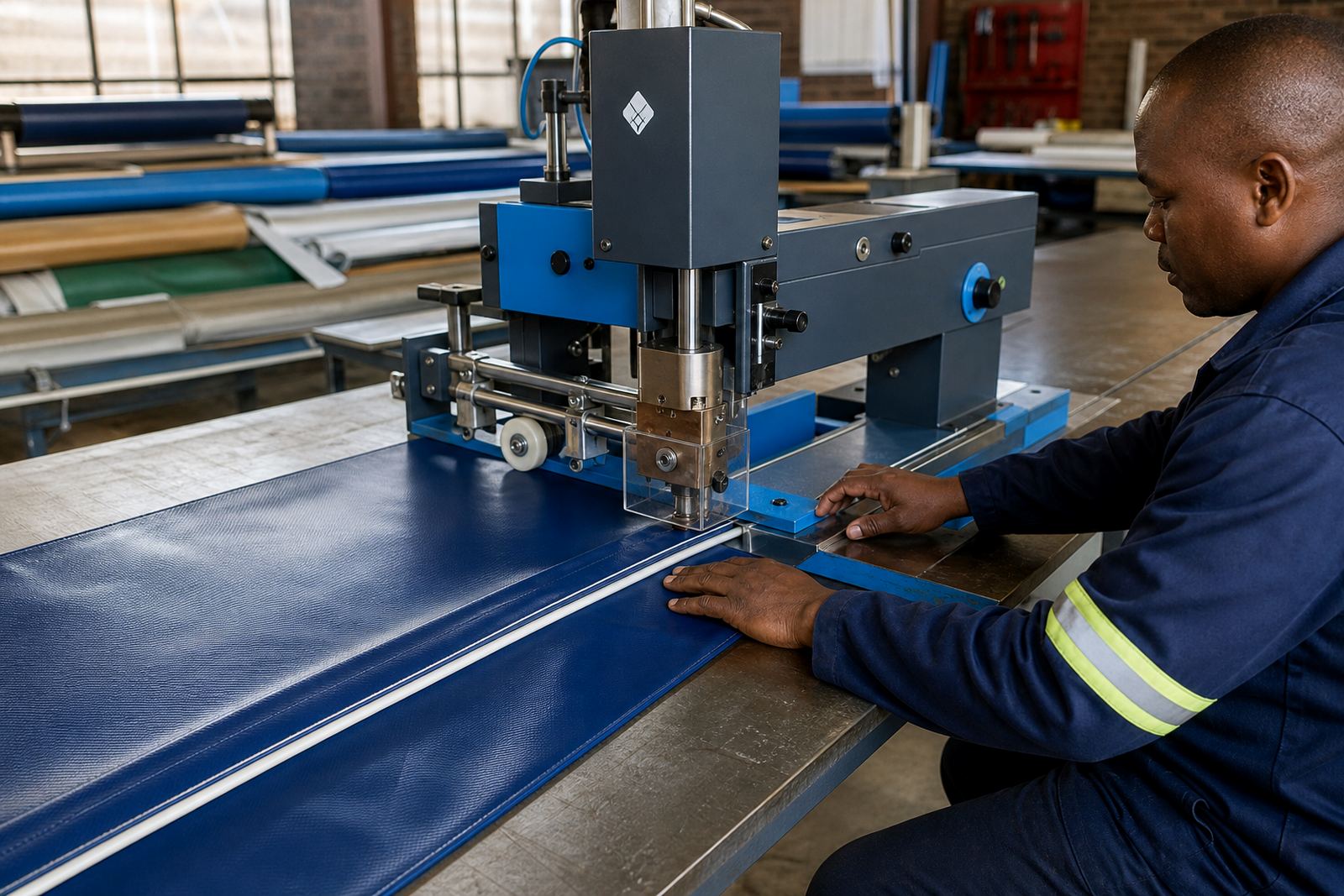
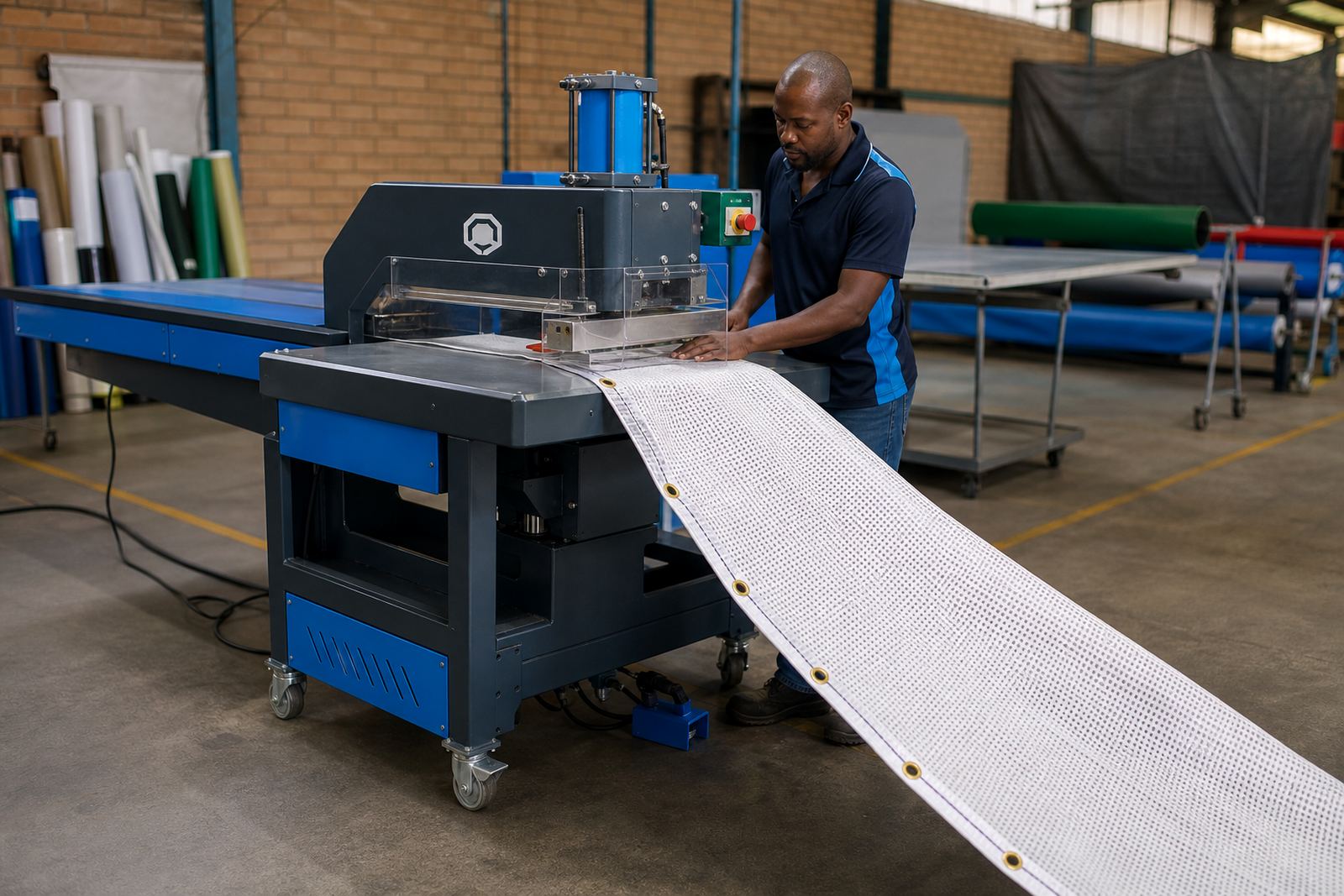
Mesh banner material is open enough to move air through it, but the finishing still has to carry the strain at the edges. This is where a mesh banner welder earns its keep. The machine is adapted for high-frequency welding or hot-air and hot-wedge welding on PVC-coated fabrics, with enough control to make narrow hems, doubled hems, banner pockets and reinforced strips without burning the face of the material.
For sign makers and display workshops, the main benefit is consistency. A long banner needs the same seam from end to end, whether it is a fence wrap in Johannesburg, a site banner in Durban humidity or a roadside graphic heading to Bloemfontein. The welding zone, guide system and pressure settings all need to suit the weight of the mesh, the coating on the fabric and the way the banner will be hung or tensioned.
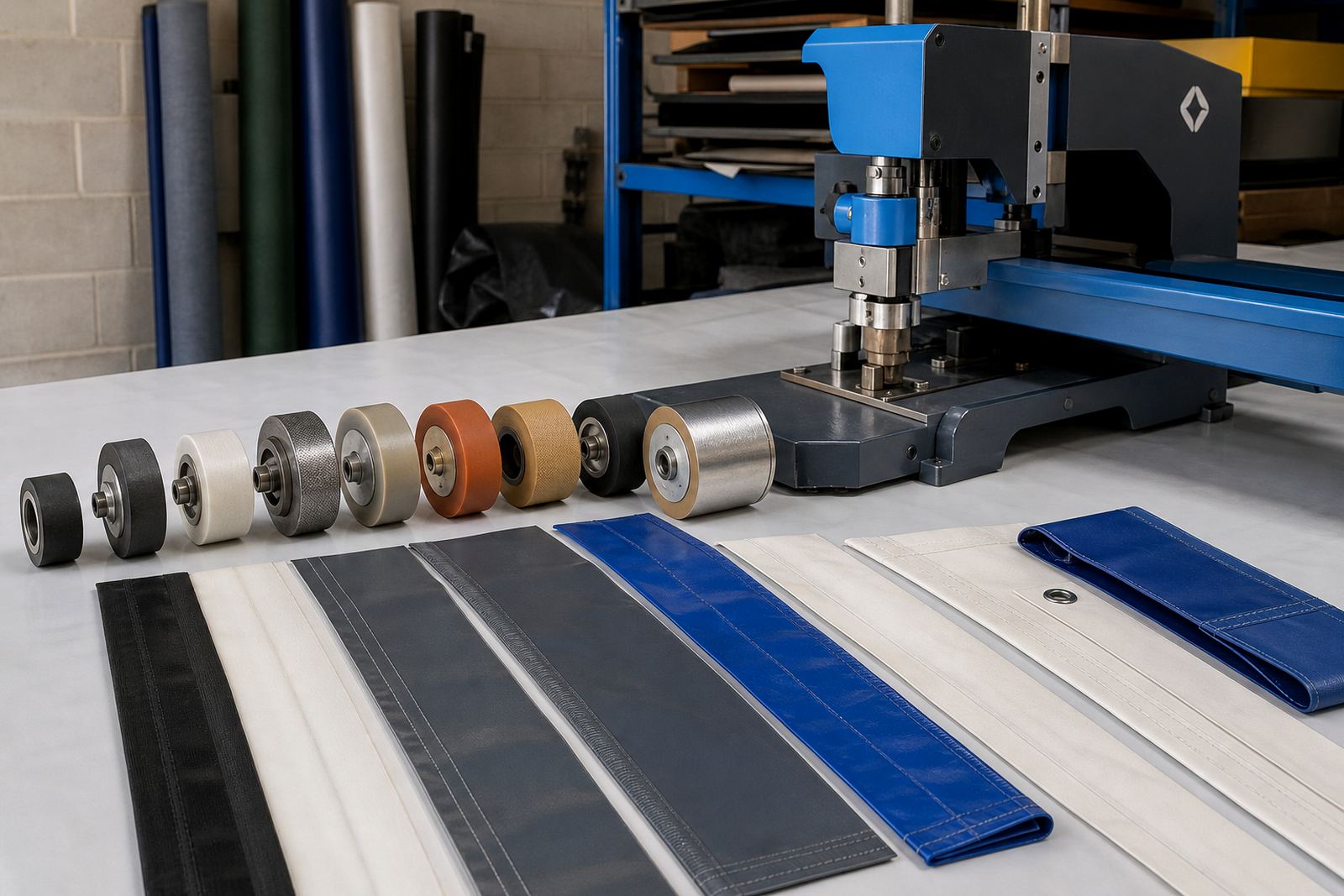
Depending on the format, the machine can be set up for straight hems, overlap seams, reinforcement tapes and edge pockets. Some shops use it mainly for short runs, others for repeat production on larger panels. The right setup depends on the substrate thickness, roll width and the type of fitting work that follows, such as eyelets, keder strip or pole pockets.
Welding methods and finishing options that matter on site
High-frequency welding uses radio frequency energy to fuse compatible PVC-coated layers under pressure. It is suited to controlled seam work where repeatability matters, especially on hems and reinforcement zones. Hot-air and hot-wedge welding use directed heat to soften the coating before the rollers press the layers together, which suits many banner and tarpaulin finishing tasks.
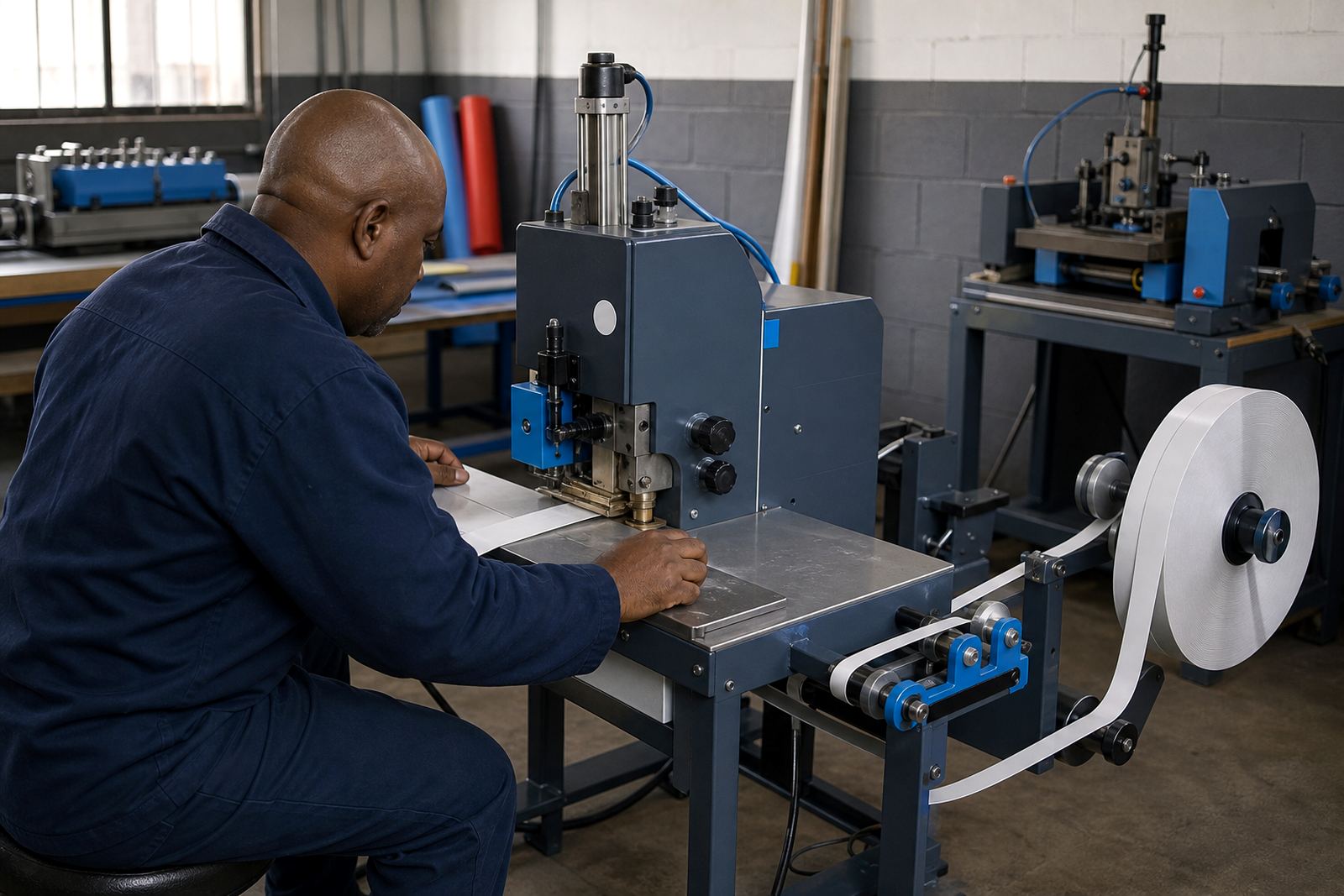
On mesh banner work, the seam choice is driven by the final use. A narrow hem may be enough for lightweight hanging, while a double fold can give more edge strength for windy coastal conditions. Pole pockets need even heat and neat folding so that a tube forms without puckering. Keder work needs accurate feed control so the cord stays centred and the weld line remains straight. Eyelet strips are usually reinforced first, then punched after the weld has cooled fully.
- Straight hems for banner edges and perimeter finishing
- Double hems for extra hold on larger signage and fence wraps
- Pocket work for poles, rods and hanging systems
- Keder attachment for tracking into frames or rails
- Reinforcement strips for eyelets and load points
For many workshops, the machine is only part of the result. The operator has to match temperature, dwell time and pressure to the fabric weight, especially where mesh banner material has a different coating from standard PVC banner stock.
Where this setup suits everyday banner production
This type of welder suits advertising workshops, event fabricators, tent makers and sign finishers that need repeatable edge work on mesh banner and similar PVC-coated products. It is common in jobs for scaffold wraps, perimeter fence branding, shade screens, stage drops and temporary event panels where wind relief matters. A well set machine helps the shop produce edges that hold up during transport, installation and removal.
In Germiston and the wider Ekurhuleni area, many businesses want equipment that can cope with mixed production. One day it may be short-run indoor display work, the next day a large outdoor banner that must sit square on a frame. The same machine can often be fitted for different seam widths, guide arrangements and tooling so the workshop does not have to compromise on finish.
- Mesh banner hems and pockets
- Large format signage finishing
- Temporary event branding
- Fence and scaffold wraps
- Tent sidewalls and accessory panels
- Custom PVC-coated fabric work
Durability matters when the banner goes out into sun, dust and coastal air. A neat weld reduces fraying at the fold and keeps the edge from opening where the load sits on eyelets or pocket seams.
Installation, fitting and workshop layout
Correct installation starts with the space around the machine as much as the machine itself. The operator needs room to feed wide banner rolls, guide folded hems and move finished panels clear without scuffing the weld. For hot-air and hot-wedge units, the alignment of the table, rollers and feed path is critical. For radio frequency equipment, the machine needs proper setup of tooling, pressure and electrode contact so the weld line lands where it should.
Power supply requirements depend on the model and workshop load. In many shops this equipment runs alongside cutters, printers and finishing benches, so the installation has to suit the available mains supply and the way the production floor is laid out. If the work involves frequent site moves, transport frames, support tables and handling methods also need to be considered before the machine is put into service.
From our Germiston workshop, we handle installation, commissioning and operator training for PVC welding customers in South Africa, including Johannesburg, Pretoria, Durban, Cape Town and Bloemfontein. That covers machine set-up, tooling alignment, seam testing and the hands-on checks that help the first weld run as it should. Customers get in touch through the enquiry form on our contact page.
Care, servicing and operator safety
Mesh banner welders need regular attention if the seams are to stay even. Keep the rollers clean, check the guides for build-up, and inspect heating elements, electrodes and pressure parts for wear. On hot-air and hot-wedge machines, the air path and heating zone should stay clear of dust and trim offcuts. On high-frequency systems, tooling condition and alignment have a direct effect on seam quality.
Preventive servicing is worth planning before problems show up. It helps reduce uneven welds, slipping material and overheating at the edges. It also keeps the machine ready for seasonal work, especially when larger signage batches come through before event periods. In coastal areas like Durban and Cape Town, humidity and salt air can add extra wear to moving parts and electrical connections, so storage and inspection matter more than many shops expect.
Operator safety should stay part of daily practice. Guards must remain in place, hot surfaces need clear marking, and the operator should use the right gloves and handling method when moving newly welded fabric. If the machine uses compressed air, that system also needs checking for leaks, pressure stability and safe routing around the work area. Good servicing keeps the weld quality steady and the workshop easier to run.
What to confirm before ordering a mesh banner welder
Mesh banner work varies from shop to shop, so the machine should be matched to the material and the output you need. Before ordering, confirm the banner width, the usual seam style and whether the workshop mainly does hems, pockets, keder or eyelet reinforcement. It also helps to know the thickness and coating type of the PVC fabric, as that affects welding settings and tooling choice.
- Material type and thickness
- Maximum roll width or panel width
- Preferred seam width and hem fold
- Need for keder, pockets or eyelet strips
- Workshop power arrangement and floor space
- Need for installation, training or service support
At PVCWelder, the aim is to supply and support equipment that fits real workshop conditions in South Africa. That means practical advice on machine selection, fitting work, servicing and replacement parts, plus support from Germiston and our regional service areas. For many banner makers, the best machine is the one that holds seam quality steady through a long production day, not just on the first panel.
Key facts
| Welding method | High-frequency radio frequency, hot-air or hot-wedge options depending on model |
|---|---|
| Suitable materials | PVC-coated mesh banner, PVC banner, tarpaulin and similar coated fabrics |
| Typical seam work | Hems, pockets, overlap seams, keder attachment and eyelet reinforcement |
| Roll or panel handling | Configured for wide-format banner work and repeat finishing runs |
| Installation support | Machine commissioning, tooling alignment, operator training and seam testing |
| Service support | Preventive servicing, fault finding, electrode refurbishment, roller replacement and parts supply |