Controlled feed for long welding runs
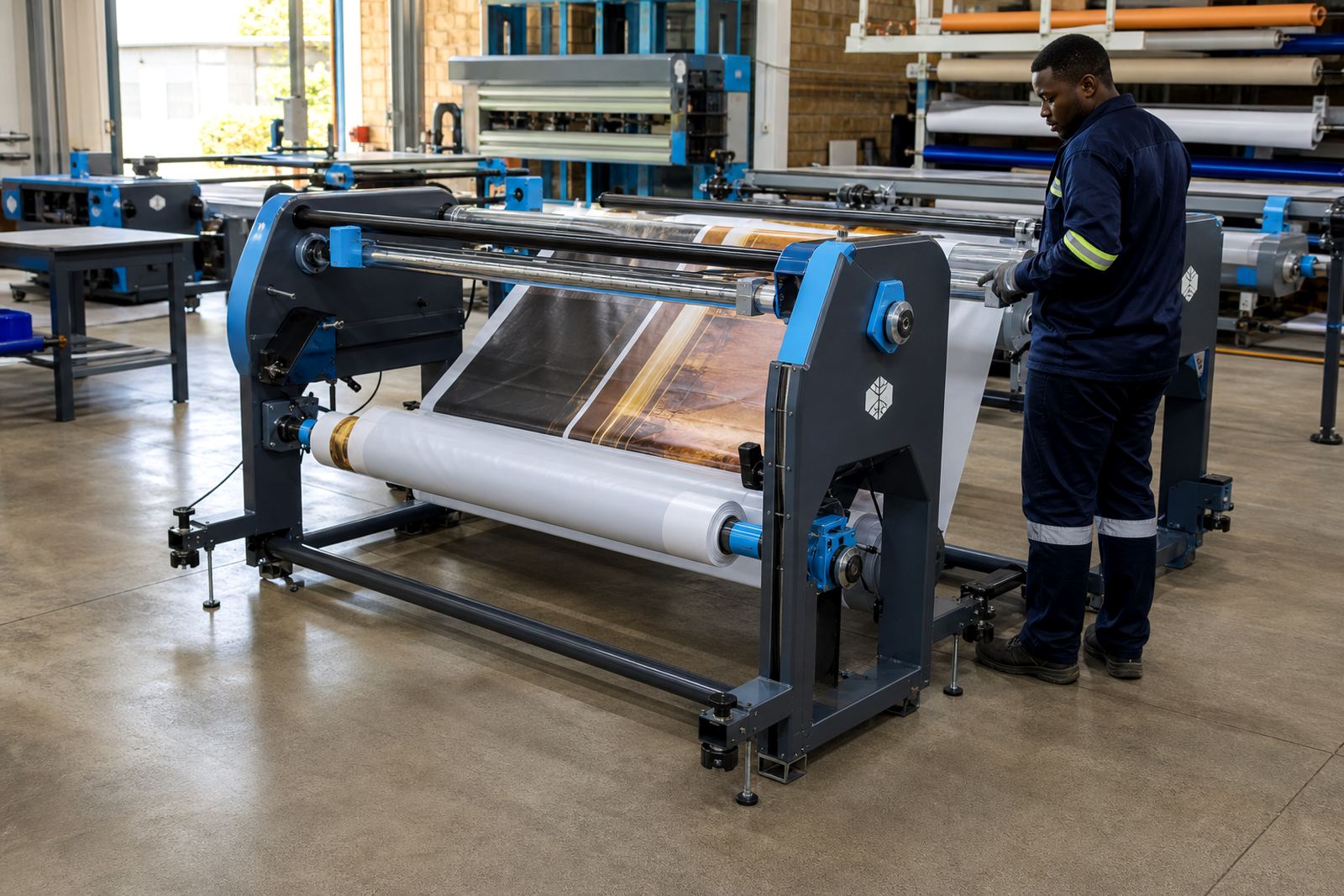
An unwinder rewinder is a handling unit used on continuous PVC welding lines to manage material as it enters and leaves the welder. It supports stable web tension on banner, tarpaulin and tent fabric, which matters when you are running long seams, hems, sleeves and panel joins on PVC-coated cloth.
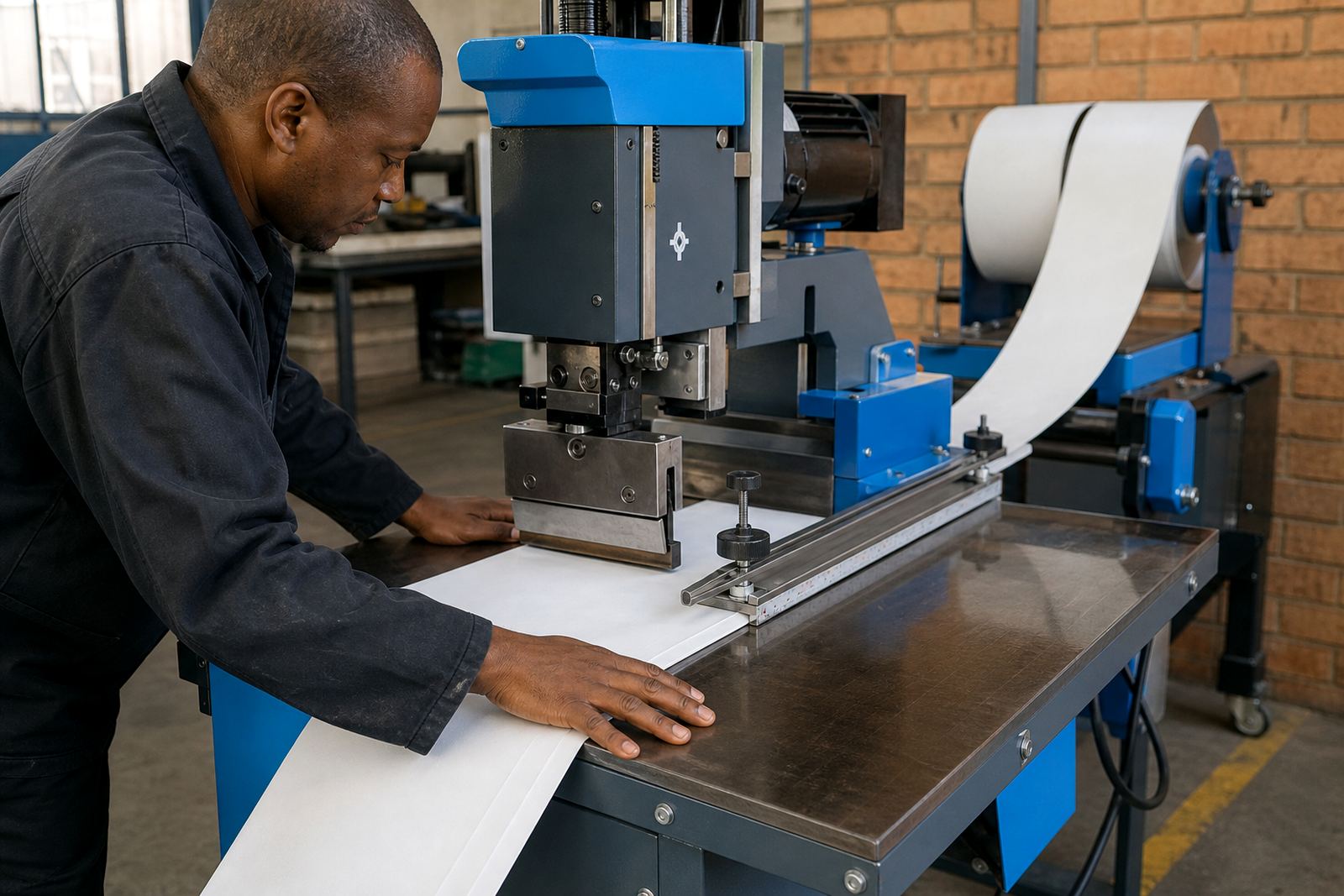
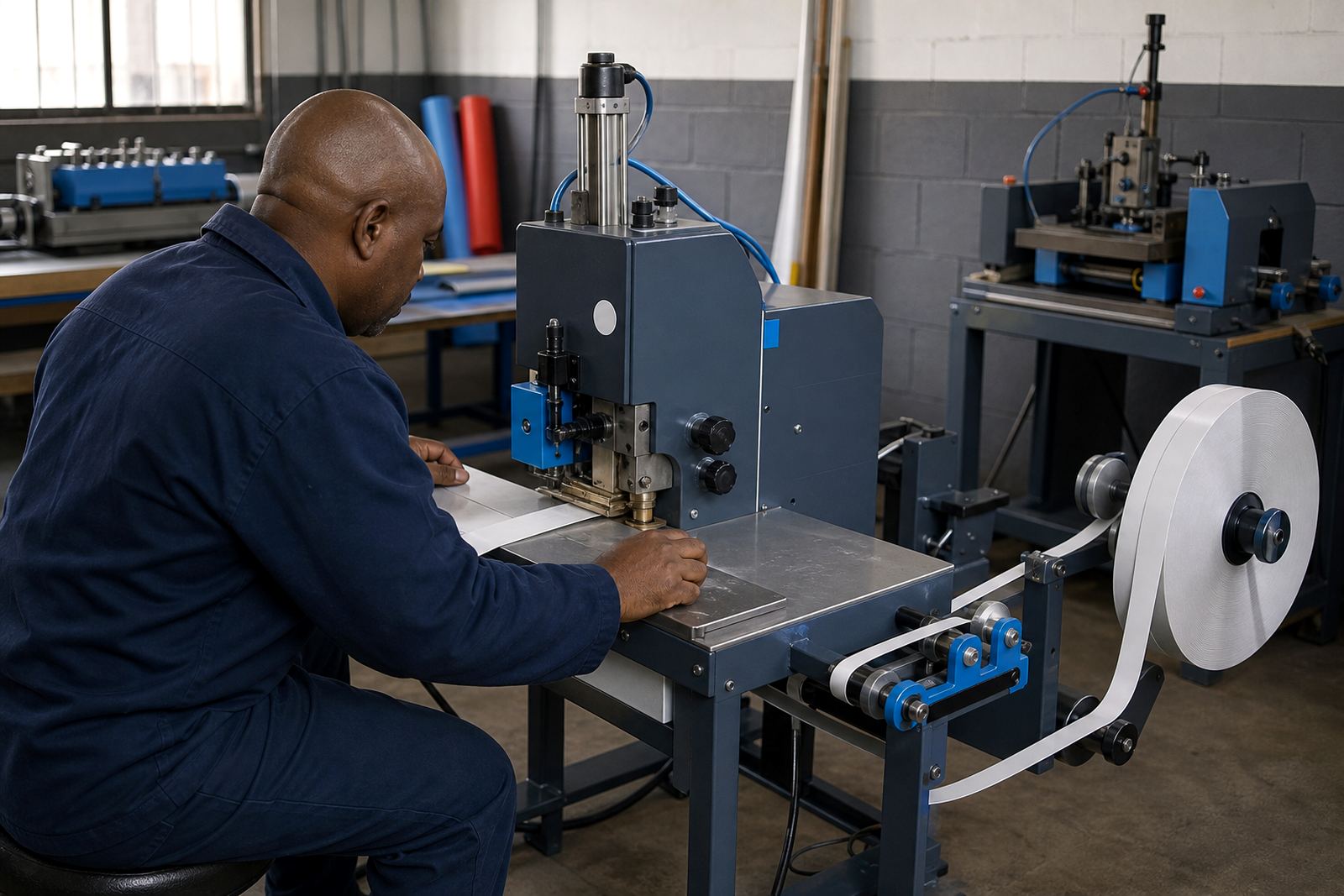
In practical use, the unit helps reduce snatching, drifting and uneven pull from the roll. That gives the operator better control when setting up radio frequency welding for PVC-coated fabrics or when feeding material through hot-air and hot-wedge equipment for straight seams, overlap joins and welded hems.
- Supports roll-to-roll processing on wide banner stock
- Helps control slack on thin and coated sheets
- Useful where repeatable seam tracking is needed
- Can be matched to handling tables, welders and cutters
Where the unit fits into tarpaulin and banner lines
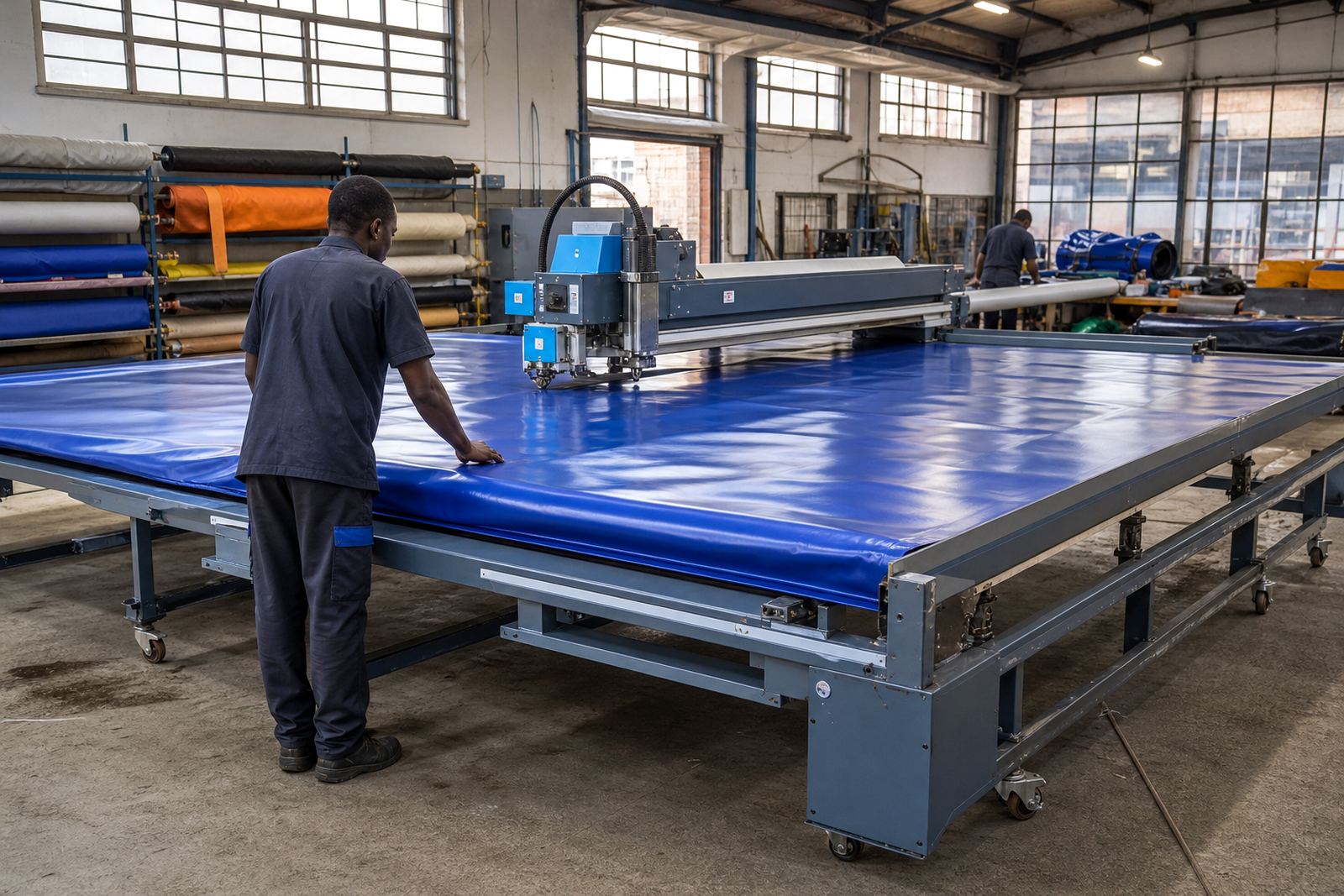
This handling unit suits signage shops, tarpaulin makers, tent makers and display fabricators that work with PVC-coated fabrics in standard roll widths. It is often used with seam welding lines where consistent feed is needed for long banners, side curtains, truck covers, awnings and event graphics.
For coastal work in Durban or Cape Town, a smooth feed helps when material has picked up moisture from storage. In inland workshops around Johannesburg, Pretoria and Germiston, the same control helps reduce handling marks on heavier PVC stock that has been standing in the sun or under dust cover.
- Banner production with long straight seams
- Tarpaulin panels and joined sheets
- Tent wall sections, valances and skirts
- Jobs needing repeatable edge alignment
Sizes, roll build and feed control choices
Unwinder rewinder units are supplied in different working widths, shaft sizes and load capacities to suit the roll formats used in local PVC fabrication. A light unit may be enough for narrow banner work, while wider plant needs heavier frames, stronger bearings and more controlled braking or drive settings.
Common options include manual brake control, powered drive, variable tension adjustment, guide rollers and stand heights set for the welder in use. The right choice depends on the roll diameter, fabric thickness, core size and whether the line is set for single operator work or two person handling. For heavier tarpaulin rolls, a reinforced frame and proper core support matter a great deal.
- Working width matched to roll size
- Shaft and core size matched to the roll tube
- Manual or powered feed control
- Tension adjustment for light or heavy coated fabric
- Fixed or mobile base depending on the workshop layout
Installation and setup on a welding line
Fitting the unit properly is part of getting clean output from the line. The frame needs to sit square to the welder so the web enters straight and the take-up side runs true. If the unit is used with radio frequency welding, alignment is important for repeatable seam position, especially on hems, reinforcement strips and keder work.
Installation usually includes mechanical positioning, shaft fitting, guide checks and trial runs with the actual material to be processed. Where the machine is paired with hot-air or hot-wedge welding, the feed speed, tension and take-up action should suit the temperature and seam path being used. A poor setup can leave wandering edges or stretched panels, which is costly on large banner jobs.
- Set the unit level before loading a full roll
- Check side guide alignment to the welder centre line
- Match tension to material weight and weld type
- Test with offcuts before full production starts
Care for bearings, shafts and braking parts
Regular care keeps the unit running smoothly and protects the fabric being processed. Dust, adhesive residue and PVC fines can build up on rollers and guides, so these parts should be cleaned and checked as part of routine workshop servicing. In humid coastal areas, bearings and fasteners need a little more attention because corrosion starts early on exposed steel.
Bearings, brakes, drive chains and guide rollers should be inspected for wear, noise and play. If the roll is tracking badly or the tension is jumping, the issue may be a worn roller, misaligned shaft or a brake that is not holding evenly. Our service work for Germiston, Johannesburg, Pretoria, Durban, Cape Town and Bloemfontein includes preventive servicing, fault finding, tooling alignment and parts supply for handling units and welding lines.
- Clean rollers and guides after production shifts
- Check fasteners and locking collars regularly
- Watch for uneven roll run or side drift
- Inspect brakes and bearings before heavy jobs
What to confirm before ordering
To match the right unwinder rewinder to your line, we need the working width, material type, roll diameter and core size. It also helps to know whether the unit will feed into a high-frequency welder, a hot-air seam machine or a hot-wedge line, and whether the layout calls for manual handling or powered take-up.
Please also confirm the workshop space available, the direction of feed, and any special work such as keder insertion, hem finishing, eyelet preparation or reinforced edge strips. If the line is used for both banner and tarpaulin work, we may suggest a setup that handles a wider range of roll weights and tension settings without constant adjustment.
- Material type and coated fabric thickness
- Roll width, roll diameter and core size
- Feed direction and workshop layout
- Machine pairing, including welder type
- Any extra work such as hems, keder or eyelets
Key facts
| Product type | Unwinder rewinder handling unit for PVC-coated fabric |
|---|---|
| Typical use | Continuous feed control for banner, tarpaulin and tent production |
| Compatible processes | High-frequency welding, hot-air welding and hot-wedge welding |
| Control options | Manual brake control or powered drive, depending on line setup |
| Handling range | Built to suit selected roll width, diameter and core size |
| Service support | Installation, alignment, servicing, parts supply and site callouts |