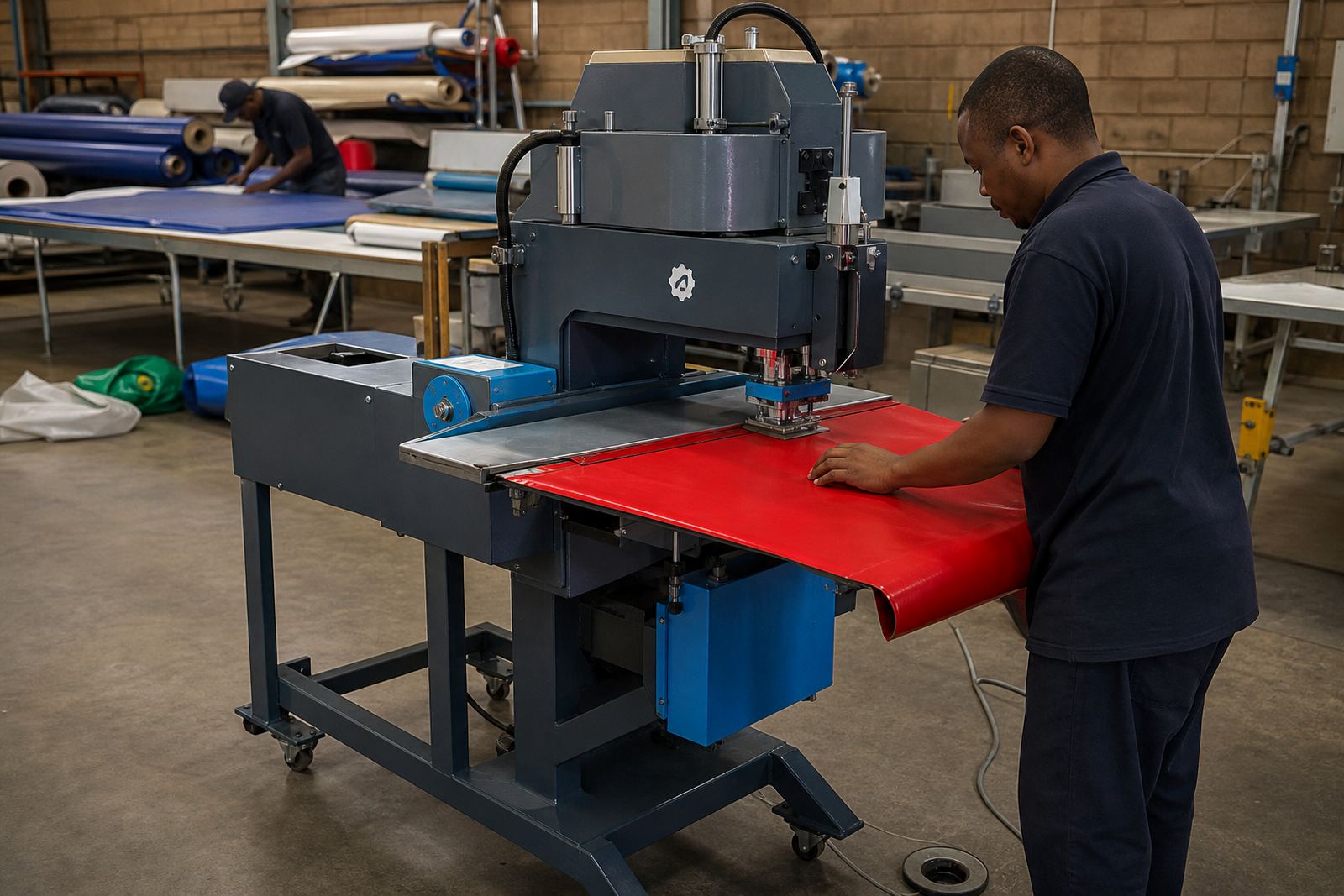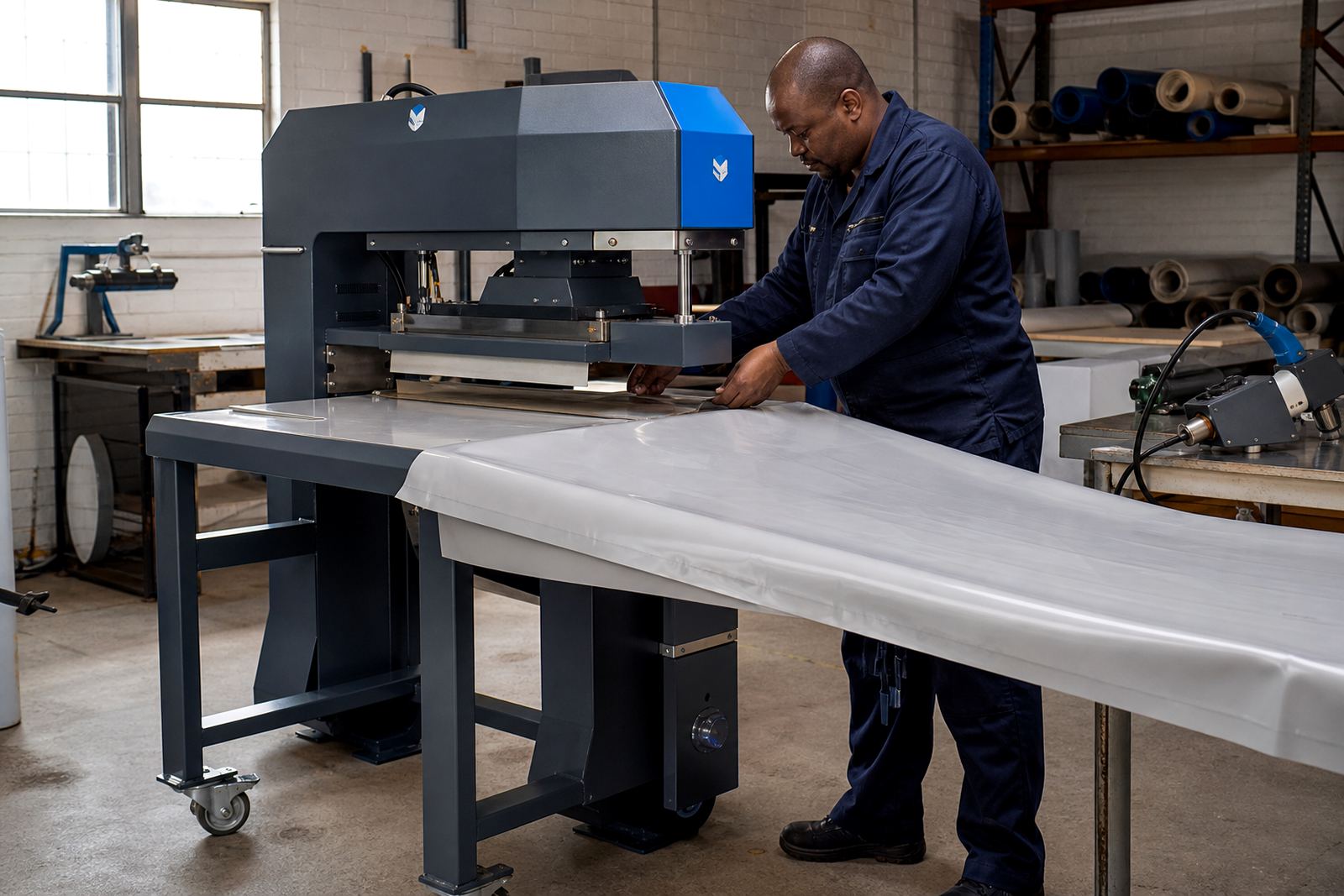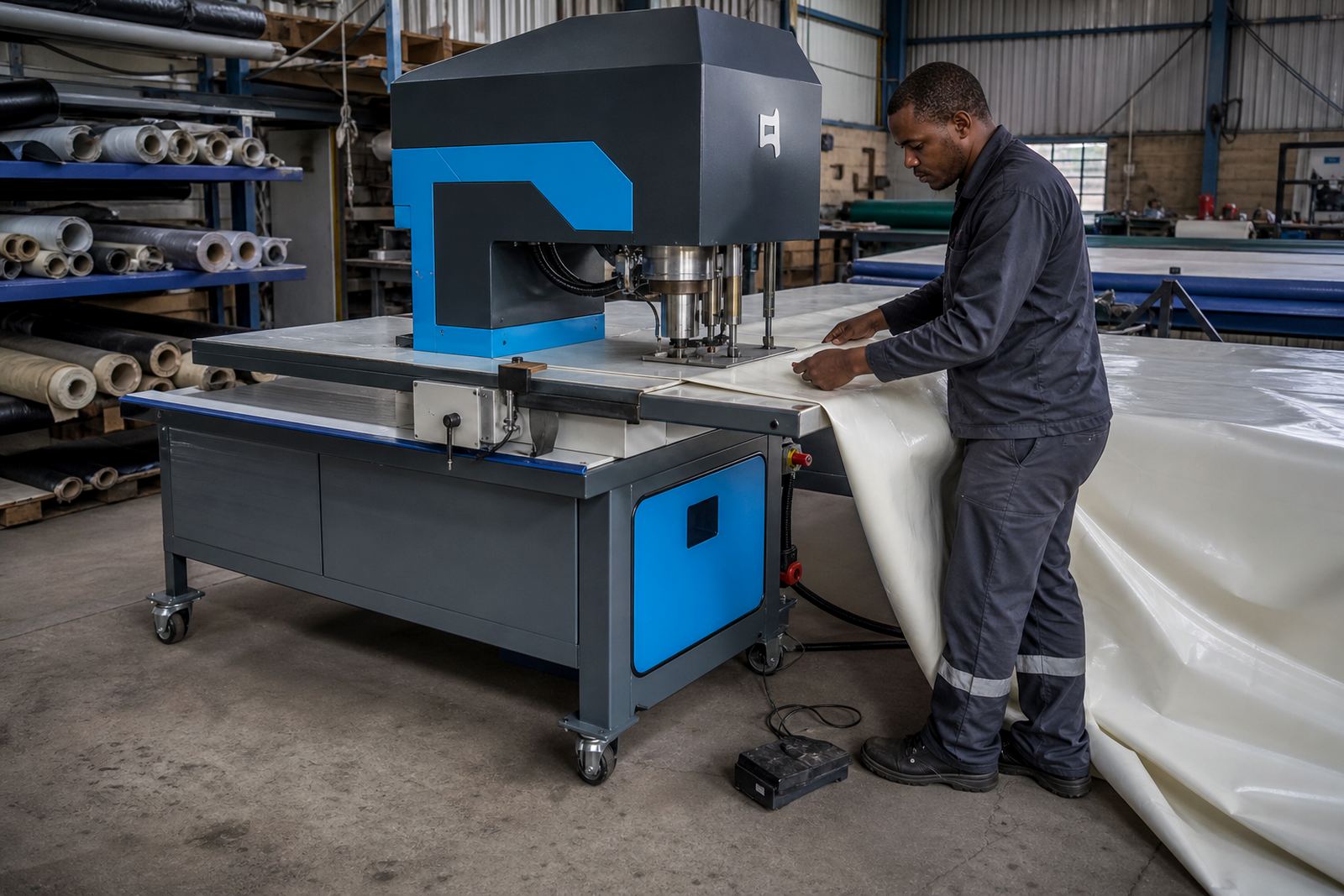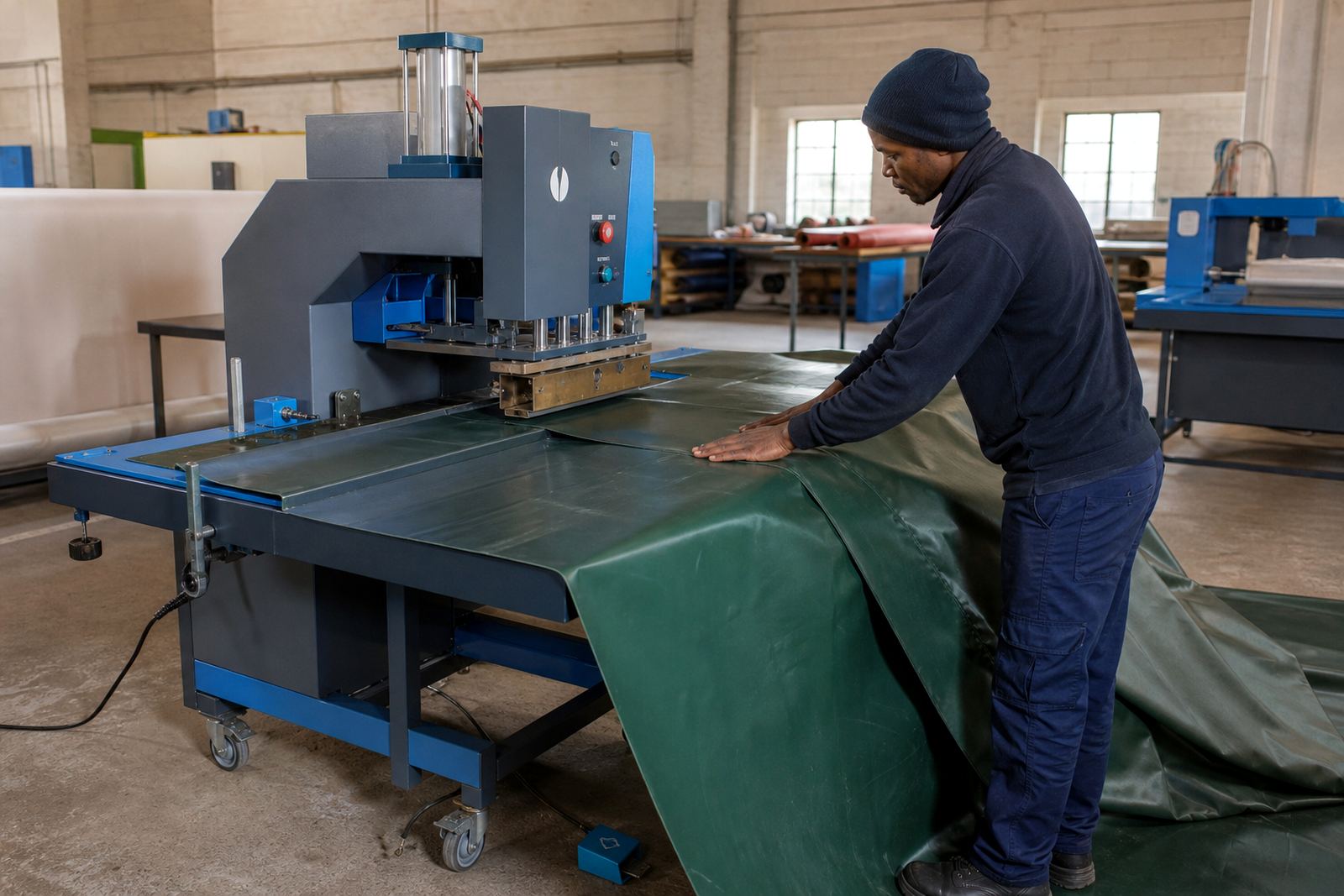
How high-frequency and hot-air welding differ on PVC-coated fabric
High-frequency, also called radio frequency welding, uses controlled electrical energy to heat the PVC layer from within the material stack. It is suited to repeatable seams where flat, even pressure and accurate alignment matter. Hot-air and hot-wedge welding use heat at the surface, then pressure to join the softened PVC coating. Both methods are used on tarpaulins, banners and tent panels, but the right choice depends on the fabric thickness, seam shape and production pace.
For most sign and shelter work, the first step is to match the weld method to the job. A narrow lap seam may suit one setup while a broad reinforcing seam or hem needs another. Clean cutting, dry material and steady feed are just as important as the machine itself.
- RF welding is often used for consistent, flat seams on PVC-coated material.
- Hot-air welding works well for hems, reinforcements and longer runs on site-friendly jobs.
- Hot-wedge systems are useful where controlled travel speed and continuous seam work are needed.
Which seam types are used on tarpaulins, banners and tents
Different products call for different seam constructions. A tarpaulin edge may need a folded hem for strength, while a banner can need a clean lap seam to hold a graphic panel flat. Tent work can involve stress points, corner patches and reinforced join lines where the load is spread across more material. Good seam choice helps the finished item keep its shape under wind, handling and repeated folding.
When checking a welded sample, look for even bonding, no scorch marks and no thin spots at the edge of the seam. If the weld lifts, shows bubbles or varies along the length, the settings or feed pressure may need adjustment.
- Lap seams are common on joined panels and banner assemblies.
- Hems add strength to exposed edges and opening points.
- Keder welds are used where a bead or track edge must slide into an extrusion or rail.
- Eyelet reinforcements need a clean weld zone with enough support around each fixing point.
Preparing PVC fabric before any weld is made
Preparation makes a major difference to seam quality. PVC-coated fabric should be cut square, kept free of dust and wiped if there is release residue or grime. Moisture can affect bonding, especially on coastal work where humidity in Durban, Cape Town or other damp areas can sit on rolled stock. If the surface feels cool and clammy, allow it to settle before welding.
On site or in the workshop, keep the work area tidy and check that the material feeds straight. A small tracking error can show up as a crooked hem or a seam that drifts off the mark. It helps to test on offcuts first, then confirm the setting before moving to the full panel.
What machine servicing usually includes
Preventive servicing keeps weld quality steady and reduces stoppages. A normal service covers alignment checks, wear inspection, cleaning, electrical safety checks where relevant, and testing of heating elements, rollers, guides and pressure parts. On RF equipment, electrode condition matters a great deal, because a worn or dirty electrode can affect the bond and leave uneven marks. On hot-air and hot-wedge machines, airflow, temperature control and contact parts need regular attention.
Service work is also where small problems are caught early. A frayed cable, loose guide, damaged roller or drifting temperature reading can become a larger fault if it is ignored.
- Check roller condition and pressure before each production run.
- Keep electrodes and sealing faces clean and free of build-up.
- Confirm that tooling is aligned for the seam width being run.
- Replace worn parts before they start marking the fabric.
Operator safety around welding equipment
Safe operation starts with training and a steady routine. Operators should keep hands clear of the weld zone, use guarding where fitted, and avoid loose clothing near moving rollers or feed systems. Heat can remain in the tooling after the weld is complete, so touch checks are not a safe way to judge readiness. Good ventilation is also important, especially in enclosed workshops where heated PVC fumes should not build up.
For RF machines, the operator should follow the correct setup and never bypass interlocks or guards. For hot-air and hot-wedge machines, it is important to keep clear of the heated element and to park the machine safely when not in use.
- Wear suitable protective gear for heat, noise and handling.
- Use training that matches the machine type in the workshop.
- Keep cables, hoses and offcuts out of walkways.
- Switch off and isolate the machine before cleaning or adjustment.
When a weld looks wrong or keeps failing
Fault finding starts with the seam itself. If the weld peels apart, check material type, surface condition, heat setting, dwell time and pressure. If the seam looks burnt, the temperature may be too high or the feed too slow. If the bond is weak but the material is not damaged, the pressure may be uneven, the tooling may be out of line or the seam may be too narrow for the load.
For recurring issues, a service technician should inspect the machine rather than making repeated setting changes by guesswork. The same fault can come from different causes, especially on mixed workloads such as tarpaulins one day and banner panels the next.
- Weak bond: check pressure, heat and alignment.
- Scorching: reduce temperature or travel speed.
- Patchy seam: inspect material cleanliness and tooling condition.
- Distorted edge: confirm guides, rollers and feed path.
How support is handled for workshops across South Africa
PVCWelder supports businesses in Germiston, Johannesburg, Pretoria, Durban, Cape Town and Bloemfontein, with service work that covers installation, commissioning, operator training, preventive servicing, seam testing and site callouts. For workshops in busy industrial areas, a practical service plan helps keep machines in use and parts changing on schedule rather than after a breakdown.
For a new setup or a machine that needs attention, clients can send an enquiry through the contact page form with the machine type, the fault symptoms and the material being welded. That gives the team a clearer starting point for diagnosis, parts supply and on-site service where needed.