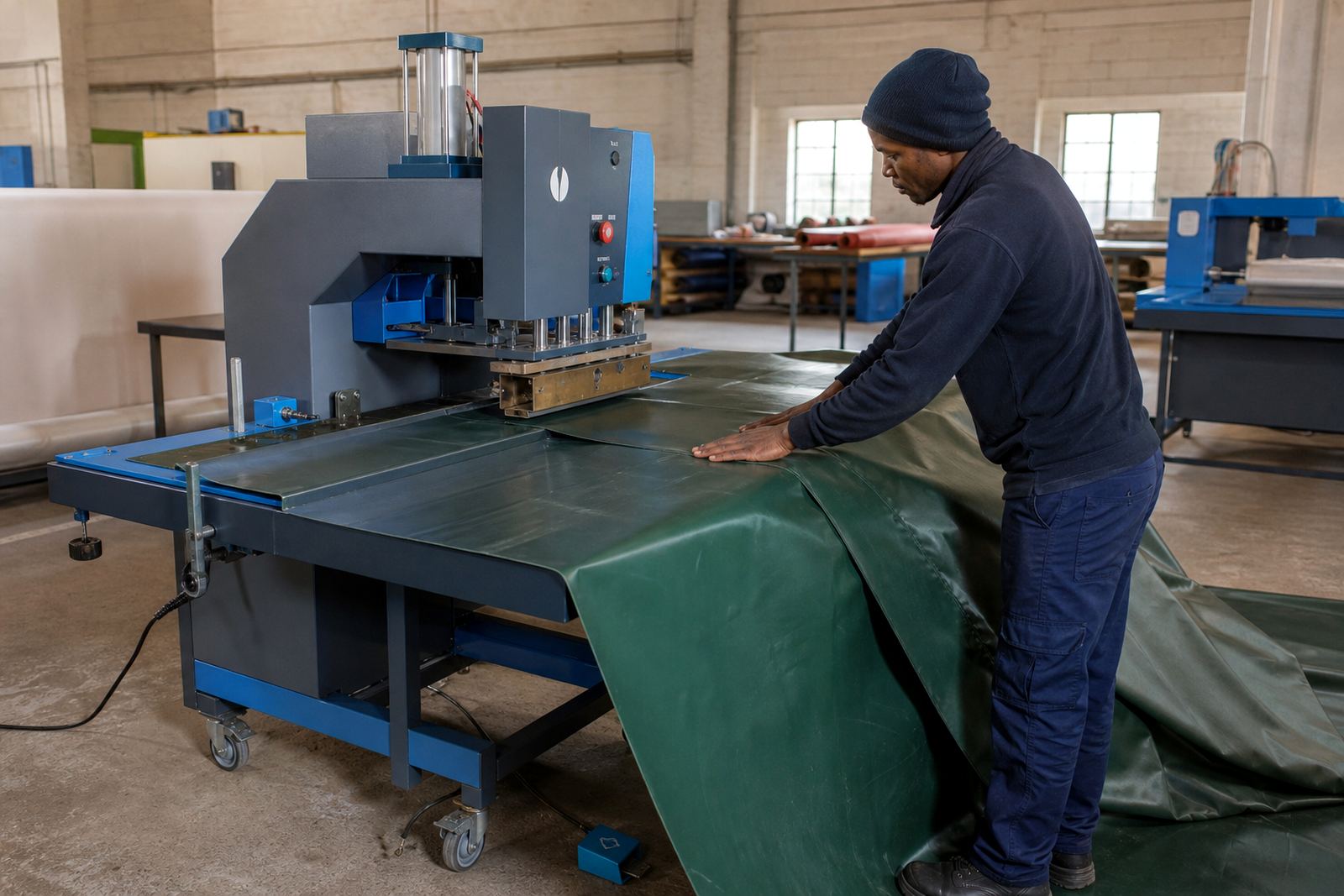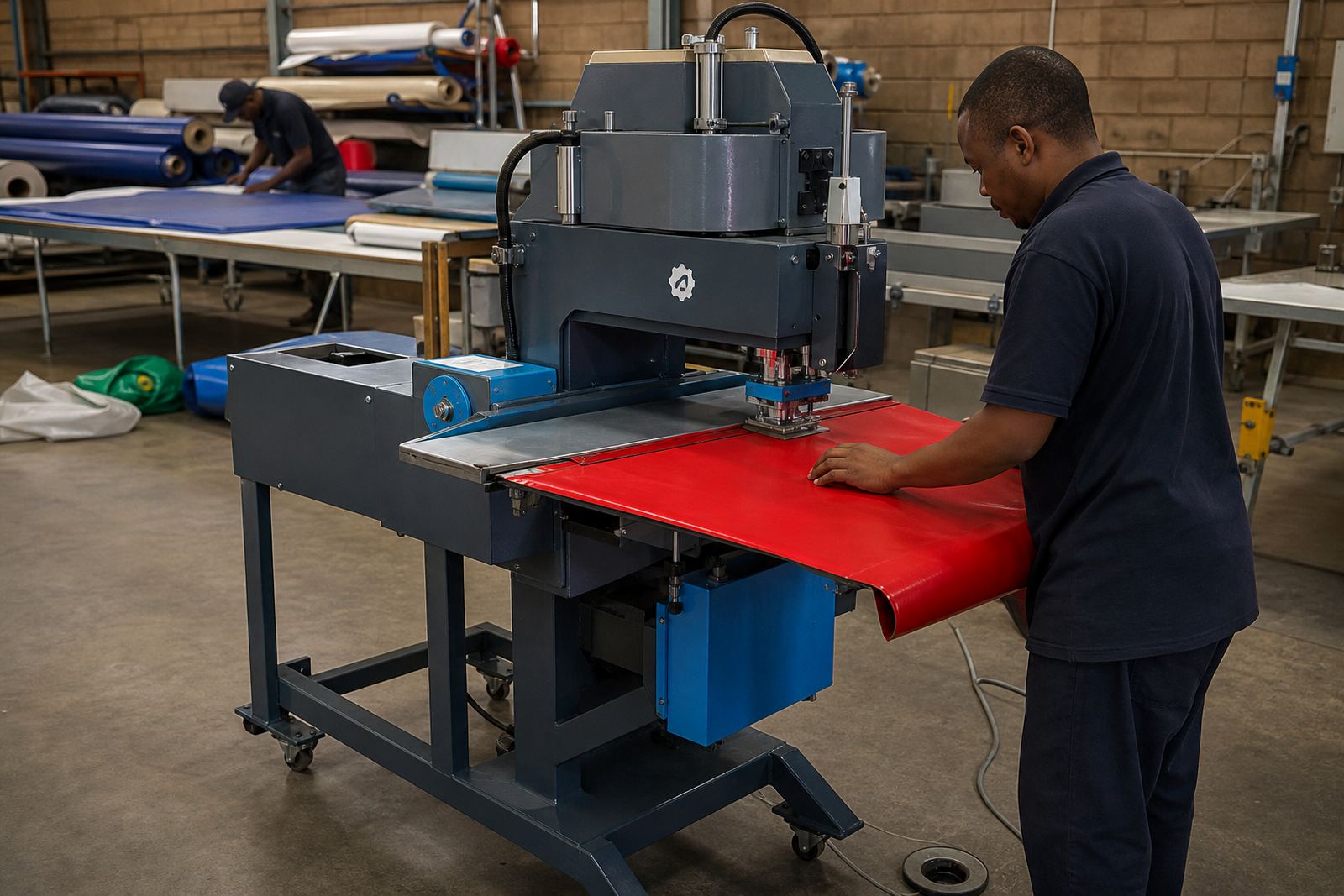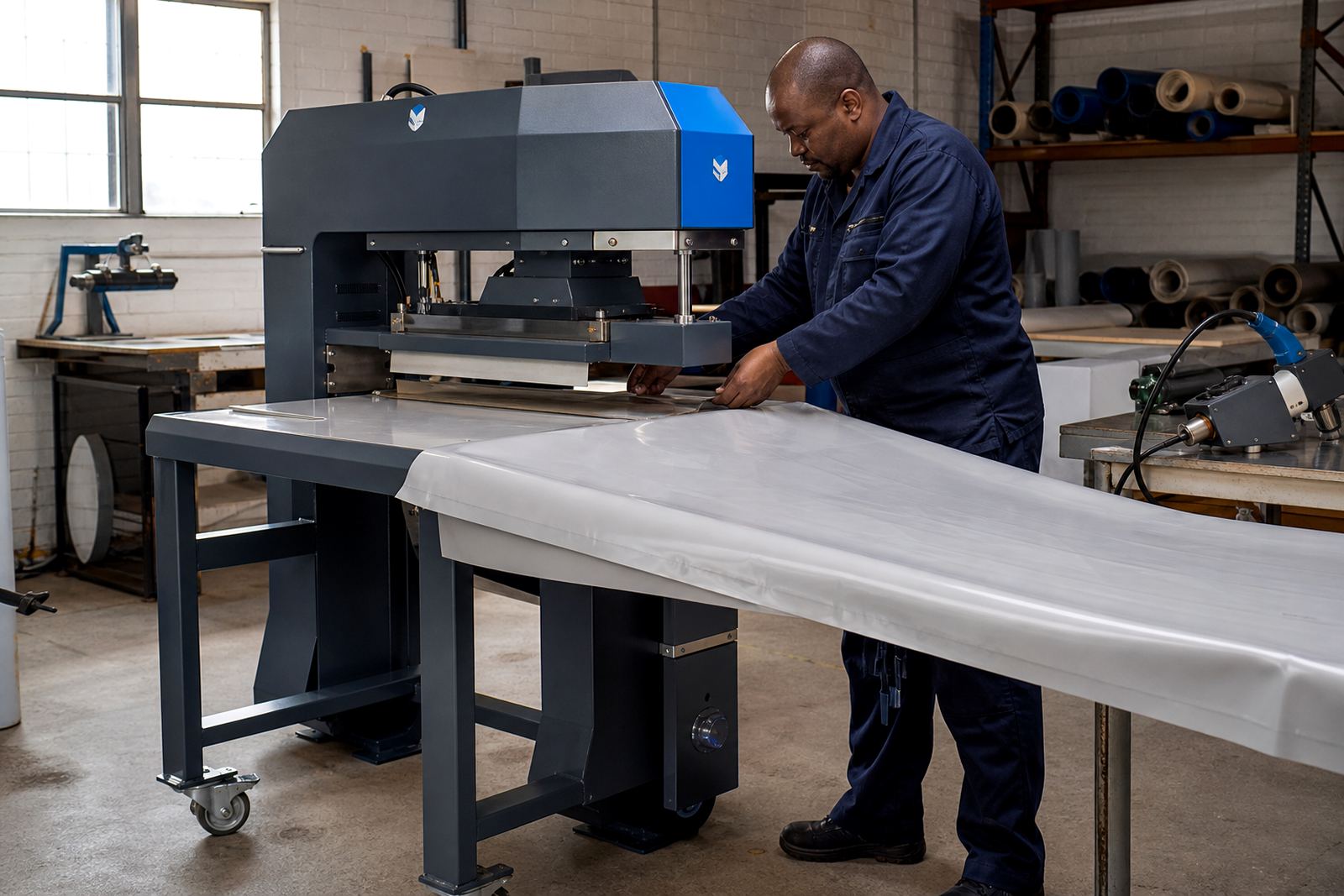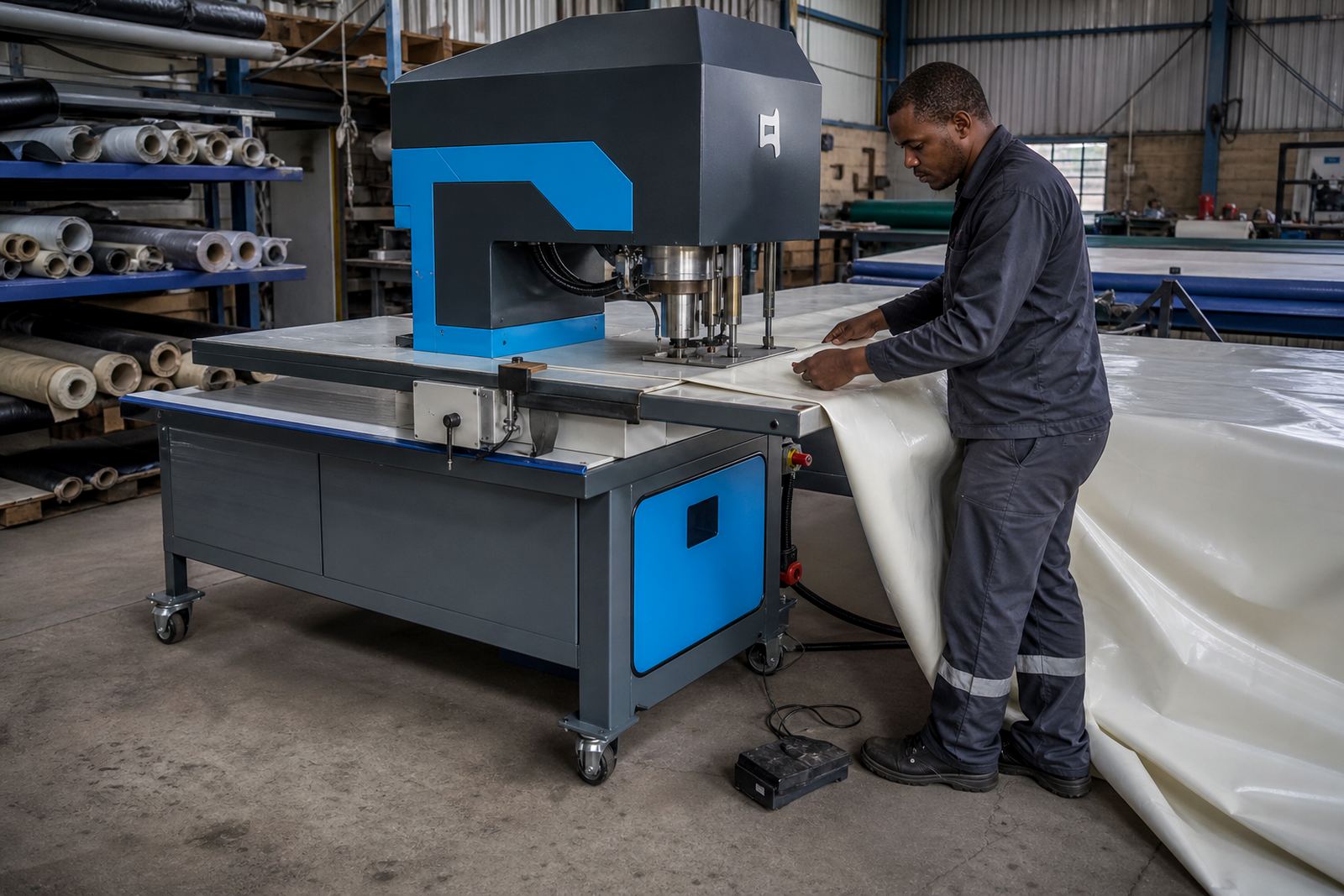
Set the machine area before the first seam
Keep a clear floor around each welder so the operator can move rolls, feed guides and finished panels without stepping over offcuts or cords. In busy workshops around Germiston, Johannesburg and Pretoria, space gets tight fast, so a fixed path for incoming fabric and outgoing jobs helps stop snags and knocks.
Check that guards, emergency stops and covers are in place before switching on. Make sure the machine sits level, the bench height suits the operator and the work surface can support long lengths of PVC-coated fabric without sagging. If the machine is near a roller table or cutting bench, keep the gap narrow enough to control the material but wide enough for hands to stay clear of pinch points.
Heated tooling needs steady hands and clear signals
High-frequency welding and hot-air or hot-wedge welding both need attention at the point of contact. The operator must know where the heat zone begins, where the pressure rollers close and how long the cycle runs. A quick glance is not enough when a hem or seam is set up for repeated production.
- Wear heat-resistant gloves when handling fresh seams or changing tooling
- Keep hands clear of the press area while the cycle is active
- Use tongs or a flat tool for lifting test pieces, not bare fingers
- Let heated parts cool before cleaning, adjustment or storage
- Never reach across the weld line while the machine is moving
Operators should also agree on simple hand signals or verbal calls when two people feed and receive material. That reduces accidental starts and keeps the seam line clean.
Large rolls must be controlled, not wrestled
Tarp and banner rolls can be awkward, especially when working with wider widths or heavier PVC-coated fabric. A roll that shifts suddenly can trap fingers, damage the edge or pull a partially welded panel out of alignment. Use a cradle, stand or supported shaft so the roll feeds evenly and does not run away under its own weight.
When lifting, keep the roll close to the body and bend the knees, not the back. If the job is too heavy for one person, use two people or a lifting aid. In coastal areas like Durban and Cape Town, where humidity can affect handling and surface tack, take care that material does not stick unexpectedly while being repositioned.
- Store rolls flat or on proper supports, not leaning loose against walls
- Keep edges covered so dust and grit do not mark the weld zone
- Do not drag fabric across sharp floor edges or metal corners
- Check that the unwind path is straight before feeding the next length
Seam types and attachments need the right protection
Different seam types carry different risks. A plain overlap seam, a folded hem, a keder pocket or an eyelet area each places pressure and heat in a slightly different way. Operators should know which tooling belongs to which task and avoid improvised setups that place hands too close to the active zone.
For hems, the fabric edge often needs to be folded and held before welding or stitching reinforcement. Keder work needs steady alignment so the cord or track sits evenly through the length. Eyelet areas need a firm base and enough clearance for setting tools. If the panel is not square or the layers drift, stop and reset it instead of forcing the pass through the machine.
Electrical safety matters in a workshop with heat and pressure
PVC welders use electrical power and controlled heat, so the workshop must stay dry, tidy and properly earthed. Keep liquids away from control panels and do not run leads through standing water or under loose offcuts. If you hear unusual arcing, smell burning insulation or see a flicker in the controls, stop the machine and isolate it before checking further.
Load-shedding can interrupt production, so it is worth having a restart routine. After power returns, inspect the seam zone, tooling and controls before restarting the job. A sudden return of power can move parts or change settings if the machine is not reset properly.
- Switch off and isolate before cleaning inside guards or around electrodes
- Check cables, plugs and sockets for wear or heat marks
- Keep the control panel dry and free from adhesive residue
- Use only trained staff for internal electrical checks
Servicing keeps safety built into the machine
Preventive servicing is not only about output, it also protects the operator. Worn rollers can pull fabric off line, loose tooling can shift under pressure and dirty electrodes can affect seam quality. A machine that is not aligned properly may force the operator to hold material in a strained position, which raises the chance of slips and hand injuries.
Regular checks should cover roller condition, alignment, fasteners, guards, heat control and the movement of any press or carriage. If a machine starts leaving weak spots, uneven hems or inconsistent weld marks, that is often a sign that servicing is due. In many shops across South Africa, small faults grow into bigger downtime when they are left on the floor for too long.
Training the operator is part of the safety job
Good training covers the machine controls, the weld cycle, the feed path and the limits of the tooling. New operators should practise on offcuts first, then move to full-size panels once they can feed straight, hold tension evenly and recognise the sound and feel of a proper weld. For teams in Germiston, Boksburg and Benoni, a short refresher after maintenance or tooling changes can prevent repeat mistakes.
A practical training session should include housekeeping, emergency stop use, safe removal of finished work and the correct way to report a fault. The aim is not to slow the team down but to keep hands, fabric and machines working in a controlled way.
For machine installation, commissioning, operator training, servicing or fault finding support, enquiries can be sent through the enquiry form on our contact page.