Start With Clean, Dry PVC Surfaces
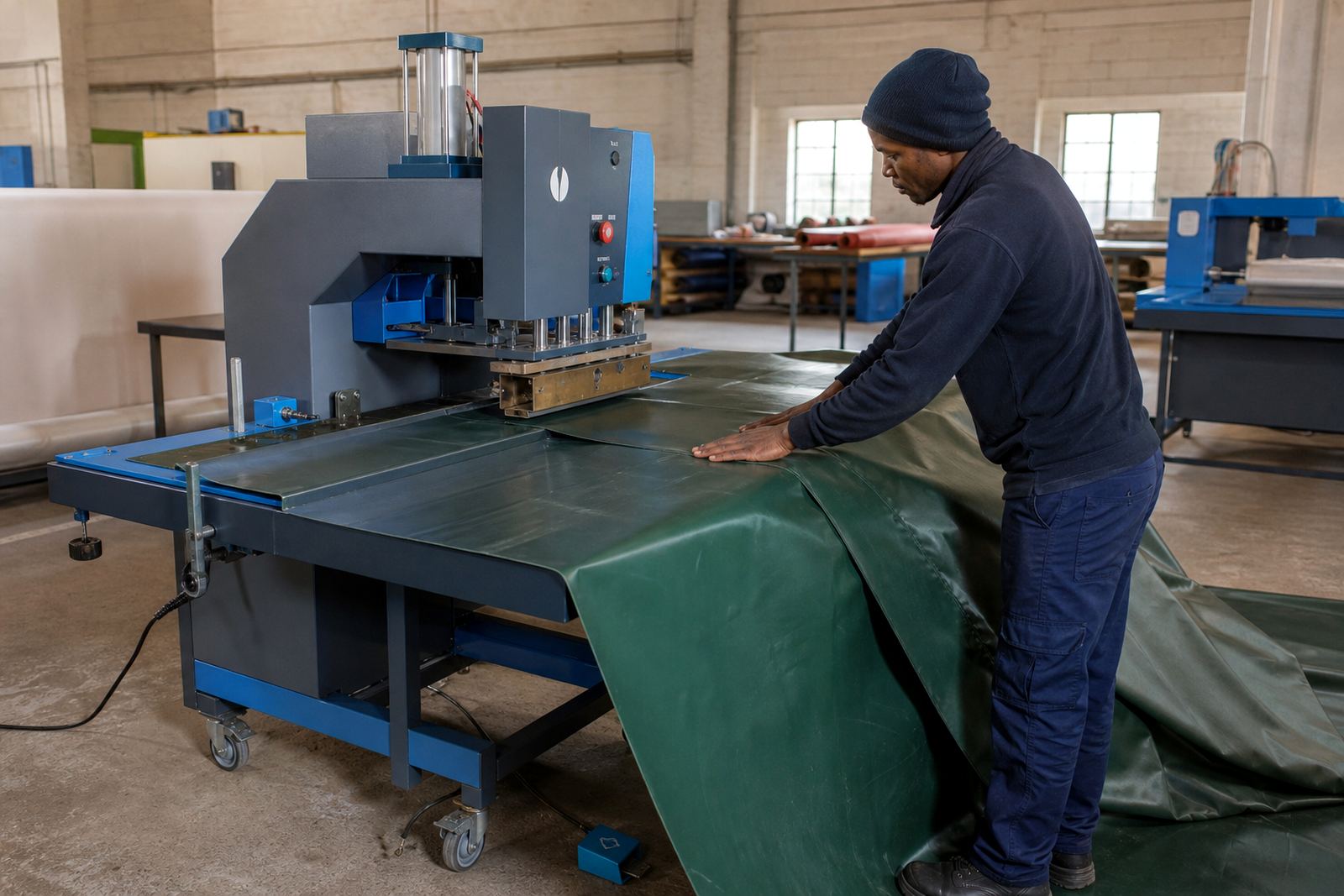
Before seam testing or production welding, check that both faces of the PVC-coated fabric are clean, dry and free of release dust, oil, chalk marks and loose dirt. In humid coastal conditions, especially around Durban and Cape Town, material can pick up moisture while it is still looking dry. Wipe it down and let it acclimatise on the workshop floor or rack before you set the weld.
If the roll has been stored near a loading bay or in an open truck, give it time to relax. Cold or stiff material does not lie flat and can shift under the welding head, which throws off seam width and edge position. Small dust lines may look harmless, but they can leave weak spots in a radio frequency seam or a hot-air seam.
- Use a clean lint-free cloth for light wiping
- Remove visible grit from both the top and underside
- Keep solvents away unless the material maker has approved them
- Let damp rolls dry naturally before cutting or welding
Cut True Before You Weld
Accurate cutting makes seam testing far easier. Trim edges square and keep repeated panels the same length so the seam allowances match from piece to piece. On banners and tarpaulins, a slight wander in the cut becomes a visible twist after welding, and that is hard to hide later. Measure twice, cut once is not fancy advice, but it saves a lot of waste.
For large covers, lay out the sheets on a flat table or clean floor and mark reference points before you start welding. If you are preparing for keder, hems or eyelet strips, allow enough extra width for the fold and reinforcement. Do not stretch the fabric while cutting, because it will relax after handling and the seam line will move.
- Keep knife blades sharp so the edge does not feather
- Use straight guides for long banner lengths
- Mark seam allowances clearly on the reverse side
- Separate cut panels so they do not stick to each other
Match the Seam Style to the Job
Different seam types need different preparation. A simple lap seam needs neat, even overlap. A double seam needs matching allowance on both sides and steady alignment. For hems, fold the edge back evenly so the finished width stays the same along the full length. When preparing keder, the cord pocket must be formed straight or it will feed badly into the track.
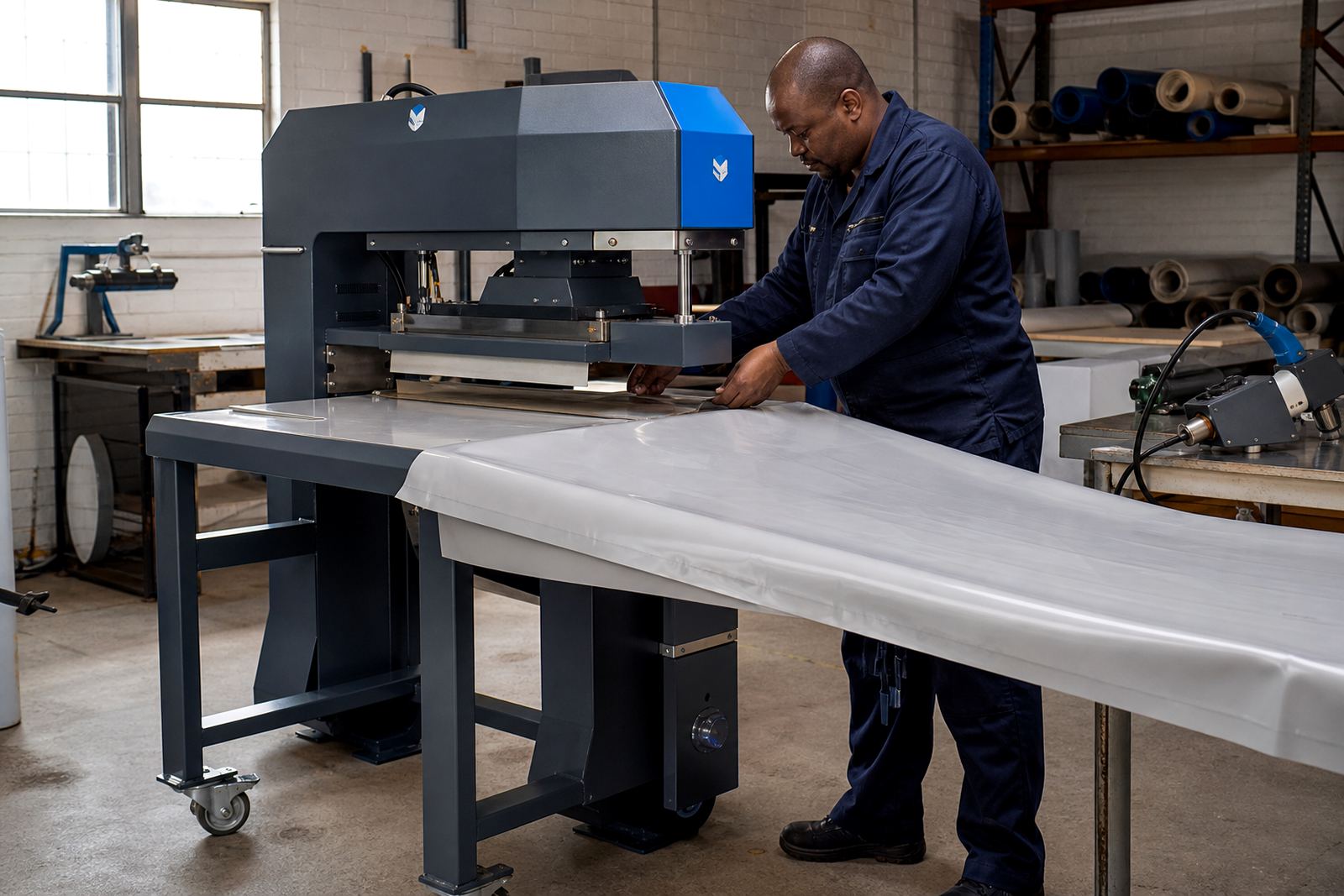
Hot-air and hot-wedge welding works best when the layers sit flush, with no trapped wrinkles or folded corners. Radio frequency welding responds well to clean, flat contact and controlled overlap. If the material changes thickness at a corner or at a printed panel join, test that section before production and make sure the weld area is not crowded by excess layers. The better the prep, the less rework later.
- Use lap seams for many banner and tarpaulin joins
- Keep hem folds even and pressed flat
- Check keder pocket width before stitching or welding
- Trim corner buildup where permitted by the job spec
Handle Reinforcement, Eyelets and Stress Points
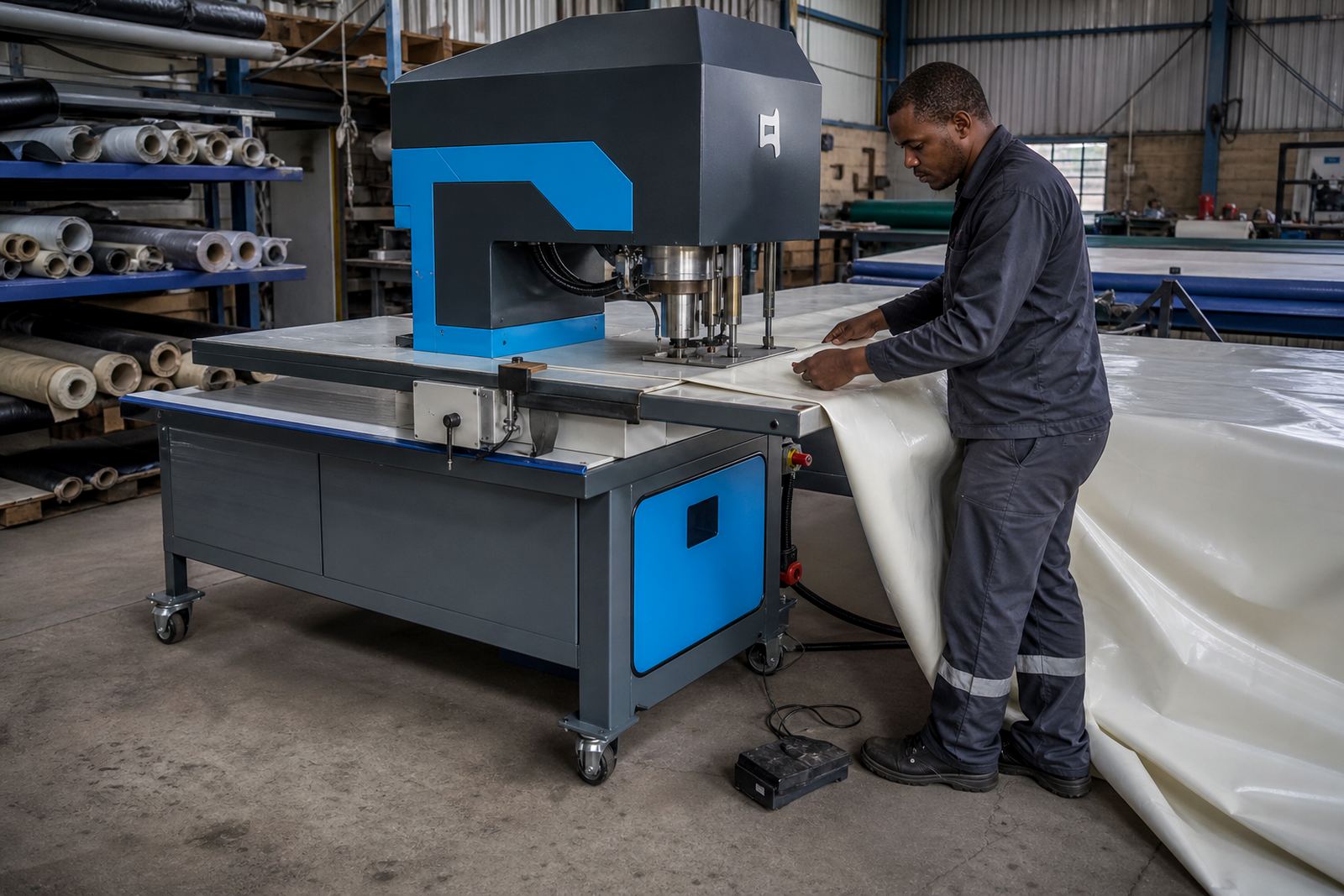
Eyelet strips, corner patches and tie-down areas need extra care. If the reinforcement is cut too narrow, the weld has too little support. If it is too wide or bulky, it can wrinkle and create a hard spot. In tent and event work, stress points carry a lot of pull, so the layers must be balanced and the edge must stay neat. A loose fold near an eyelet can split after the first few pulls, and then the repair becomes more expensive than the prep work.
Before you weld, check that the eyelet pattern matches the spacing needed for the finished product. Leave enough room for the tool head and for later punching if the eyelets are added after welding. On heavier material, stack the layers carefully and keep the reinforcement centred. If the job uses printed PVC, do not place a stress point on a weak printed edge unless the design allows it.
- Keep corner patches symmetrical where possible
- Space eyelets evenly and measure from a fixed edge
- Press reinforcement flat before the weld cycle starts
- Check that no cords, offcuts or scrap are trapped inside folds
Set Up the Job for a Clean First Test
Before full production, run a short seam test on offcut material from the same batch. That gives you a clear check on temperature, pressure, dwell or power setting, depending on the machine type. Keep the test strip prepared the same way as the job itself, because a perfect offcut with different prep tells you very little. If the seam opens at the edge, the issue is often alignment or surface contamination rather than the machine alone.
For workshop teams in Germiston, Johannesburg, Pretoria, Durban, Cape Town and Bloemfontein, a repeatable prep routine helps keep results steady across different crews and shifts. Label bundles, keep pattern sets together and note any changes in coating thickness or backing weave. That way the operator is not guessing when the roll changes mid-job.
- Test on offcuts from the same roll or batch where possible
- Keep sample pieces labelled with seam type and machine settings
- Record any edge curl, coating bloom or stiffness changes
- Separate rejected panels so they are not mixed back into production
Keep the Welding Area Ready for Safe Work
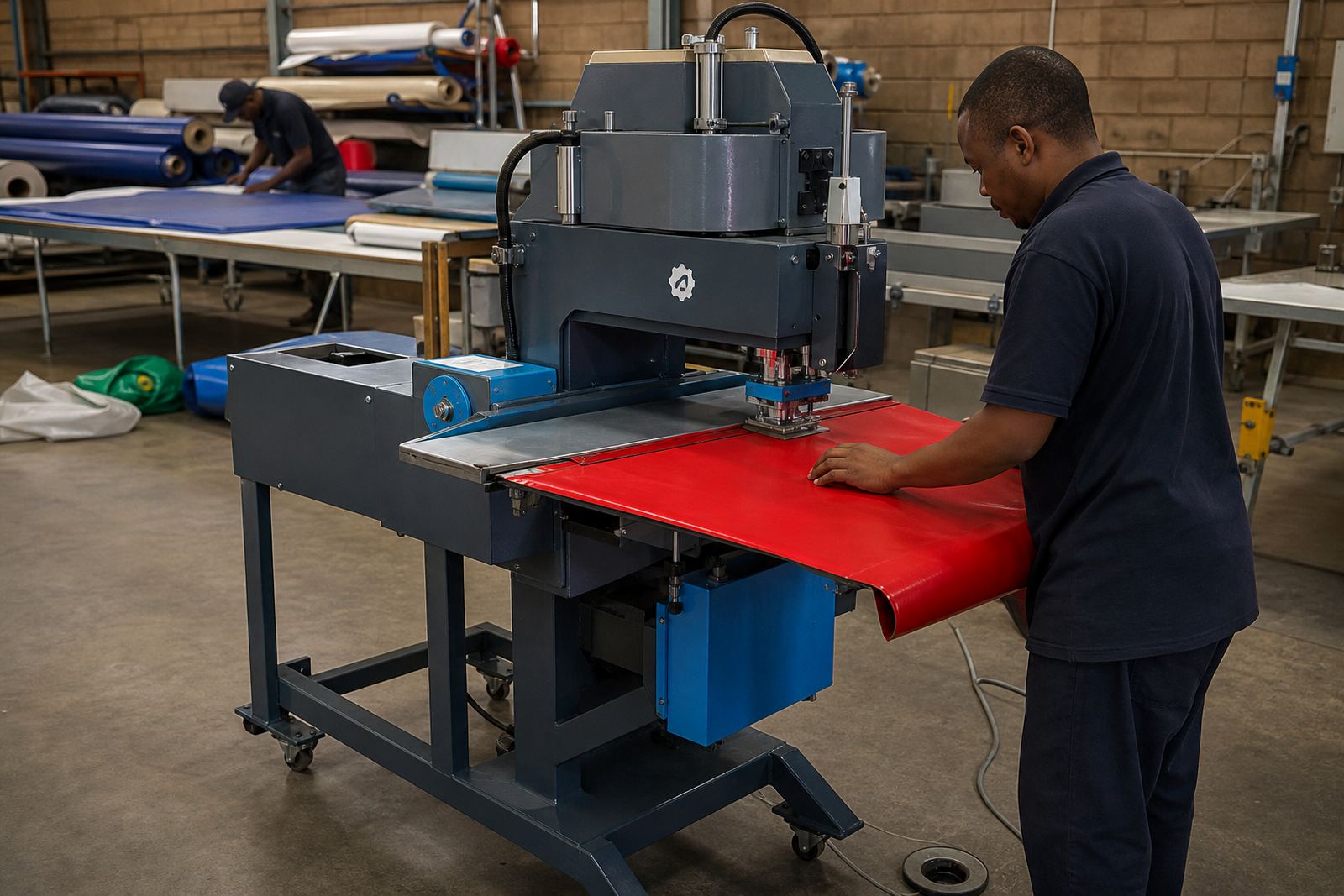
Good material prep also supports operator safety. Clear loose scraps, cut ties and packaging from around the machine so nothing gets pulled into the work path. A tidy feed area helps the operator guide the fabric without overreaching or forcing the sheet. On hot-air and hot-wedge units, make sure hands stay clear of the heated zone and that guides are set before the run starts, not while the piece is moving.
Servicing matters too. A machine with worn rollers, poor electrode alignment or damaged guides can spoil a good panel even when the fabric is prepared properly. If the seam drifts, check the tooling and feed path as well as the material prep. Preventive servicing, tooling alignment and parts replacement all support cleaner seams and less waste across tarpaulin, banner and tent work. It is worth keeping the machine in step with the fabric, rather than fighting it each shift.
- Keep the feed path clear of offcuts and loose tools
- Do not reach across the heated zone during operation
- Check rollers, guides and electrodes before a long run
- Store prepared panels flat so the seams do not distort