How to lodge a service request
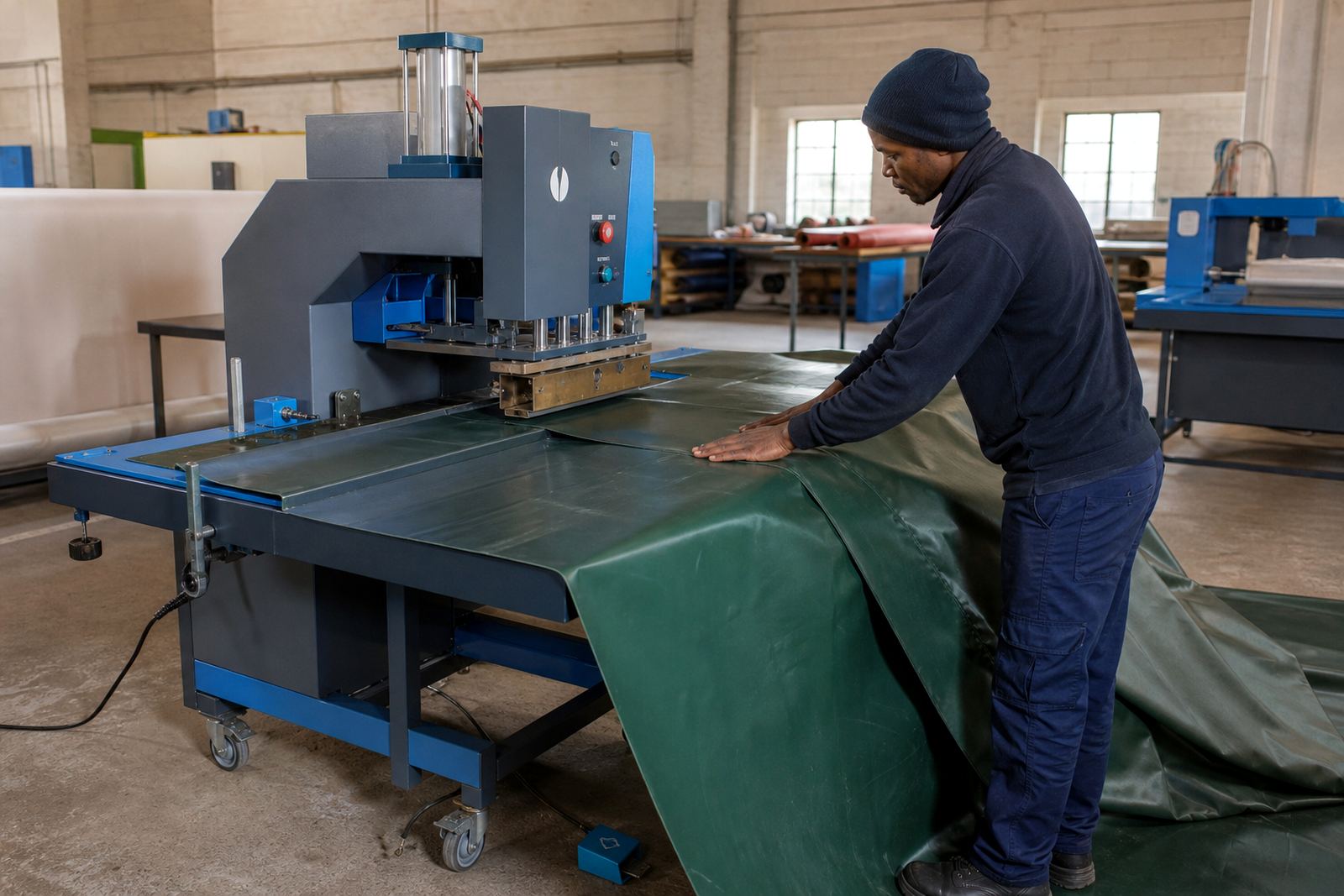
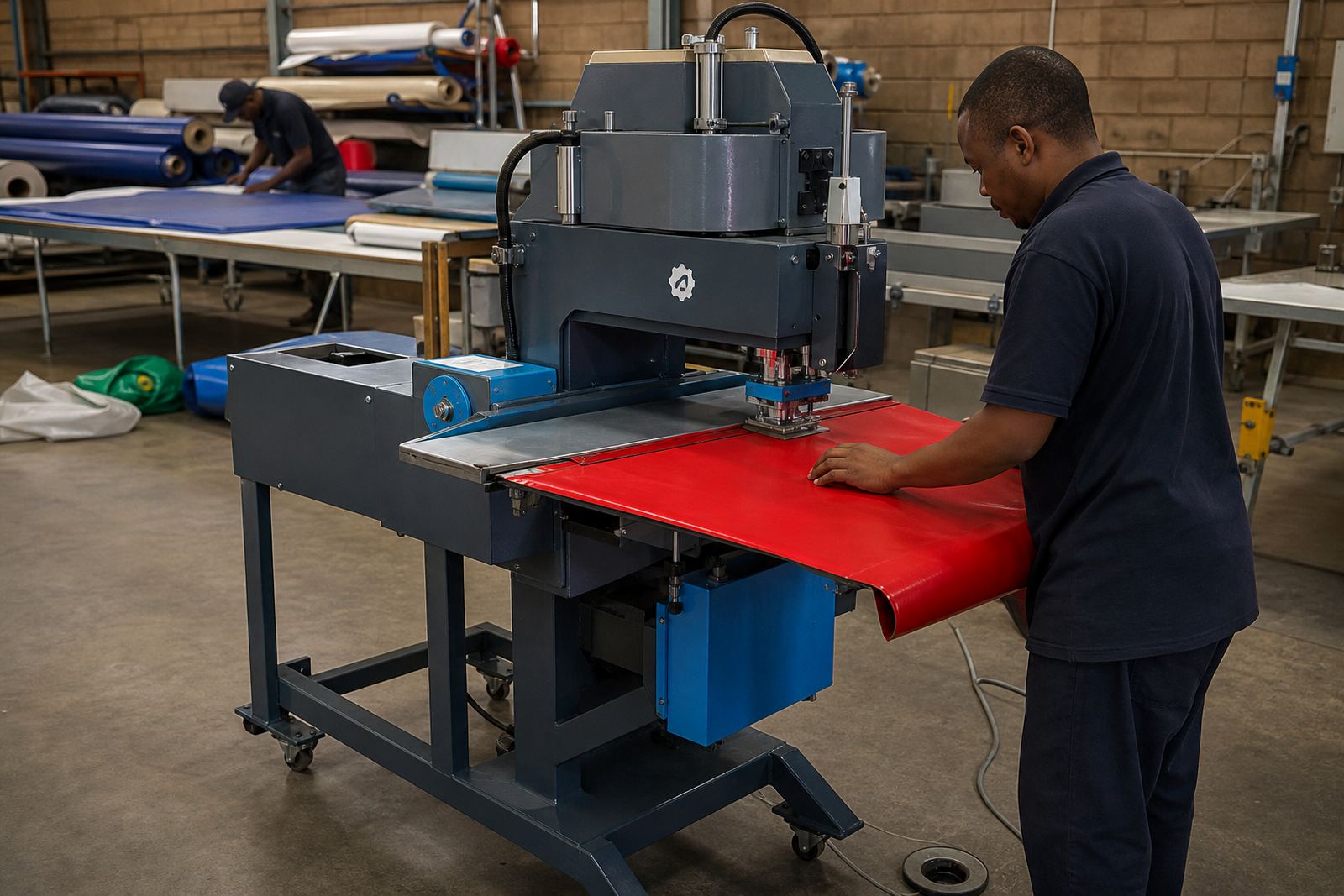
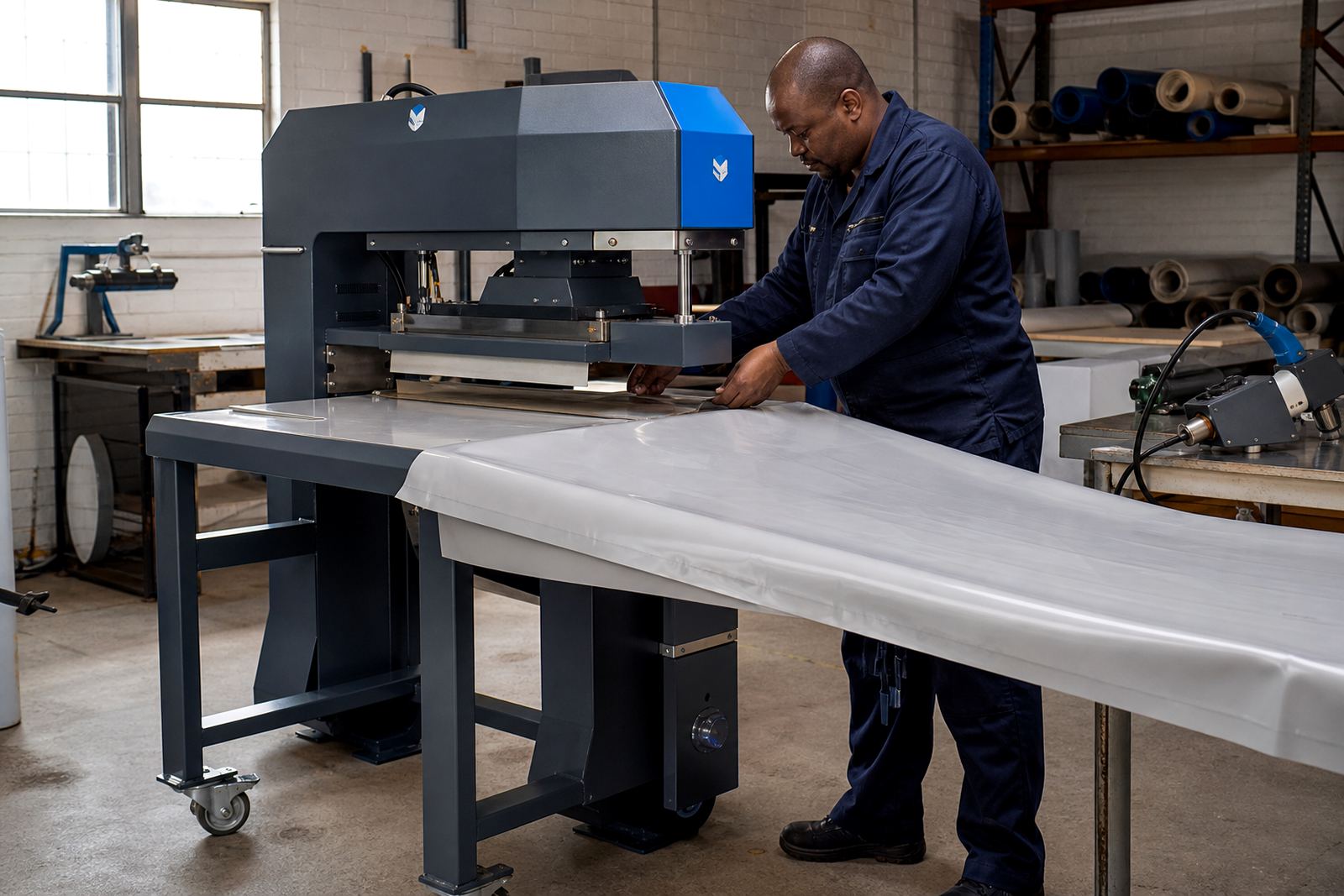
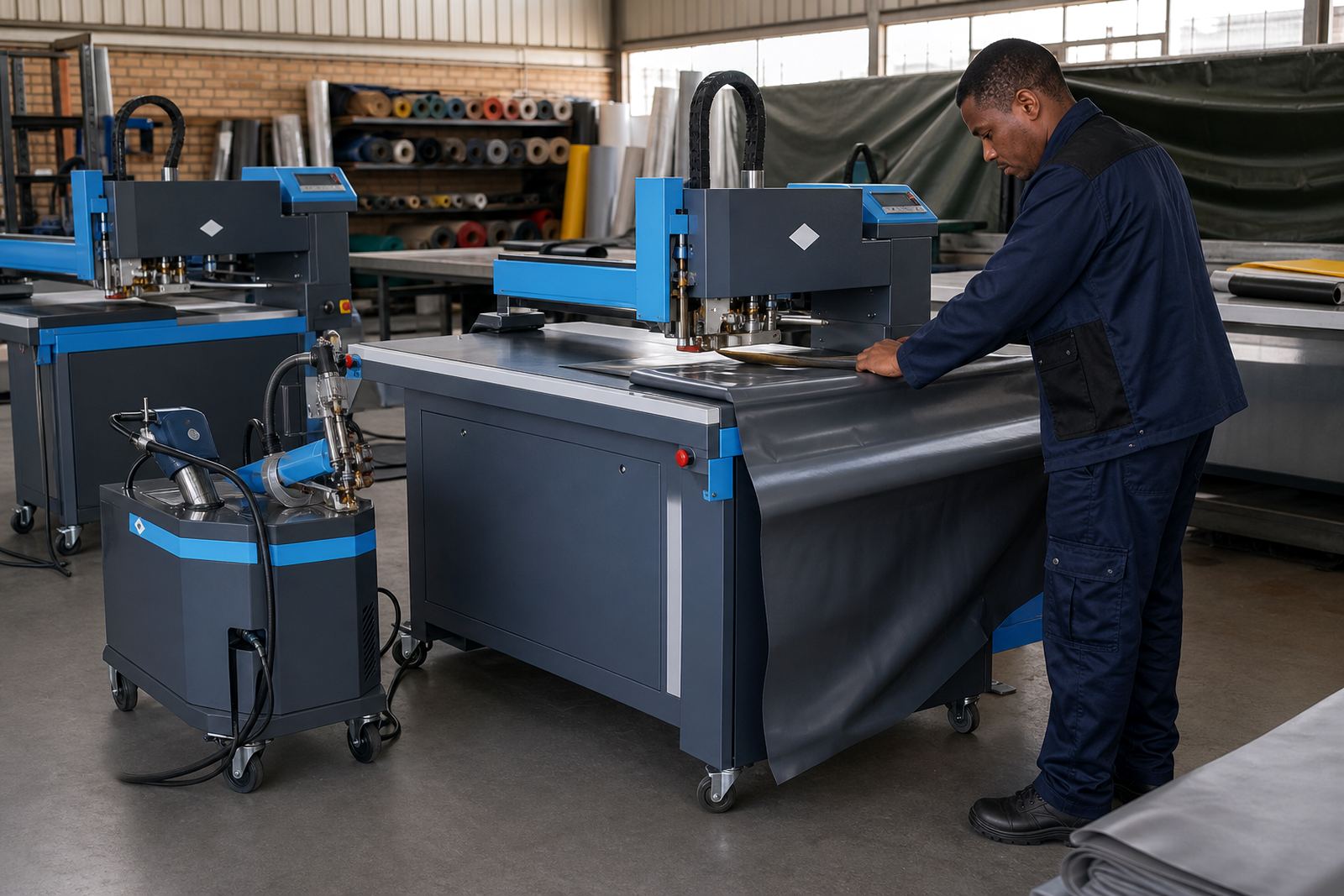
Use the enquiry form on our contact page and give the machine details that matter for the job. Include the type of welder, whether it is radio frequency, hot-air or hot-wedge equipment, and a short note on the PVC-coated fabric being processed, such as banners, tarpaulins, blinds or tent panels.
It helps to mention the fault, the seam type you are trying to make, and whether the issue shows up on hems, keder, eyelet areas or overlap seams. If the machine is on-site in Germiston, Johannesburg or further afield, say where it is installed and whether access is easy for a technician or if the unit must be collected.
What to include so the work can be assessed properly
A good request saves time on the first visit. A few clear facts help the team work out if the issue is electrical, mechanical or related to settings, tooling or operator handling.
- Machine type and approximate table size or weld width
- Material being welded, including PVC thickness and fabric finish
- Seam fault, for example burn marks, weak bonds, wrinkles or poor edge alignment
- Recent changes to tooling, rollers, electrodes or heating elements
- Any unusual noise, smell, arcing or repeated stoppages
- Whether the machine needs installation, commissioning, fault finding or preventive servicing
If the weld looks fine on one side but peels on the other, note that too. Small details like this often point to roller pressure, temperature settings or alignment that needs checking.
Installation and commissioning requests
When a new welder is being brought into production, the request should cover the site layout, power supply details and the kind of work the machine must handle. High-frequency equipment needs correct positioning, earthing and operator space, while hot-air and hot-wedge units need practical access for material feeding, trimming and cooling.
Commissioning usually includes setting the machine up for the fabric used, checking seam consistency and making sure the team understands the controls. For tarpaulin shops in Durban or coastal areas, it is worth flagging humidity and storage conditions because moisture can affect material handling and finished seams, ja.
- Machine placement and floor space
- Required seam widths and accessory tooling
- Input power details and site readiness
- Operator names for training and handover
Repair, fault finding and parts support
If a welder has stopped making a sound seam, send the symptom rather than only saying it is not working. A broken weld can come from poor electrode contact, worn rollers, misaligned tooling, damaged heating parts or contamination on the fabric edge. Some faults are minor and some need a site visit with spares.
The support team can assist with roller replacement, electrode refurbishment, tooling alignment, seam testing and parts supply. On older machines it is often better to inspect the wear points first before replacing larger assemblies, because that keeps the repair focused and avoids unnecessary downtime.
- Intermittent heat or weak output
- Worn seals, rollers or guiding parts
- Incorrect seam formation on hems or keder
- Eyelet area distortion or fabric scorching
- Repeated machine tripping or control faults
Servicing for shops that work every week
Preventive servicing suits production lines that run long batches of banners, tents and covers. A proper service check looks at wear, machine cleanliness, moving parts, safety covers and the condition of the weld path. On hot-air and hot-wedge units, dust and adhesive residue can build up quickly, so regular cleaning matters more than many operators realise.
Service requests can also cover planned maintenance before a busy event season. If the machine is used for municipal work, sports grounds, signage or exhibition pieces, it makes sense to test it before the rush rather than waiting for a breakdown. That approach keeps the welds neat and the team safer around moving parts and heat zones.
Safety points for operators and workshop staff
When sending a support request, mention any safety concern straight away. Exposed live parts, damaged insulation, tired foot switches, loose guards or faulty temperature control should never be ignored. Operators should not work with wet hands, frayed leads or blocked cooling areas, and the machine must be kept clear of scrap vinyl and loose offcuts.
Training requests can be logged at the same time as repairs. Good training covers safe loading, correct pressure, seam testing, eyelet work, edge finishing and how to spot early signs of trouble before a fault becomes costly.
- Keep hands clear of heated and moving parts
- Do not bypass guards or switches
- Test the seam on offcuts before production
- Report unusual smell, arcing or smoke at once
Branches and support areas across South Africa
Support requests are handled from Germiston, with service coverage across Johannesburg, Pretoria, Durban, Cape Town, Bloemfontein and the surrounding areas. Boksburg and Benoni requests are also supported, which helps local tarpaulin, banner and tent makers get help without waiting for a distant team to guess at the fault.
Whether the request is for a new installation, a site callout, a service plan or a repair on an older welders, give the location and the machine history in the enquiry. The more exact the information, the easier it is to match the right technician, tooling and parts to the job.