Read the Wear Before It Becomes a Fault
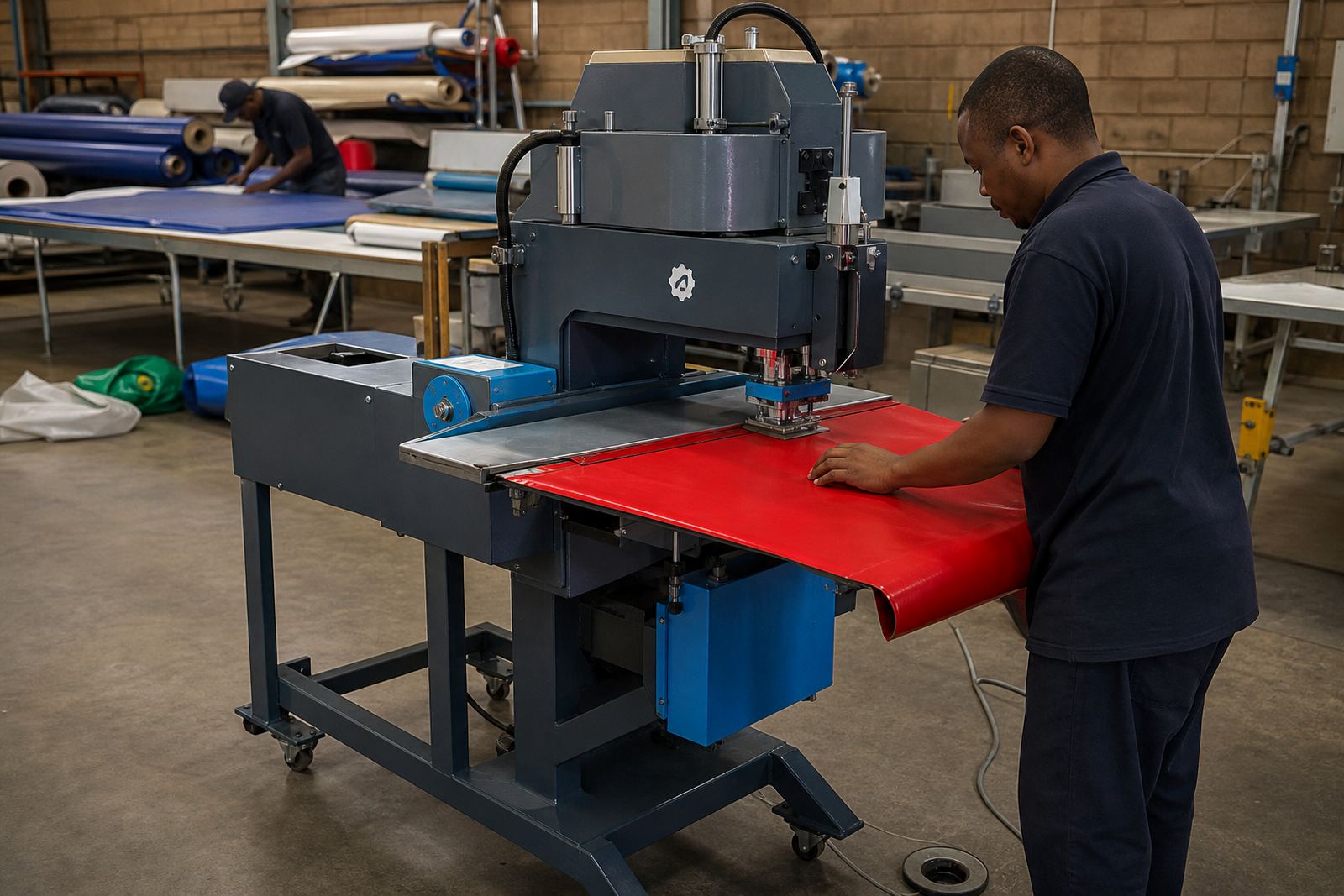
Most spares questions start with the same signs: heat not spreading evenly, weld marks showing one side stronger than the other, or material pulling slightly at the edge of a seam. On high-frequency units, worn electrodes and poor alignment can leave a weak channel on PVC coated fabric. On hot-air and hot-wedge machines, tired rollers, dirty nozzles, worn belts and damaged wedges often show up as scorched edges or uneven seam width.
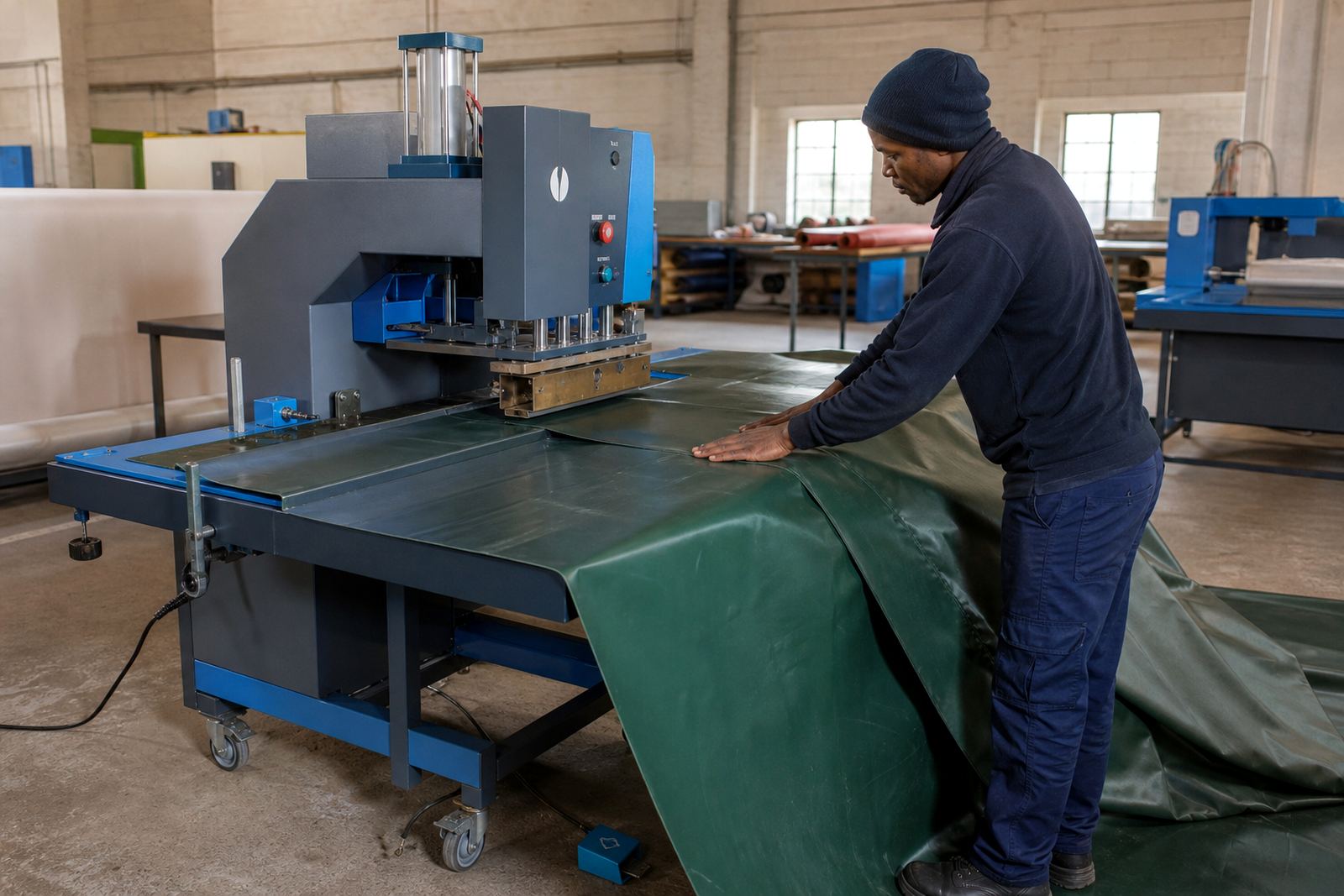
When a machine is used on heavy tarpaulin, coated mesh or tent panels, check the contact points first. Look for pitting on electrodes, grooves on rollers, loose guides and any movement in the tooling head. A small fault on Monday can turn into wasted material by Friday.
Parts That Deserve a Shelf Space
Good spares planning is less about buying everything and more about keeping the parts that stop work when they fail. In a busy sign shop or tent workshop, the usual wear items are easy to identify once you know the machine's pattern.
- Electrodes and electrode faces for radio frequency welding
- Rollers, pressure wheels and guide rollers
- Heating elements, nozzles, wedges and air path parts
- Belts, drives, sensors and switches
- Fasteners, seals, clamps and alignment pieces
- Consumables for seam testing and setup checks
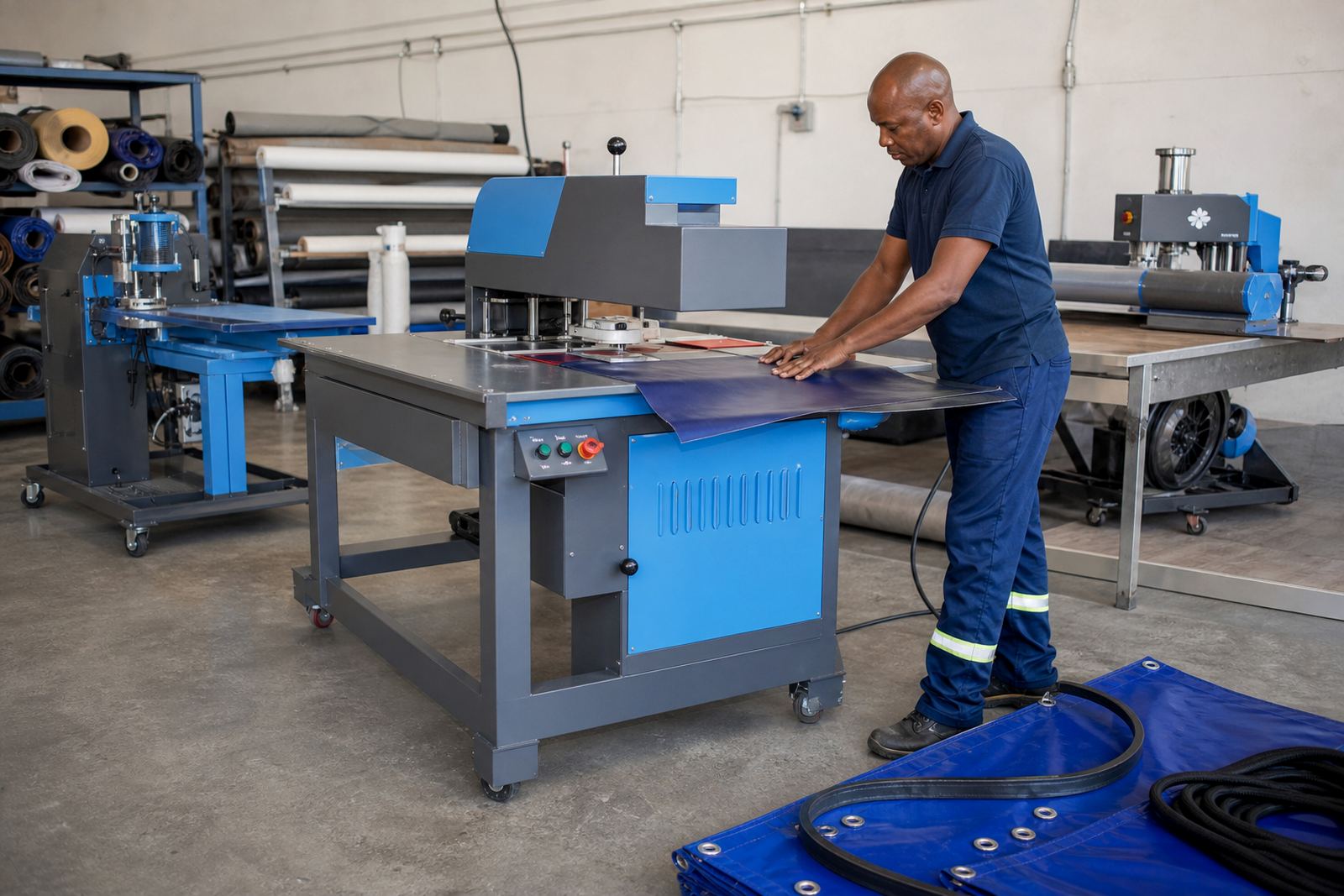
If your work includes hems, keder pockets or eyelet strips, keep the tooling that matches those jobs separate and labelled. That saves time during changeovers and cuts down on accidental fitting of the wrong part.
How to Match the Right Spare to the Machine
The safest way to identify a spare is to work from the machine plate, the part number if it is visible, and a clear photo of the worn item beside a ruler. Take note of seam width, tooling shape, hole spacing and the thickness of the PVC coated fabric you run most often. A part that suits light banner work may not suit heavy-duty tarpaulin or tent material.
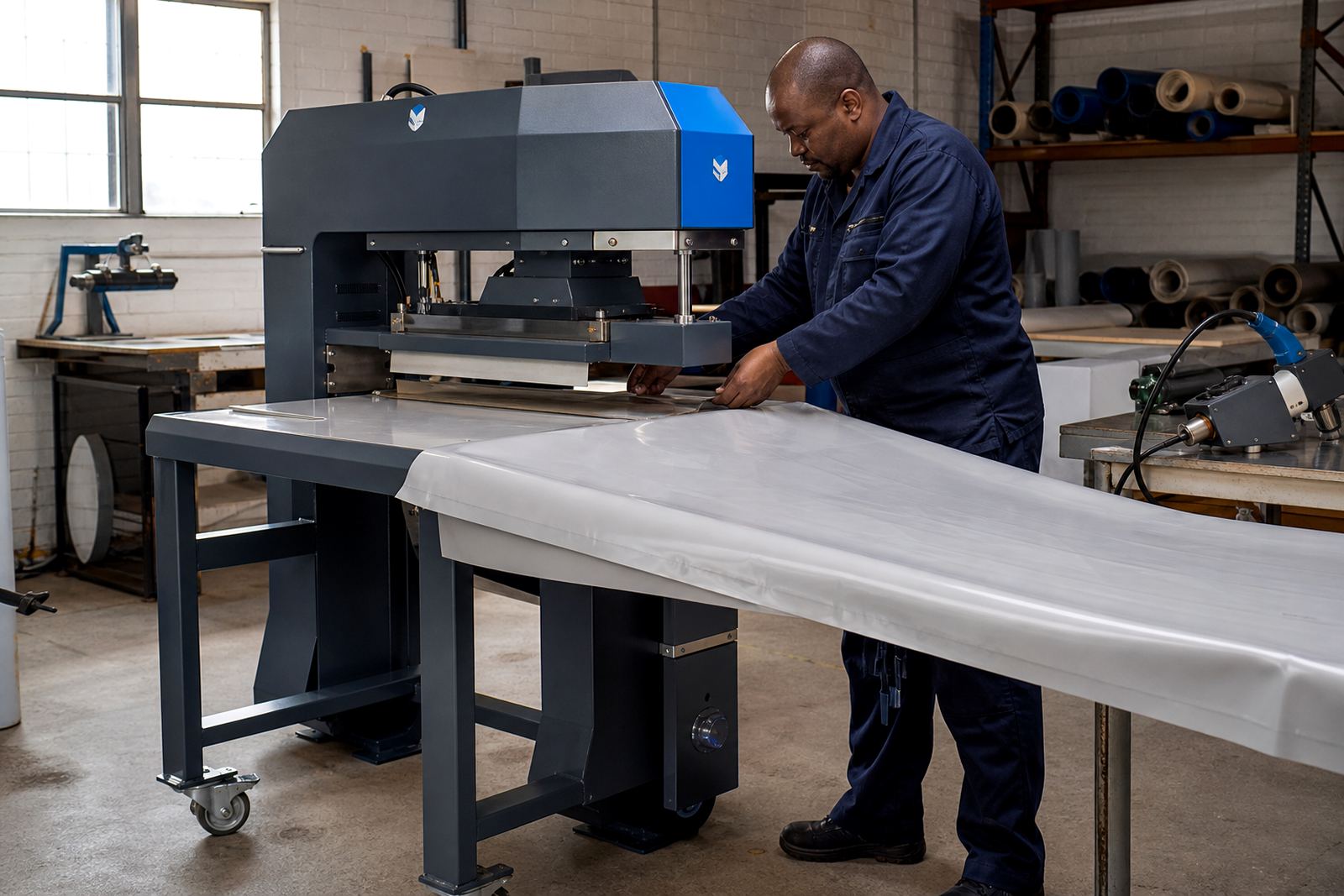
For high-frequency welders, details such as electrode profile, table size and clamping arrangement matter. For hot-air and hot-wedge welders, the width of the weld path, roller profile and heating head shape matter just as much. If the machine has been retooled over time, check what is fitted now, not only what the manual first listed.
Keep Stock Without Overbuying
Stock should match how the workshop runs, the volume of work and the type of products made. A banner shop in Johannesburg with regular short runs will stock differently from a tent maker in Durban working on large panels in humid coastal conditions. Heat, dust and constant changeovers all affect wear rates.
- Keep one set of critical wear parts for each active machine
- Separate fast-moving parts from long-life parts
- Label parts by machine model and job type
- Store electrodes, rollers and seals in a dry, clean cabinet
- Inspect stock every month for damage, flat spots or corrosion
If your workshop runs on a tight production schedule, build a reorder point based on actual use, not guesswork. Parts used on every shift should not be treated the same as parts replaced only during servicing.
Planning Replacements Around Production
Replacement planning works best when it is tied to servicing dates, not only to breakdowns. If you know a tooling set lasts through a certain number of jobs, schedule replacement before the seam quality starts drifting. That matters on signage, where a weak hem or uneven keder pocket shows up fast on the finished product.
For workshops handling municipal or event work, it helps to plan ahead for peak periods. Keep an eye on the parts that affect operator safety too, such as guards, switches and covers. A machine that feels rough to use is often telling you the bearings, guides or alignment are already due for attention.
Servicing Notes That Make Spares Last Longer
Spare parts last longer when the machine is cleaned and set up properly. Wipe down the welding area, clear off dust and fabric offcuts, and check that the tooling is seated square after every changeover. Misalignment causes uneven pressure, which shortens the life of electrodes, rollers and wedges.
During servicing, look for signs of heat damage, loose fixings and worn contact surfaces. Keep a record of each replacement so you can see patterns, not just faults. If one machine keeps chewing through the same part, the issue is often in setup or handling, not the spare itself.
- Log the date and reason for every part replacement
- Match replacements to seam tests after installation
- Train operators to report odd noise, drag or heat changes early
- Ask for a check if the same fault returns after fitting a new part
That approach keeps high-frequency, hot-air and hot-wedge welders working more predictably across tarpaulin, banner and tent production.